Overview
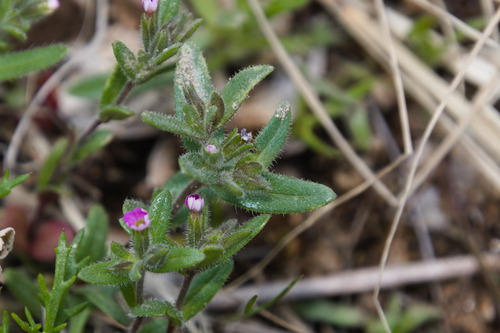
Microsteris gracilis is a small spring annual reaching 2-6 inches (5-15 cm) tall and 1-4 inches (2.5-10 cm) wide, with slender, branching, often reddish stems carrying glandular hairs. The lower leaves are opposite and narrow, while the upper leaves alternate; all are linear to lance-shaped and 0.2-1 inch (5-25 mm) long. From early spring it bears small tubular flowers about 0.2-0.3 inch (5-8 mm) across, with five notched lobes that are pink to white above a yellow throat. The flowers close in dull weather and open in sun. It is one of the smaller relatives of garden phlox and was long placed in Phlox as Phlox gracilis. The species grows in open, sandy or gravelly ground, sagebrush flats, grassland, and disturbed sites across western North America, completing its life cycle quickly after winter and spring moisture. Plants are short-lived and inconspicuous, fading by early summer as the soil dries, so the display is brief.
Native Range
Microsteris gracilis is native to western North America, from British Columbia south through California and east to the Rocky Mountains and Great Plains. It grows in open sandy or gravelly ground, sagebrush flats, grassland, and disturbed sites.Suggested Uses
Used in native plant gardens, rock gardens, and seed mixes for dry, open sites and spring wildflower displays. It suits gravelly banks and sandy ground where it can self-sow. Sown or spaced about 4 inches (10 cm) apart in drifts.How to Identify
Appearance
Size & Dimensions
Height2" - 6"
Width/Spread1" - 4"
Bloom Information
Flowering occurs in spring, generally March through June depending on elevation and rainfall. Flowers open in sunlight and close in dull or cool weather. The bloom is brief, ending as the plants dry off in early summer.
Detailed Descriptions
Flower Description
pink to whiteFoliage Description
greenGrowing Conditions
Sun Requirements
Requires 6-8 hours of direct sunlight daily
• Full Sun: 6+ hours of direct sunlight
• Partial Shade: 3-6 hours of direct sunlight
• Full Shade: Less than 3 hours of direct sunlight
Water & Climate
Water Needs
Care & Maintenance
Care Guide
Grow in full sun in light, sandy or gravelly, well-drained soil. This cool-season annual germinates with fall and winter moisture and flowers in spring. It needs no supplemental water in a normal wet-winter climate and does not tolerate waterlogged ground. Rich soil and heavy irrigation favor leafy growth over flowers. Plants self-sow where the soil stays open and unmulched. Once seed sets, the plants die and disappear by summer.Pruning
No pruning is needed for this small annual. Plants can be left to set and drop seed for the following season. Spent plants can be cleared once they dry and shed seed.Toxicity
Non-toxicPlanting Guide
Planting Methods & Timing
Planting Method
direct sow
Direct Sow Timing
Fall or early spring
Days to Maturity
60–90 days
Plant Spacing
4 inches