Metasequoia, Genus, glyptostroboides, Species,
- Genus & species
dawn redwoods
Overview
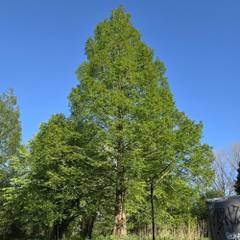
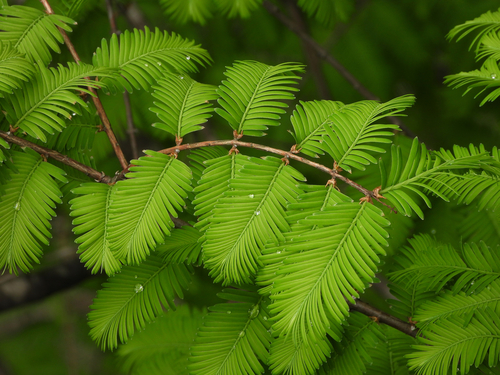
Metasequoia is a genus of deciduous conifers in the cypress family (Cupressaceae), once widespread across the Northern Hemisphere and known mainly from fossils until living trees of M. glyptostroboides, the dawn redwood, were identified in central China in the 1940s. It is a fast-growing tree reaching 50-150 feet (15-45 m) tall with a straight trunk and a narrow to broadly conical crown. The trunk is often fluted and buttressed at the base, clad in fibrous, reddish-brown bark that peels in strips. Unlike most conifers, it is deciduous: the soft, linear needles, 0.4-1.2 inch (1-3 cm) long, are arranged in opposite ranks on short shoots, emerge bright green in spring, and turn russet to orange-brown before dropping in autumn. Small rounded seed cones 0.6-1 inch (1.5-2.5 cm) hang on long stalks. Metasequoia grows naturally along moist valley bottoms and streamsides and tolerates wet ground better than many conifers. In cultivation it needs ample room and steady moisture, and the early-leafing shoots can be caught by late spring frosts.
Native Range
In the wild Metasequoia glyptostroboides is restricted to a small area of central China, in parts of Hubei, Hunan, and Sichuan, where it grows along moist valley floors, streamsides, and lower slopes. The genus was formerly distributed widely across the Northern Hemisphere, as shown by an extensive fossil record.Suggested Uses
Used as a fast-growing specimen and avenue tree in parks, large gardens, and streetside plantings with room to develop, and for screening or as a feature beside water. The deciduous habit lets winter light through after leaf fall. Its size and moisture needs make it unsuited to small or dry gardens.How to Identify
Appearance
Size & Dimensions
Height50' - 150'
Width/Spread15' - 25'
Bloom Information
As a conifer, Metasequoia does not flower but bears separate pollen and seed cones. Pollen is shed from small cones in late winter to early spring, and the rounded woody seed cones ripen the same year, in autumn. The main seasonal change is the foliage, which flushes green in spring and turns orange-brown before leaf fall.
Detailed Descriptions
Foliage Description
bright green, turning russet-orange in autumnGrowing Conditions
Sun Requirements
Requires 6-12 hours of direct sunlight daily
• Full Sun: 6+ hours of direct sunlight
• Partial Shade: 3-6 hours of direct sunlight
• Full Shade: Less than 3 hours of direct sunlight