Image 1 of 15
1 / 15
Plant Reference
Metasequoia, Genus, glyptostroboides, Species,
- Genus & species
dawn redwood
Central China — border region of Hubei, Hunan, and Sichuan provinces; moist valleys and ravines; discovered as a living species in 1941 (previously known only from fossils dating to the Cretaceous period)
Overview
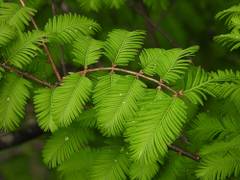
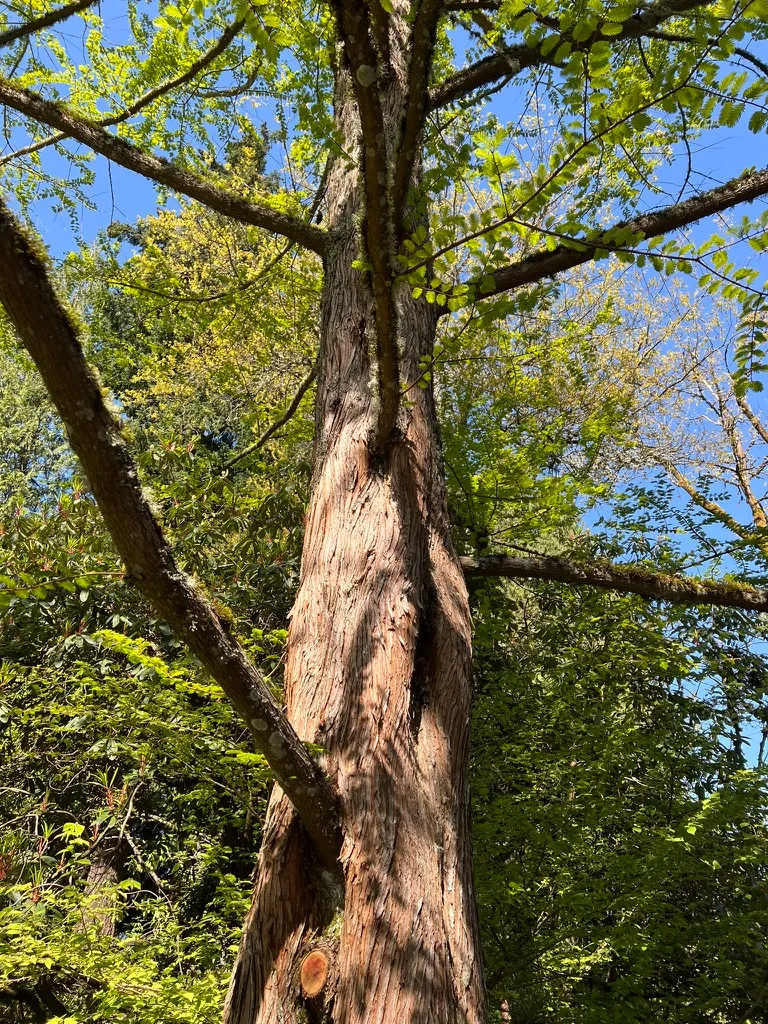
Metasequoia glyptostroboides is dawn redwood (water fir), a large upright deciduous conifer growing 70-100 feet (21-30 m) tall and 25-35 feet (7.5-10.5 m) wide with a conical pyramidal form. Flat needles 0.5-1 inch (1.3-2.5 cm) in opposite pairs along deciduous branchlets — light green in spring, medium green in summer, russet-orange to coppery-bronze in fall before dropping. Reddish-brown fibrous-shredding bark. The trunk develops a broad buttressed base on mature specimens. In Cupressaceae. A living fossil — known from Cretaceous fossils (65+ million years ago), discovered as a living species in Hubei, China, in 1941. A deciduous conifer — drops needles and branchlets in fall. The very large mature size is the primary space limitation. Needs consistently moist soil — not drought-tolerant. Tolerates a wide pH range (5.0-8.0) and wet conditions. No significant pest or disease problems. Deer-resistant. Non-toxic. Zones 4-8. Full sun. Growth rate is fast.
Native Range
Native to central China — border region of Hubei, Hunan, and Sichuan provinces. Found in moist valleys and ravines. Discovered as a living species in 1941.Suggested Uses
Grown as a specimen tree in large landscapes, parks, and along water features spaced 25-35 feet (7.5-10.5 m). Living fossil. Deciduous conifer — russet-bronze fall color. Tolerates wet soil. Not for small lots. Non-toxic. Zones 4-8.How to Identify
Appearance
Size & Dimensions
Height70' - 100'
Width/Spread25' - 35'
Colors
Foliage Colors
Bloom Information
Early spring (March-April). Pollen release from small male cones. Female cones 0.5-1 inch (1.3-2.5 cm) on long stalks. Wind-pollinated. 2 weeks.
Detailed Descriptions
Flower Description
Conifer — not applicable (produces small round cones 0.5-1 inch / 1.3-2.5 cm on long stalks)Foliage Description
Flat needles 0.5-1 inch (1.3-2.5 cm) in opposite pairs along deciduous branchlets; light green in spring; medium green in summer; russet-orange to coppery-bronze in fall before droppingGrowing Conditions
Sun Requirements
Requires 6-10 hours of direct sunlight daily
• Full Sun: 6+ hours of direct sunlight
• Partial Shade: 3-6 hours of direct sunlight
• Full Shade: Less than 3 hours of direct sunlight
Care & Maintenance
Care Guide
Full sun (6+ hours). Moist soil pH 5.0-8.0 — tolerates wide pH range, clay, and wet conditions. Not drought-tolerant. No significant pest or disease problems. Very large at maturity (70-100 feet / 21-30 m). Prune in late winter (February-March). Deer-resistant. Non-toxic. Zones 4-8.Pruning
Prune in late winter (February-March). Develop a single central leader. Remove dead, crossing, or competing leaders. The conical pyramidal form is natural — minimal pruning needed on healthy trees.Pruning Schedule
Prune: February–March
early spring