Melinis, Genus, repens, Species,
- Genus & species
natal grass
Overview
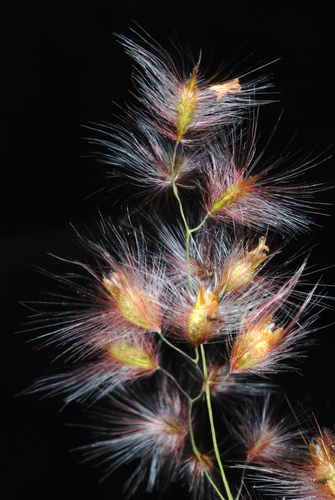
A tufted annual to short-lived perennial grass reaching 12-40 inches (30-100 cm) tall and 8-16 inches (20-40 cm) wide. Stems are slender and erect, sometimes bending at the base and rooting at the lower nodes. Leaf blades are flat and narrow, 2-8 inches (5-20 cm) long and 0.1-0.3 inch (3-8 mm) wide, green to blue-green, with a sparse covering of hairs. The flower head is an open, airy panicle 2-8 inches (5-20 cm) long, densely covered with silky hairs that are pink to red when young and fade to silvery white with age. Flowering occurs spring through autumn and can extend year-round in warm areas. Seeds are tiny and shed readily. Growth is fast on disturbed, sandy ground. It spreads quickly by seed and is treated as an environmental weed in many regions.
Native Range
Native to southern and tropical Africa. Widely naturalized in warm parts of the world, including northern and eastern Australia, where it grows on roadsides, sandy soils, and disturbed ground in open, sunny sites.Suggested Uses
Grown occasionally as an ornamental grass for its colored seed heads, spaced 12-18 inches (30-45 cm) apart, and cut for fresh and dried arrangements. It appears mostly as a colonizer of roadsides and disturbed sandy ground. Heavy self-seeding and weed status limit its planting near bushland.How to Identify
Appearance
Size & Dimensions
Height1' - 3'4"
Width/Spread8" - 1'4"
Bloom Information
Flowers spring through autumn, and nearly year-round in frost-free areas. The silky panicles open pink to red and age through rose to silvery white over several weeks. Each plant produces abundant seed. Warm, dry weather extends the display.
Detailed Descriptions
Flower Description
Pink to red, fading to silvery whiteFoliage Description
Green to blue-greenGrowing Conditions
Sun Requirements
Requires 6-10 hours of direct sunlight daily
• Full Sun: 6+ hours of direct sunlight
• Partial Shade: 3-6 hours of direct sunlight
• Full Shade: Less than 3 hours of direct sunlight
Care & Maintenance
Care Guide
Grows readily on dry, sandy, disturbed soils and needs no irrigation once established. Tolerates full sun and low fertility. Self-seeds heavily, forming dense stands that crowd out other low plants. The small seeds spread by wind, water, and machinery into new ground. Few pests trouble it. Plants are often short-lived but replaced by abundant seedlings.Pruning
Cut or mow flowering stems before the seed heads ripen to limit spread. Remove whole tufts at the base where the grass is not wanted. The seeds release readily when the heads are disturbed. No formative pruning applies.Pruning Schedule
Prune: April
fall
Container Growing
Suitable for container growing
Minimum container size: 2 gallons