Meconopsis, Genus, spp., Multiple species,
- Genus
- Multiple species
blue poppy
Himalaya and mountains of western China
Overview
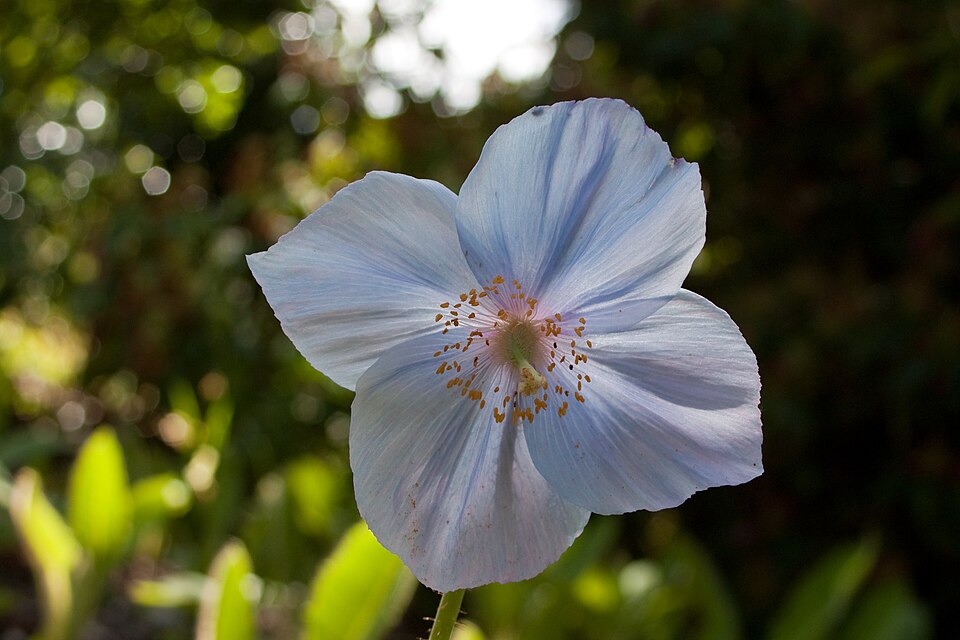
Meconopsis is a genus of about 75 perennials and biennials in the poppy family (Papaveraceae), centered on the Himalaya and the mountains of western China, with one outlier, the Welsh poppy, in western Europe. The plants form rosettes of bristly, lobed or toothed leaves, from which leafy or leafless flowering stems rise 12–60 in (30–150 cm) tall. Cup- or saucer-shaped flowers 2–4 in (5–10 cm) across open in late spring and summer in clear sky-blue, purple, red, pink, yellow, or white, with a central boss of yellow stamens. The blue-flowered species, such as M. betonicifolia and M. grandis, are widely grown for their petals. Several species are monocarpic, building a rosette over several years and dying after a single flowering. The genus needs cool, humid summers, dappled shade, and deep, moist, acidic, humus-rich soil, and is intolerant of heat, drought, and alkaline ground. Slugs and crown rot are common problems. Seed is small and short-lived, and is sown fresh to aid germination. In hot or dry climates the plants are short-lived and hard to maintain.
Native Range
Meconopsis is native chiefly to the alpine meadows, woodland, and screes of the Himalaya and the mountains of western China, with a few species in Myanmar and elsewhere in Asia. The Welsh poppy, M. cambrica, grows wild in western Europe.Suggested Uses
Grown in woodland gardens, shaded borders, and peat beds in cool, moist climates, often massed for the blue-flowered display. The genus suits Himalayan-style and acid-soil plantings alongside primulas and rhododendrons. It grows reliably only in regions with cool summers.How to Identify
Appearance
Size & Dimensions
Height1' - 5'
Width/Spread1' - 2'
Bloom Information
Detailed Descriptions
Flower Description
sky-blue, purple, red, pink, yellow, or whiteFoliage Description
blue-green to green, bristlyGrowing Conditions
Sun Requirements
Requires 3-6 hours of direct sunlight daily
• Full Sun: 6+ hours of direct sunlight
• Partial Shade: 3-6 hours of direct sunlight
• Full Shade: Less than 3 hours of direct sunlight
Care & Maintenance
Care Guide
Meconopsis grows in dappled shade on deep, moist, acidic, humus-rich soil in regions with cool, humid summers. Steady moisture is needed through the growing season, but waterlogging in winter rots the crown. The genus performs poorly in heat, drought, and alkaline soil, which limits it largely to cool maritime and mountain climates. Removing the first flower buds on young monocarpic plants can push them toward a perennial habit. Slugs, snails, and crown rot are the main problems. Plants are raised from fresh seed or, in clump-forming species, by division after flowering.Pruning
Spent flower stems are cut back after bloom, unless seed is wanted from monocarpic plants. Removing early flower buds in the first year or two can prolong the life of monocarpic species. Dead foliage is cleared in late autumn as the rosettes die down.Container Growing
Suitable for container growing
Minimum container size: 2 gallons