Marah, Genus, oregana, Species,
- Genus & species
bigroot, manroot
British Columbia south through Washington, Oregon to California; forest edges, shrubby thickets, stream banks, and disturbed open ground
Overview
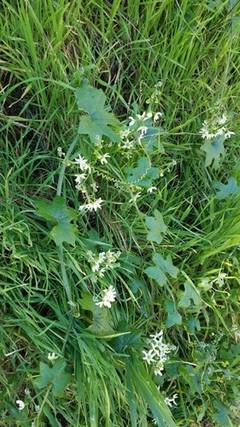
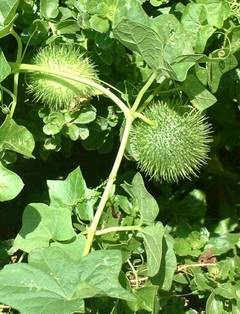
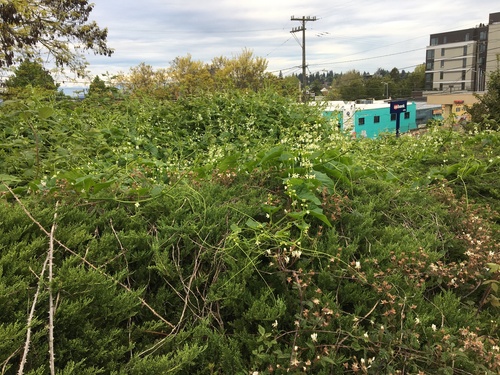
Marah oregana is a deciduous tuberous-rooted climbing vine in the Cucurbitaceae family native to forest edges, thickets, and stream banks from British Columbia south to California. Each season the underground tuber, which can reach 50-100 lb (23-45 kg) on mature plants, sends up annual stems 10-20 feet (3-6 m) long that climb adjacent shrubs and small trees by branched tendrils. Palmately lobed green leaves 2-5 inches (5-13 cm) wide have 5-7 shallow rounded lobes. Plants are monoecious, producing small white five-petaled male flowers in racemes 2-4 inches (5-10 cm) long and solitary female flowers at the leaf axils from March to May. The fruit is a round to ovoid spiny green capsule 1.5-3 inches (4-7.5 cm) across containing 4-16 large flattened brown seeds. All parts of M. oregana contain bitter cucurbitacin compounds and are toxic to pets and humans if ingested; the spiny mature fruits also pose a hazard to handlers. Foliage and stems die back to the ground each summer as the tuber goes dormant, and the plant re-emerges from the tuber the following late winter.
Native Range
Native to forest edges, shrubby thickets, stream banks, and disturbed open ground from British Columbia south through Washington and Oregon to California.Suggested Uses
Used in native plant restorations, woodland edge plantings, and large naturalized thickets in Pacific Northwest native ranges. The annual climbing stems and spiny fruits limit use to large-scale plantings away from foot traffic, children, and pets. Not suited to ornamental gardens, mixed borders, or small residential sites.How to Identify
Appearance
Size & Dimensions
Height10' - 20'
Width/Spread10' - 20'
Bloom Information
Blooms March to May with small white five-petaled male flowers 0.4-0.6 inch (10-15 mm) wide in axillary racemes 2-4 inches (5-10 cm) long, and solitary female flowers at the leaf axils. Bloom lasts 4-6 weeks per plant, after which spiny green seed capsules develop and ripen by mid-summer. Flowers attract small native bees.
Detailed Descriptions
Foliage Description
GreenGrowing Conditions
Sun Requirements
Requires 4-8 hours of direct sunlight daily
• Full Sun: 6+ hours of direct sunlight
• Partial Shade: 3-6 hours of direct sunlight
• Full Shade: Less than 3 hours of direct sunlight
Care & Maintenance
Care Guide
Site M. oregana at forest edges, fence lines, or shrub thickets where annual stems can climb 10-20 feet (3-6 m) into supporting woody plants. Plants tolerate part shade to full sun and a wide range of soils, including dry summer conditions, once established by the deep tuber. Sow seeds 1-2 inches (2.5-5 cm) deep in fall in their permanent location; transplanting mature tubers is impractical because of their size. The plant is rarely cultivated and is more often encountered in restoration plantings or left in place during native plant clearing. The vigorous annual growth can smother small shrubs, and the spiny fruits and toxicity restrict its use in gardens with children, pets, or frequent foot traffic. Plants take 3-5 years from seed to first flower as the tuber bulks up underground.Pruning
Annual stems die back naturally by mid-summer and disintegrate by fall; no pruning is required. Cut back any dead stems entangled in supporting shrubs in fall or winter to clear the framework before next season's growth. The plant cannot be pruned to control size — only complete tuber removal stops the annual cycle, and the tuber is difficult to excavate.Pruning Schedule
Prune: November–December
fallwinter