Marah, Genus, fabacea, Species,
- Genus & species
California manroot
California and northern Baja California
Overview
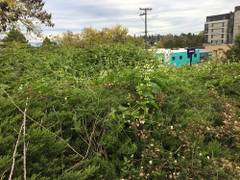
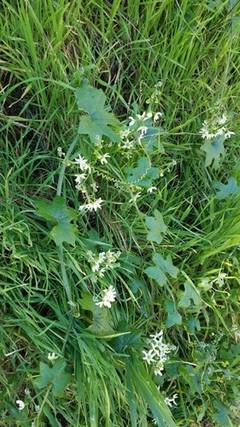
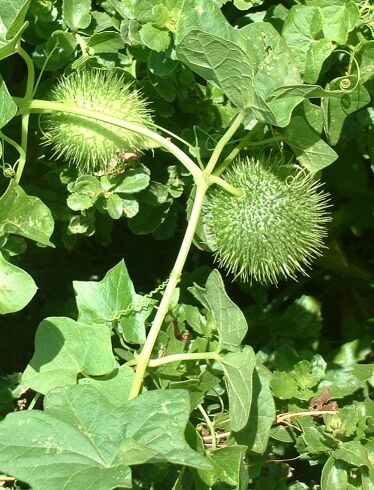
Marah fabacea is a perennial climbing vine of California and Baja California, growing from a massive underground tuber that can weigh many pounds. Each year it sends up stems that climb by branched tendrils to 6-20 feet (1.8-6 m) over shrubs and fences before dying back in summer. The palmately lobed leaves are 2-4 inches (5-10 cm) wide with five to seven lobes. Small cream to white flowers appear from winter into spring, the male flowers in branched clusters and the larger female flowers single at the leaf base. The fruit is a round to oval spiny capsule 1-2 inches (2.5-5 cm) across that dries and splits to drop a few large seeds. The plant grows in chaparral, coastal scrub, and stream margins, regrowing from its tuber after summer dormancy and fire. All parts, especially the seeds, contain bitter compounds that are toxic if eaten. The brief growing season and irregular vining habit limit its use to wild and restoration plantings.
Native Range
Native to California and northern Baja California, in coastal scrub, chaparral, and the margins of streams and washes.Suggested Uses
Used in habitat restoration, native plant gardens, and wild slopes where its summer dormancy is acceptable. The early growth covers fences and shrubs through the rainy season. The spiny fruit and bold tuber draw interest in native plant collections.How to Identify
Appearance
Size & Dimensions
Height6' - 20'
Width/Spread3' - 6'
Bloom Information
Detailed Descriptions
Flower Description
cream to whiteFoliage Description
greenGrowing Conditions
Sun Requirements
Requires 4-10 hours of direct sunlight daily
• Full Sun: 6+ hours of direct sunlight
• Partial Shade: 3-6 hours of direct sunlight
• Full Shade: Less than 3 hours of direct sunlight
Care & Maintenance
Care Guide
Grows in full sun to part shade in well-drained soils of slopes, scrub, and washes, with a pH of 6.0-7.5. The plant draws on winter and spring rains and goes dormant through the dry summer, surviving as a buried tuber. Established plants need no irrigation and are damaged by summer water while dormant. Soil must drain freely to protect the tuber from rot. Hardy in USDA zones 8-10. The vine resprouts after fire and rarely needs any care in its native range.Pruning
Dead vines are cleared after they brown in early summer. The top growth can be cut back where it climbs into unwanted areas. The tuber regrows new stems the following winter regardless of cutting.Pruning Schedule
Prune: June
summer