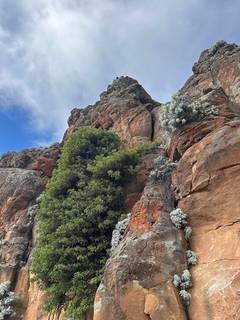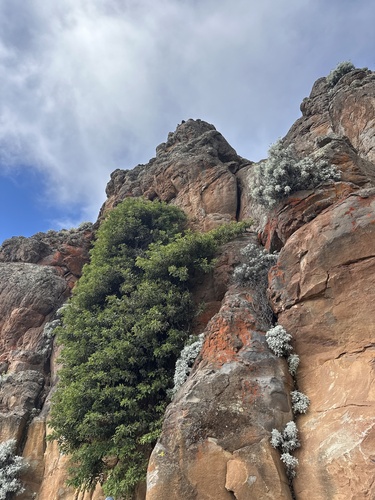
Malosma, Genus, spp., Multiple species,
- Genus
- Multiple species
laurel sumac
Coastal southern California and Baja California
Overview
Malosma is a monotypic genus in the cashew family, represented by the single species M. laurina, an evergreen shrub or small tree of coastal southern California and Baja California. Plants reach 6.5–18 ft (2–5.5 m) tall and spread into a broad, rounded crown. The aromatic leaves are lance-shaped, 2–4 in (5–10 cm) long, and fold upward along the reddish midrib into a taco-like profile that helps separate it from other chaparral shrubs. Reddish petioles and new growth contrast with the glossy green blades. Small cream-white flowers open in dense terminal panicles 2–6 in (5–15 cm) long during late spring and summer, followed by tiny whitish drupes. The species resprouts vigorously from a woody root crown after fire. It tolerates drought once established and grows on dry, well-drained slopes. Frost tolerance is low: foliage is damaged below about 25°F (-4°C), and the plant historically marked the frost line for citrus growers. Like other members of the cashew family, the sap can irritate sensitive skin, which limits its use near paths and play areas.
Native Range
Malosma laurina is native to coastal southern California and the Baja California peninsula of Mexico, where it grows in coastal sage scrub and chaparral below about 3,000 ft (900 m).Suggested Uses
Grown in native and habitat gardens, on dry banks, and for erosion control on sunny slopes in mild-winter regions. It works as an evergreen screen or informal hedge in coastal California landscapes. The resprouting habit suits fire-adapted chaparral restoration.How to Identify
Appearance
Size & Dimensions
Height6'7" - 18'
Width/Spread10' - 20'
Bloom Information
Detailed Descriptions
Foliage Description
glossy green with red midrib and petiolesGrowing Conditions
Sun Requirements
Requires 6-12 hours of direct sunlight daily
• Full Sun: 6+ hours of direct sunlight
• Partial Shade: 3-6 hours of direct sunlight
• Full Shade: Less than 3 hours of direct sunlight