Mallotus, Genus, philippensis, Species,
- Genus & species
kamala
South and Southeast Asia to northern and eastern Australia
Overview
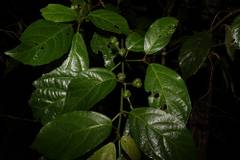
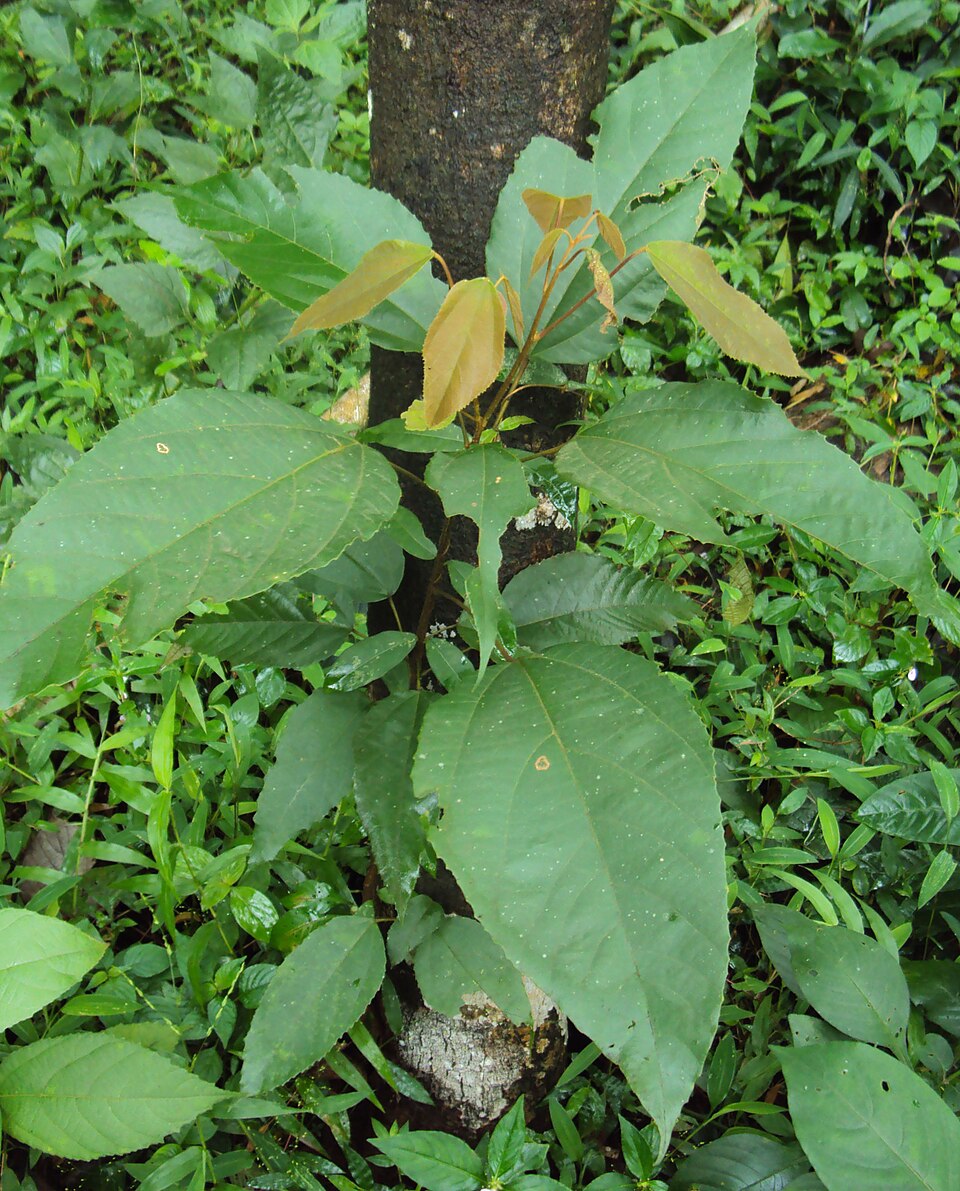
Mallotus philippensis is an evergreen tree of the spurge family, widespread from India and southern China through Southeast Asia to northern and eastern Australia. It usually grows 16-33 feet (5-10 m) tall and reaches up to 80 feet (25 m) in rainforest, with a slender trunk and a rounded crown. The alternate leaves are oval, 2-8 inches (5-20 cm) long, with three main veins from the base, dark green above and pale beneath, where rusty glandular dots are scattered. It is dioecious, with male and female flowers on separate trees, both small, cream to yellowish, and grouped in narrow spikes without petals. Female trees develop three-lobed capsules coated in a bright red-orange powder of tiny glands. This powder, known as kamala, has long been collected as a dye and a traditional medicine, and it acts as a strong purgative if swallowed. The tree is a fast-growing pioneer of clearings and rainforest margins and is frost-sensitive, restricting it to warm, frost-free climates. It casts moderate shade and sheds leaves and fruit capsules that can litter the ground beneath.
Native Range
Native to a wide region from India, Sri Lanka, and southern China through Southeast Asia and Malesia to Papua New Guinea and northern and eastern Australia. In Australia it grows in Queensland and northeastern New South Wales in rainforest, its margins, and regrowth.Suggested Uses
Mallotus philippensis is used as a shade and pioneer tree in tropical and subtropical plantings and in rainforest regeneration, where it establishes quickly on cleared ground. The red fruit powder is harvested as a natural dye and in traditional medicine. Its fruit and seeds feed native birds.How to Identify
Appearance
Size & Dimensions
Height16' - 80'
Width/Spread16' - 33'
Bloom Information
Small cream to yellowish flowers appear mainly in spring, carried in slender spikes. Because the tree is dioecious, only female trees go on to set the powdery red fruit, which ripens through summer and autumn. The flowers lack petals and are inconspicuous, while the red-coated capsules that follow are far more conspicuous.
Detailed Descriptions
Flower Description
Cream to yellowish, in narrow spikesFoliage Description
Dark green above, pale with rusty glands beneathGrowing Conditions
Sun Requirements
Requires 6-10 hours of direct sunlight daily
• Full Sun: 6+ hours of direct sunlight
• Partial Shade: 3-6 hours of direct sunlight
• Full Shade: Less than 3 hours of direct sunlight