Mallotus, Genus, spp., Multiple species,
- Genus
- Multiple species
mallotus
Paleotropics — tropical Africa, Asia, northern Australia, and the Pacific
Overview
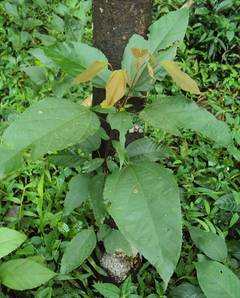
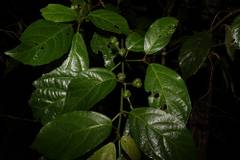
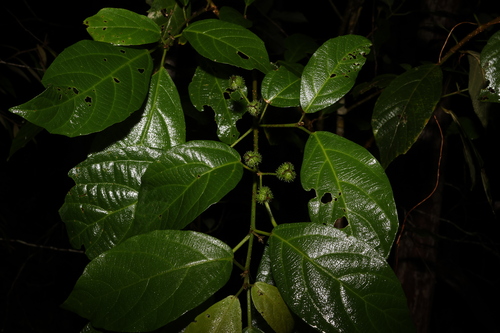
Mallotus is a genus of roughly 150 species of trees and shrubs in the spurge family, distributed across tropical and subtropical Africa, Asia, northern Australia, and the Pacific islands. Members range from multi-stemmed shrubs about 6.5 ft (2 m) tall to canopy trees near 65 ft (20 m). Most carry alternate or opposite leaves that are three-veined from the base, sometimes peltate, and coated beneath with star-shaped hairs and minute resinous glands that lend the underside a pale or rust-toned cast. The plants are dioecious, with separate male and female individuals bearing small petalless flowers in slender spikes or panicles. Fruit is a three-lobed capsule; in M. philippensis the capsule is dusted with red glandular powder once collected as kamala dye. Leaf retention and cold tolerance differ across the genus, so no single habit describes every species. Many grow on disturbed forest margins and regenerating clearings, establishing rapidly where light is high. Sap and seeds of several species contain irritant compounds typical of the family, and cut stems release a latex that can mark skin. Frost tolerance is low, confining most species to frost-free tropical and subtropical climates.
Native Range
Mallotus is native to the paleotropics, spanning tropical and subtropical Africa, southern and Southeast Asia, Malesia, northern Australia, and the western Pacific. Species diversity is greatest in tropical Asia and Malesia.Suggested Uses
Across the genus, species are grown as shade and screening trees in tropical gardens and within regenerating native woodland. M. philippensis is cultivated as a source of kamala dye and traditional medicine. Compact species are kept in containers under glass in cooler regions.How to Identify
Appearance
Size & Dimensions
Height6'7" - 65'7"
Width/Spread6'7" - 30'
Bloom Information
Flowering varies by species and climate, generally in spring and summer in seasonal regions and through much of the year near the equator. The flowers are small, greenish to cream, and lack petals, carried in narrow spikes or panicles. Pollen moves by wind and insects between separate male and female plants.
Detailed Descriptions
Flower Description
greenish to creamFoliage Description
green, often pale or rust-tinted beneathGrowing Conditions
Sun Requirements
Requires 6-10 hours of direct sunlight daily
• Full Sun: 6+ hours of direct sunlight
• Partial Shade: 3-6 hours of direct sunlight
• Full Shade: Less than 3 hours of direct sunlight