Lunularia, Genus, spp., Multiple species,
- Genus
- Multiple species
crescent-cup liverwort
SunFull Shade – Part Shade
WaterHigh
Overview
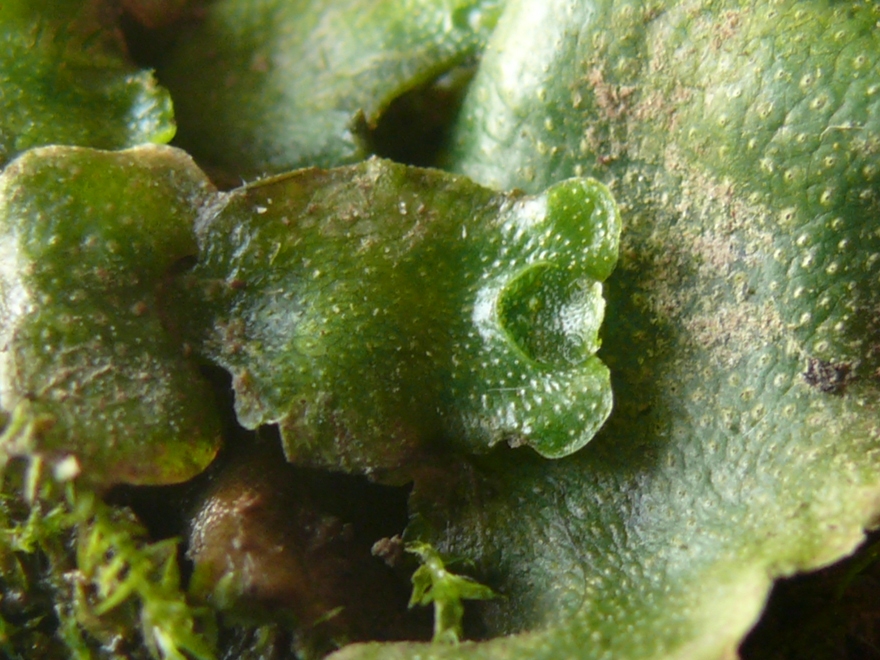
Lunularia is a genus of thalloid liverworts in the family Lunulariaceae, represented in cultivation almost entirely by Lunularia cruciata. The plant body is a flat, ribbon-like green thallus 0.1-0.2 inch (3-5 mm) wide that branches dichotomously and presses close to the soil surface, forming spreading mats. Native to the Mediterranean basin, it has naturalized across temperate and subtropical regions worldwide and ranks among the liverworts most frequently found in greenhouses, nurseries, and container plantings. The genus is named for its crescent-shaped (lunate) gemma cups, which sit on the upper thallus surface and release lens-shaped gemmae that disperse in splashing water to start new plants. Sexual reproduction through stalked receptacles is infrequent outside the native Mediterranean range, so spread is mainly vegetative. It grows on consistently moist, shaded surfaces including potting soil, paving, and the rims of pots, where it can form a dense crust over the soil of cultivated plants. Because it competes with seedlings for surface moisture and nutrients, it is treated as a weed in horticultural settings. It lacks roots, flowers, and vascular tissue, absorbing water directly across the thallus.
Native Range
Native to the Mediterranean region of southern Europe, North Africa, and western Asia. It has naturalized worldwide in temperate and subtropical climates, largely through the horticultural trade, and is now established on every continent except Antarctica.Suggested Uses
Not grown ornamentally; the genus is encountered as a colonizer of moist soil rather than a cultivated plant. It is studied in bryology as a model thalloid liverwort and serves as an indicator of persistently wet, poorly drained growing conditions.How to Identify
Appearance
Colors
Foliage Colors
Bloom Information
This liverwort does not flower. Reproduction is chiefly vegetative through gemmae produced in crescent-shaped cups and dispersed by water year-round in moist conditions. Sexual structures, when present, mature in spring within the native Mediterranean range.
Growing Conditions
Sun Requirements
Tolerates up to 3 hours of direct sunlight daily
• Full Sun: 6+ hours of direct sunlight
• Partial Shade: 3-6 hours of direct sunlight
• Full Shade: Less than 3 hours of direct sunlight
Water & Climate
Water Needs