Lotus, Genus, corniculatus, Species,
- Genus & species
bird's-foot trefoil
Europe, western Asia, northern Africa
Overview
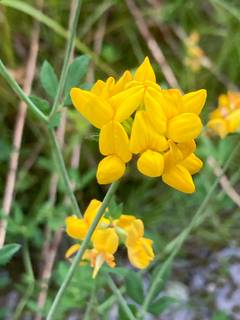
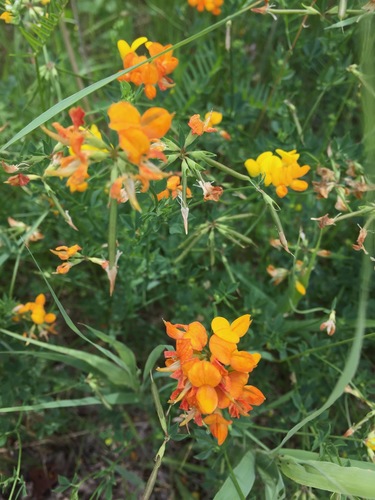
Lotus corniculatus is a prostrate to ascending, taprooted perennial legume in the pea family (Fabaceae) reaching 6–18 inches (15–45 cm) tall with a 12–36 inch (30–90 cm) spread. Stems are solid (not hollow — a key distinction from L. uliginosus), prostrate to ascending, branching from the base, glabrous to sparsely hairy. Leaves appear trifoliate but actually bear 5 leaflets: 3 terminal leaflets in a clover-like arrangement plus 2 stipule-like leaflets at the base of the very short petiole. Leaflets are obovate, 0.2–0.6 inch (5–15 mm) long. Flowers are bright yellow, 0.4–0.6 inch (10–15 mm) long, papilionaceous (pea-shaped), borne in umbel-like clusters of 2–7 on long peduncles. Flowers often develop reddish-orange streaks as they age or under sun exposure. The fruit is a cluster of straight, narrow pods 0.8–1.2 inches (20–30 mm) long, radiating from the peduncle tip like a bird's foot — the source of the common name. A single plant produces 500–5,000 seeds. Seeds have a hard coat and remain viable in soil for 60+ years. Contains cyanogenic glycosides (lotaustralin, linamarin) that release hydrogen cyanide when foliage is damaged; toxic to livestock in quantity, though generally low-risk at normal consumption levels. Nitrogen-fixing via Rhizobium symbiosis. Intentionally planted for erosion control and forage but persists and spreads in roadsides, meadows, and disturbed ground.
Native Range
Native to Europe, western Asia, and northern Africa, occurring in meadows, grasslands, roadsides, and coastal areas from sea level to approximately 8,000 feet (2,400 m). Intentionally introduced to North America for forage and erosion control. Widely naturalized across the Pacific Northwest and all temperate regions of North America.Suggested Uses
Used in Fabaceae identification courses for teaching papilionaceous flower morphology, the 5-leaflet arrangement, and nitrogen fixation. The bird's-foot pod cluster is a diagnostic teaching feature. Studied in forage legume agronomy, seed bank longevity, and cyanogenic glycoside toxicology. Planted for erosion control on road cuts, mine reclamation sites, and degraded slopes due to drought tolerance and nitrogen fixation.How to Identify
Appearance
Size & Dimensions
Height6" - 1'6"
Width/Spread1' - 3'
Bloom Information
Flowers from May through September. Individual flowers last 2–3 days. Clusters of 2–7 flowers on long peduncles bloom sequentially over 10–14 weeks. In the Pacific Northwest, peak bloom occurs in June through August. Pollinated by bees, particularly bumblebees. Flowers redden with age. Pods mature 3–4 weeks after pollination.
Detailed Descriptions
Flower Description
Yellow, often streaked or tinged with redFoliage Description
Medium green, pinnately compound with 5 leaflets (3 terminal + 2 stipule-like at the petiole base), glabrous to sparsely hairyGrowing Conditions
Sun Requirements
Requires 6-10 hours of direct sunlight daily
• Full Sun: 6+ hours of direct sunlight
• Partial Shade: 3-6 hours of direct sunlight
• Full Shade: Less than 3 hours of direct sunlight