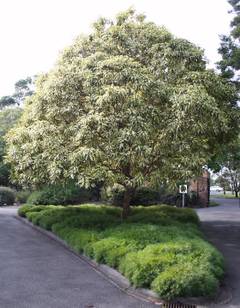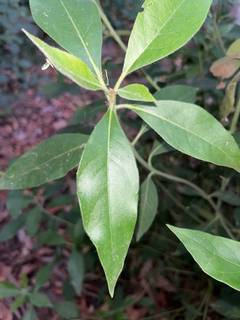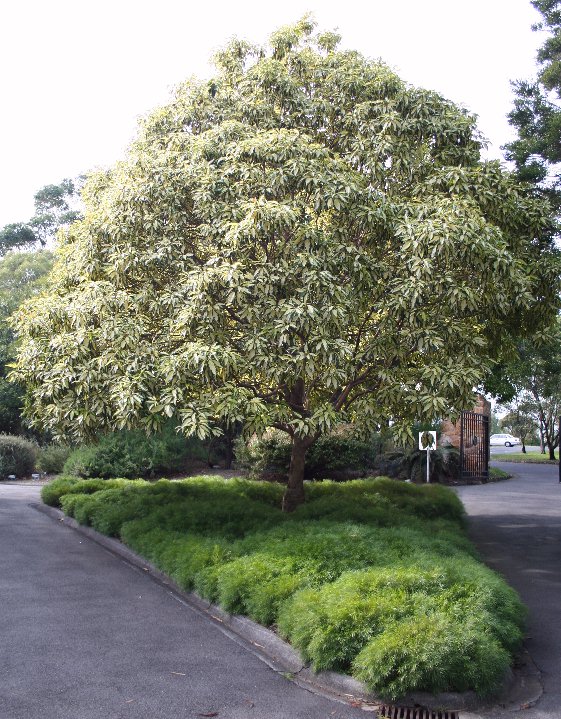
Image 1 of 2
1 / 2
© No machine-readable author provided. Casliber assumed (based on copyright claims)., some rights reserved (CC-BY-SA) · Wikimedia Commons
Lophostemon, Genus, spp., Multiple species,
- Genus
- Multiple species
brush box
Eastern and northern Australia and New Guinea
Overview
Lophostemon is a genus of about four to six species of evergreen trees in the myrtle family, Myrtaceae, native to eastern and northern Australia and New Guinea. A commonly grown species, brush box Lophostemon confertus, grows 30-130 feet (9-40 m) tall, while others are smaller trees of swampy ground. Plants have leathery, glossy leaves often crowded in whorls at the branch tips, and many species shed bark to reveal smooth, pinkish to grey new bark beneath. In late spring and summer, clusters of white flowers open, each with five bundles of feathery stamens that give a fluffy appearance, followed by woody, cup-shaped seed capsules. The genus grows in moist to wet, well-drained soils in warm-temperate to tropical climates, in full sun to part shade, and tolerates a range of soils including heavier and coastal types. Brush box is widely planted as a street and shade tree for its dense canopy and tolerance of pollution and pruning. Frost-tender when young, most species need warm, frost-free or near-frost-free conditions.
Native Range
Lophostemon species are native to eastern and northern Australia, from coastal New South Wales through Queensland to the Northern Territory, and to New Guinea, where they grow in rainforest margins, open forest, and swampy lowlands.Suggested Uses
Brush box and related species are used as street, park, and shade trees and as windbreak and screen trees in warm climates, used for dense evergreen canopy and tolerance of urban conditions. Smaller and swamp species are used in wet sites and revegetation of moist ground.How to Identify
Appearance
Size & Dimensions
Height30' - 130'
Width/Spread20' - 50'
Bloom Information
Flowering occurs in late spring and summer, generally November to February in the native Southern Hemisphere range. Clusters of fluffy white flowers open over several weeks and draw bees and other insects. Woody, cup-shaped capsules follow and persist on the branches.
Detailed Descriptions
Foliage Description
Glossy dark greenGrowing Conditions
Sun Requirements
Requires 6-10 hours of direct sunlight daily
• Full Sun: 6+ hours of direct sunlight
• Partial Shade: 3-6 hours of direct sunlight
• Full Shade: Less than 3 hours of direct sunlight
Care & Maintenance
Care Guide
Lophostemon grows in full sun to part shade in moist to wet, well-drained soils, and tolerates heavier, sandy, and coastal soils. Brush box and its relatives need warmth and steady moisture when young and become moderately drought-tolerant once established. The genus is frost-tender in youth, suiting warm-temperate, subtropical, and tropical climates, with mature brush box taking only light frost. Trees tolerate urban pollution, compacted soil, and pruning, which has made brush box a common street tree. Wet but not waterlogged soil suits the swamp species. Phosphorus-sensitive root problems are uncommon compared with some other Australian families.Pruning
Young trees are pruned to a single leader and clear trunk for street and shade use, and brush box tolerates formative and crown-lifting pruning. Dead, crossing, or damaged branches are removed in the warmer months. Established trees need little routine pruning beyond clearance and deadwood removal.Pruning Schedule
summer