Lomandra, Genus, obliqua, Species,
- Genus & species
fish bones
Overview
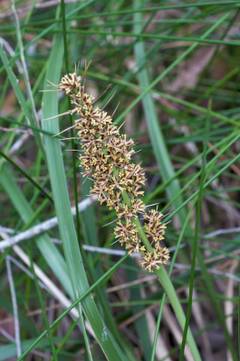
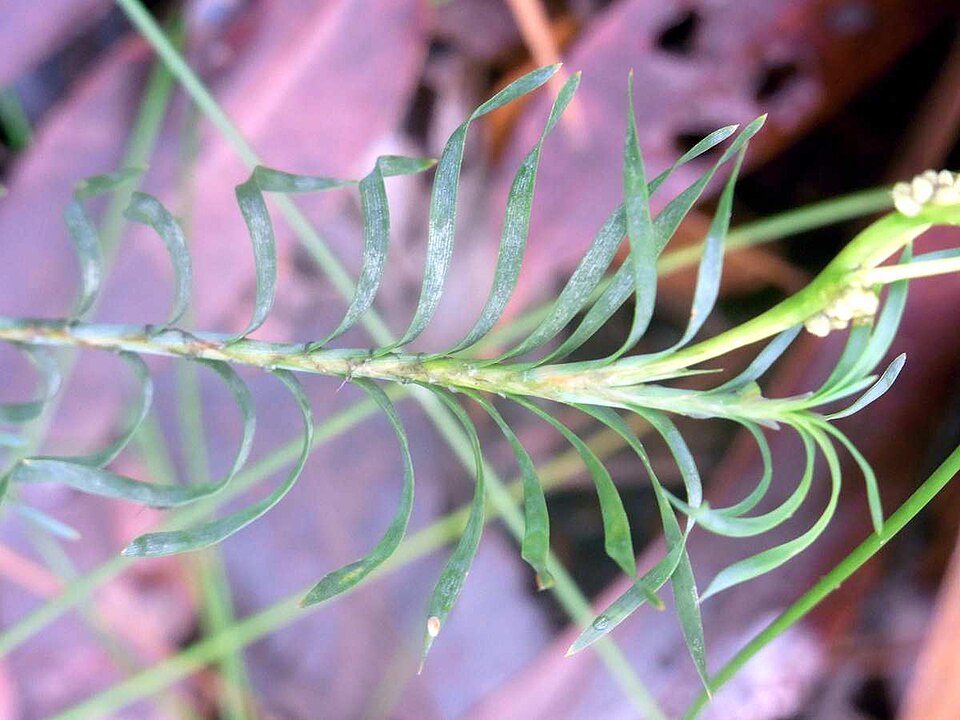
Lomandra obliqua is an evergreen perennial in the family Asparagaceae forming a low, spreading clump 8-20 inches (20-50 cm) tall and 12-24 inches (30-60 cm) wide. Stiff, narrow leaves are arranged in two flattened ranks along arching stems, an angled herringbone pattern that gives the common name fish bones. Each leaf is 0.4-1.2 inches (10-30 mm) long and grey-green to deep green. Small cream to brown flowers are clustered in short spikes among the leaf bases in spring, and male and female flowers occur on separate plants. The flowers carry a light fragrance. Plants spread slowly by rhizomes to form open mats and tolerate dry shade beneath trees. Growth is slow, and clumps take 3-4 years to fill their space. Lower leaves brown and persist on the stems with age.
Native Range
Native to eastern Australia, from Queensland through New South Wales to Victoria, where it grows in dry sclerophyll forest and woodland on sandy and rocky soils. Found mainly on ridges and slopes in dappled shade.Suggested Uses
Planted as a low groundcover and edging in dry shade, native gardens, and under trees, spaced 12-18 inches (30-45 cm) apart. The two-ranked foliage forms a low textured mat on slopes and rockeries. Grows in containers of at least 2 gallons (8 L) with a free-draining mix.How to Identify
Appearance
Size & Dimensions
Height8" - 1'8"
Width/Spread1' - 2'
Colors
Bloom Information
Small cream to brown flowers appear in spring, mainly September to November in its native range. The flower spikes are short-lived, lasting 2-3 weeks, and are partly hidden among the leaves. Male plants carry slightly larger, lightly fragrant flower clusters than female plants.
Detailed Descriptions
Flower Description
cream to brownFoliage Description
grey-green to greenGrowing Conditions
Sun Requirements
Requires 2-6 hours of direct sunlight daily
• Full Sun: 6+ hours of direct sunlight
• Partial Shade: 3-6 hours of direct sunlight
• Full Shade: Less than 3 hours of direct sunlight
Care & Maintenance
Care Guide
Grows in well-drained sandy or rocky soil in part to full shade, matching its woodland-understorey origins. Established plants tolerate extended dry shade and 3-5 weeks without rain. Young plants need occasional water through the first summer until rooted. The species tolerates a wide pH range and low-fertility soil. Few pests or diseases affect it, though root rot can develop in wet, heavy soil. Old clumps can be divided in spring to renew growth.Pruning
Little pruning is needed. Browned older leaves and spent flower spikes can be removed in late winter to tidy the clump. Plants tolerate a hard cut to near ground level in early spring, after which fresh foliage regrows.Pruning Schedule
Prune: August
winter
Container Growing
Suitable for container growing
Minimum container size: 2 gallons