Heliconia, Genus, rostrata, Species,
- Genus & species
hanging lobster claw
Overview
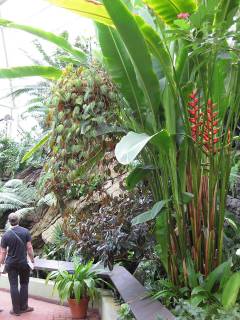
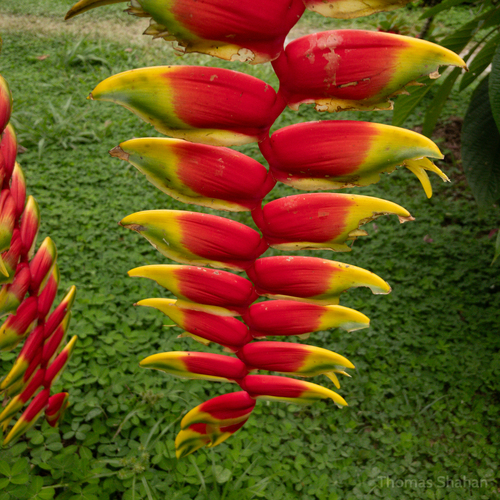
Heliconia rostrata is the hanging lobster claw, growing 48–120 inches (120–300 cm) tall and 36–72 inches (90–180 cm) wide. Pendant (hanging) inflorescences 12–24 inches (30–60 cm) with 4–12 alternating bright red waxy bracts tipped in yellow-green — the pendant orientation distinguishes H. rostrata from upright-inflorescence species like H. caribaea and H. bihai. The bracts are arranged in a zigzag pattern along a hanging rachis, resembling a string of lobster claws. The true flowers are small and hidden inside the bracts — hummingbirds access the nectar by probing into the bract openings. Large dark green banana-like oblong leaves 24–48 inches (60–120 cm) — in the order Zingiberales, closely related to bananas (Musa) and bird of paradise (Strelitzia). Grows from thick rhizomes that spread to form clumps. Each pseudostem (formed by overlapping leaf sheaths) flowers once and then dies, replaced by new shoots from the rhizome base — similar to the banana growth cycle. Native to Peru, Bolivia, Ecuador, and Colombia. Heavy water needs — the natural habitat is along streams and in wet tropical forests. Frost-tender: foliage killed at 32°F (0°C). In zone 9, the rhizome may survive with heavy mulch but will not flower in a single growing season. Full sun to partial shade. Rich moist soil. Non-toxic. Growth rate is fast. Containers of 10+ gallons (40+ liters). Zones 10–11.
Native Range
Native to Peru, Bolivia, Ecuador, and Colombia, growing along streams and in wet tropical forests at low to moderate elevations.Suggested Uses
Grown in the ground in zones 10–11 or in containers of 10+ gallons (40+ liters) with heavy water. Full sun. The pendant red-and-yellow inflorescences are the display feature. Hummingbird-pollinated. Non-toxic. Cut flower (the inflorescences last 2–3 weeks in water).How to Identify
Appearance
Size & Dimensions
Height4' - 10'
Width/Spread3' - 6'
Bloom Information
Detailed Descriptions
Flower Description
Red bracts with yellow-green tips; pendant (hanging) inflorescenceFoliage Description
Dark green, large, banana-like, oblongGrowing Conditions
Sun Requirements
Requires 6-10 hours of direct sunlight daily
• Full Sun: 6+ hours of direct sunlight
• Partial Shade: 3-6 hours of direct sunlight
• Full Shade: Less than 3 hours of direct sunlight
Care & Maintenance
Care Guide
Full sun to partial shade. Heavy water — natural habitat is along streams. Rich moist soil. Each pseudostem flowers once and dies (replaced by new rhizome shoots). Frost-tender at 32°F (0°C). Non-toxic. Hummingbird-pollinated. Zones 10–11.Pruning
Cut spent pseudostems to ground level after flowering. Remove dead or damaged leaves. Thin the clump if it becomes congested. New shoots emerge continuously from the rhizome base.Container Growing
Suitable for container growing
Minimum container size: 10 gallons