Heliconia, Genus, spp., Multiple species,
- Genus
- Multiple species
heliconias
Tropical Americas and western Pacific
Overview
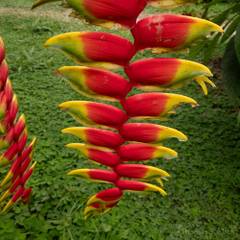
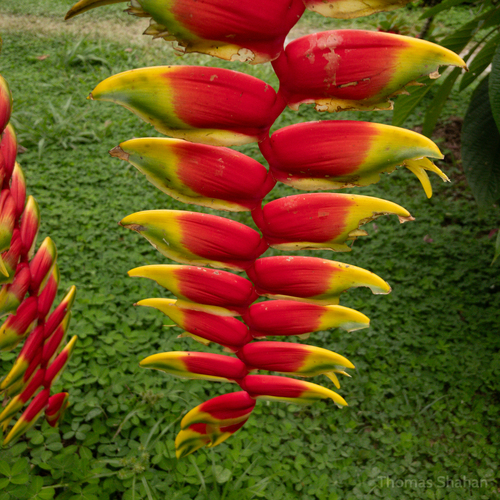
Heliconia is a genus of about 190 species of large tropical herbaceous perennials in the family Heliconiaceae, related to bananas and gingers and called lobster claws, false bird-of-paradise, or wild plantains. Plants grow from spreading rhizomes into clumps 1.5 to 20 ft (0.5 to 6 m) tall, with long-stalked paddle-shaped leaves 1 to 10 ft (0.3 to 3 m) long arranged like those of a banana. The visible color comes from waxy boat-shaped bracts, in red, orange, yellow, pink, and green, held in a zig-zag rank along an erect or hanging stem; the true flowers are small and tucked inside these bracts. Inflorescences range from a few inches to several feet long depending on species. In their native range the flowers are pollinated mainly by hummingbirds, and the bracts hold rainwater that shelters tiny aquatic insect larvae. The genus is native to the tropical Americas, with a few species in the western Pacific, growing in rainforest clearings, stream banks, and forest edges. Heliconia is frost-tender and grows outdoors only in frost-free climates, where established clumps spread widely by rhizome; cold below freezing kills the foliage and rhizomes.
Native Range
Heliconia is native to the tropical Americas, from Mexico and the Caribbean through Central America to Brazil and Bolivia, with a smaller group of species in the islands of the western Pacific. It grows in rainforest clearings, along streams, and at forest margins in warm, humid lowlands and foothills.Suggested Uses
Heliconia is grown as a tropical landscape plant for borders and screening in frost-free gardens, in large containers and conservatories elsewhere, and as a long-lasting cut flower. The bract stems are widely used in tropical floristry.How to Identify
Appearance
Size & Dimensions
Height1'6" - 20'
Width/Spread2' - 10'
Bloom Information
In frost-free climates many Heliconia flower for much of the warm season, and some bloom nearly year-round where conditions stay warm and moist. Each colorful bract stem lasts several weeks to a few months. Flowering slows in cooler, drier, or shaded conditions.
Detailed Descriptions
Flower Description
red, orange, yellow, pink, and green bractsFoliage Description
green, sometimes red-backedGrowing Conditions
Sun Requirements
Requires 4-10 hours of direct sunlight daily
• Full Sun: 6+ hours of direct sunlight
• Partial Shade: 3-6 hours of direct sunlight
• Full Shade: Less than 3 hours of direct sunlight
Care & Maintenance
Care Guide
Heliconia grows in full sun to part shade in rich, moist, well-drained soil at pH 5.5 to 7.0, with steady warmth and high humidity. It is frost-tender, hardy only in USDA zones 10 to 12, and is grown in containers or under glass where winters are cold, kept above 50 F (10 C). Plants use ample water and nutrients during active growth to support the large leaves and bracts. In suitable climates the rhizomes spread steadily, and clumps are lifted and divided to control their size. Wind shreds the foliage, so sheltered sites keep the leaves intact.Pruning
Spent flower stems are cut to the ground after the bracts fade, since each stem flowers only once and then dies back. Old and damaged leaves are removed to tidy the clump. Crowded clumps are lifted and divided in spring to renew them and limit spread.Pruning Schedule
spring
Container Growing
Suitable for container growing
Minimum container size: 7 gallons