Image 1 of 10
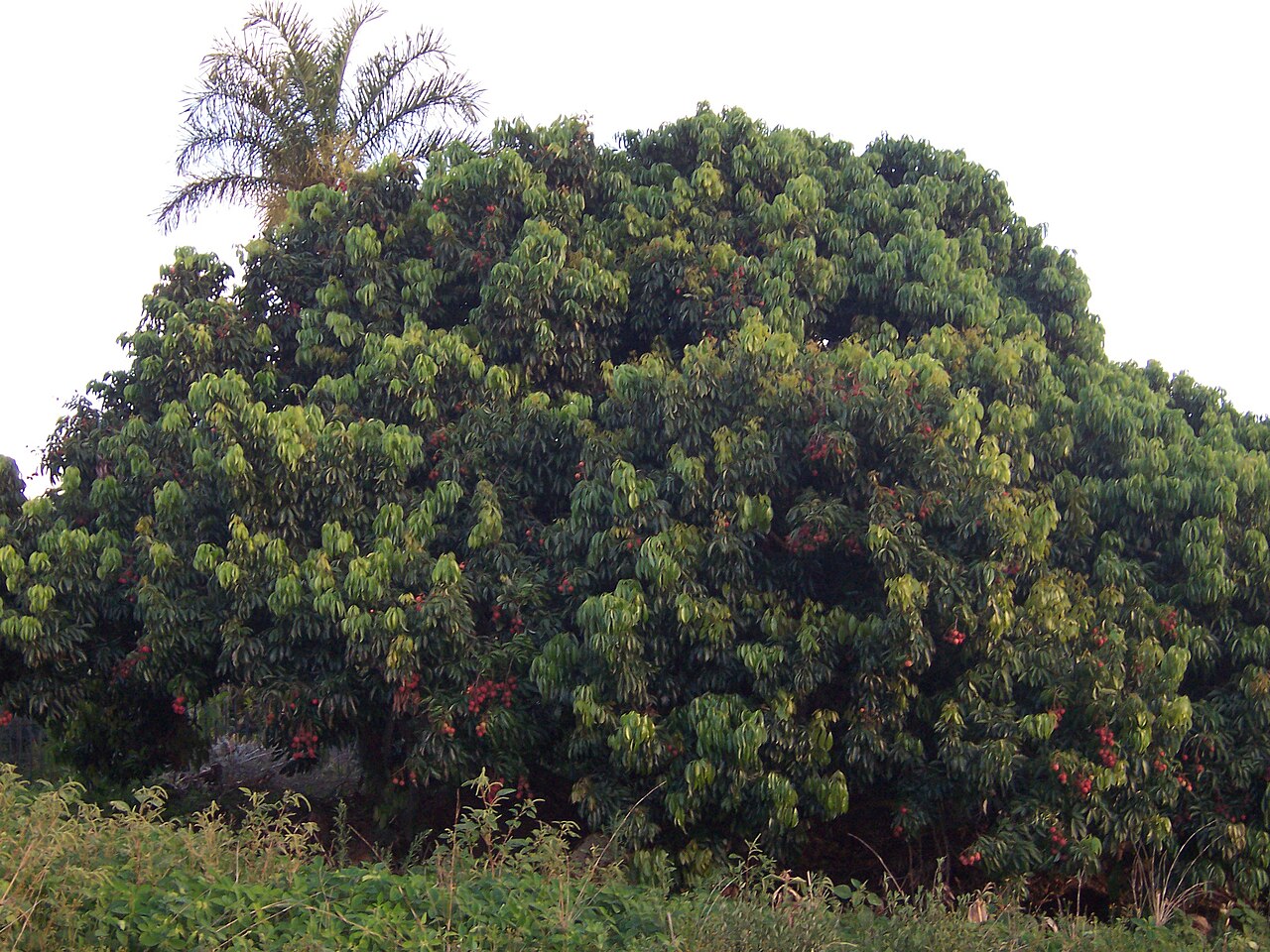
© No machine-readable author provided. B.navez assumed (based on copyright claims)., some rights reserved (CC-BY-SA) · Wikimedia Commons
1 / 10
Litchi, Genus, chinensis, Species,
- Genus & species
Lychee
Overview
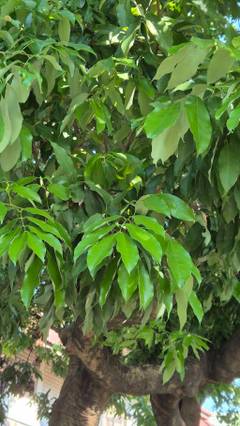
Litchi chinensis is an evergreen tree reaching 30-40 feet (9-12 m) tall with a crown of similar width in orchards, and 60-100 feet (18-30 m) on old sites in southern China. The canopy is dense and rounded, on brittle branches that split under fruit load or in wind above 40 mph (65 km/h). Leaves are alternate and pinnate with 2-4 pairs of lance-shaped leaflets, each 2-6 inches (5-15 cm) long, glossy dark green above and grey-green beneath; new flushes emerge bronze-red and harden over 3-4 weeks. Flowers are small and without petals, greenish-yellow to cream, carried in terminal panicles 12-30 inches (30-75 cm) long from January to March. Fruit ripens 80-112 days after flowering, each 1-1.5 inches (2.5-4 cm) across with a rough red pericarp, a translucent white aril, and a single brown seed; harvest falls May to July in the Northern Hemisphere and November to January in Australia and South Africa. Fruit does not sweeten after picking. Flower initiation calls for 100-200 hours between 50 and 68F (10-20C) in winter, so trees in tropical lowlands make vegetative flushes and set little or no crop, and yields swing widely from year to year even in suitable climates.
Native Range
Litchi chinensis is native to southern China and northern Vietnam, with wild and semi-wild stands in Guangdong, Guangxi, Hainan, Fujian, and Yunnan on lowland and foothill slopes below 3,000 feet (900 m). Cultivation in Guangdong dates to about 1000 BC, and named cultivars appear in Chinese horticultural texts by the 11th century. The species is now grown commercially in India, Vietnam, Thailand, Madagascar, South Africa, Australia, Israel, Mexico, and Florida.Suggested Uses
Grown as an orchard tree at 20-30 foot (6-9 m) spacing in subtropical regions and as a single shade and fruit tree in home gardens in USDA zones 10-11. Container culture in pots of 25 gallons (95 L) or larger holds trees at 6-8 feet (1.8-2.4 m) and allows them to be moved under cover when temperatures fall below 32F (0C). The ripe aril is the edible portion; seeds and unripe fruit contain hypoglycin A and methylenecyclopropylglycine, compounds linked to acute hypoglycaemia in undernourished children who eat unripe fruit in quantity.How to Identify
Appearance
Size & Dimensions
Height30' - 40'
Width/Spread30' - 40'
Bloom Information
Panicles open between January and March in the Northern Hemisphere and July to September in the Southern Hemisphere, over a period of 3-5 weeks. Each panicle carries male, female, and hermaphrodite flowers that open in overlapping waves, so pollination runs across the whole flowering window. Honeybees work the flowers heavily, and fruit set rises several-fold where hives are placed at 1-2 per acre (2.5-5 per hectare). Rain during flowering washes pollen from the stigmas and cuts set, and temperatures above 95F (35C) at bloom do the same.
Detailed Descriptions
Flower Description
Greenish-yellow to creamFoliage Description
Glossy dark green, bronze-red on new growthGrowing Conditions
Sun Requirements
Requires 6-12 hours of direct sunlight daily
• Full Sun: 6+ hours of direct sunlight
• Partial Shade: 3-6 hours of direct sunlight
• Full Shade: Less than 3 hours of direct sunlight
Care & Maintenance
Care Guide
Trees crop in full sun on deep, free-draining acid soils at pH 5.0-6.5, and show interveinal yellowing above pH 7.0 that is corrected with chelated iron. Water demand is high: 10-15 gallons (38-57 L) per week for a young tree and 40-60 gallons (150-230 L) per week for a mature tree during fruit development, with a drier spell of 6-8 weeks before flowering. That dry period, together with 100-200 hours below 68F (20C), drives flower initiation. Nitrogen runs at 0.5-1 pound (225-450 g) per bearing tree per year, split into 3-4 applications, since heavy single doses burn the shallow root system. Lychee erinose mite raises felted galls on the leaves and is the main pest in Florida and Australia, while anthracnose spots the fruit in wet seasons. Young trees are damaged at 32F (0C) and mature trees at 25-28F (-4 to -2C), which holds field planting to USDA zones 10-11.Pruning
Pruning follows immediately after harvest, cutting fruited shoot tips back by 12-18 inches (30-45 cm) so the resulting flush hardens before the winter cool period. Cuts made after September in the Northern Hemisphere remove the wood that would carry the next panicle. Mature trees are held at 12-15 feet (3.7-4.5 m) by shortening leaders every second year, which keeps fruit within reach and limits wind damage to the brittle branches. Taking out crossing interior limbs opens the dense canopy and lowers anthracnose pressure.Pruning Schedule
Prune: June–August
summer
Container Growing
Suitable for container growing
Minimum container size: 25 gallons