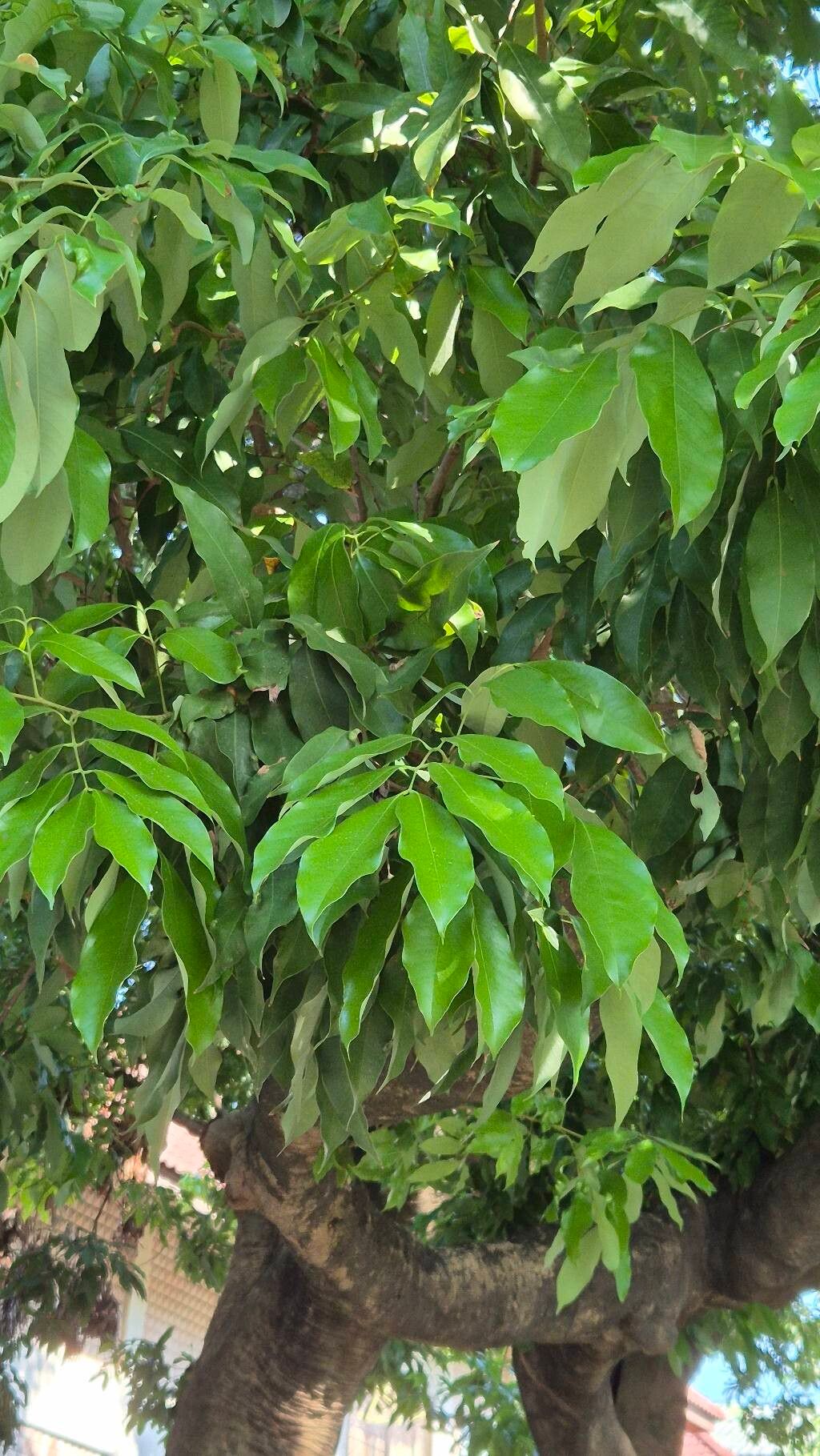
Litchi, Genus, spp., Multiple species,
- Genus
- Multiple species
Lychee
Overview
Litchi is a monotypic genus in the soapberry family (Sapindaceae), represented by Litchi chinensis, an evergreen subtropical fruit tree native to southern China and Southeast Asia. Trees reach 30-40 ft (9-12 m) tall with a broad, dense, rounded crown of similar spread, though grafted orchard trees are usually held to 15-25 ft (4.5-7.5 m). The compound leaves carry 4-8 leathery leaflets, each 2-6 in (5-15 cm) long, glossy dark green above and pale beneath, with new growth flushing coppery red or bronze. Small greenish-white to yellowish flowers open in branched terminal panicles 6-12 in (15-30 cm) long in late winter to spring. Fruit ripens in early summer as a rough-skinned, strawberry-red drupe 1-1.5 in (2.5-4 cm) across, enclosing a single seed wrapped in translucent, juicy white aril. Trees are sensitive to frost, with young plants damaged below 32 F (0 C) and mature trees below about 25 F (-4 C). Flowering and fruit set are erratic in climates without a cool, dry winter rest.
Native Range
Litchi chinensis is native to the subtropical lowlands and foothills of southern China, particularly Guangdong, Guangxi, and Fujian, and adjacent northern Vietnam. It has been cultivated for well over a thousand years and is now grown in subtropical regions worldwide, including India, Southeast Asia, Australia, South Africa, and the southern United States.Suggested Uses
Litchi is grown as an orchard fruit tree and as a shade or specimen tree in frost-free subtropical gardens. Single trees are spaced 25-30 ft (7.5-9 m) apart in orchards, closer where size is held by pruning. Compact cultivars are container-grown and overwintered under cover in cooler climates.How to Identify
Appearance
Size & Dimensions
Height30' - 40'
Width/Spread25' - 40'
Bloom Information
Flowering occurs in late winter to spring, generally February to April in subtropical climates, on panicles at the branch tips. The small greenish-white flowers are wind- and insect-pollinated, and a cool, dry winter promotes heavier flowering. Fruit follows in early summer, ripening May to July depending on region and cultivar.
Detailed Descriptions
Flower Description
Greenish-white to yellowishFoliage Description
Glossy dark green, new growth coppery redGrowing Conditions
Sun Requirements
Requires 6-10 hours of direct sunlight daily
• Full Sun: 6+ hours of direct sunlight
• Partial Shade: 3-6 hours of direct sunlight
• Full Shade: Less than 3 hours of direct sunlight
Care & Maintenance
Care Guide
Litchi grows in full sun in deep, acidic, well-drained soil with a pH of 5.0-6.5 and steady moisture during fruit development. Trees need a frost-free or nearly frost-free site, as temperatures below 25 F (-4 C) damage mature wood and any frost can kill young plants. A cool, dry winter spell of several weeks triggers flowering, so fruiting is unreliable in fully tropical or frost-prone zones. Hardiness is limited to USDA zones 10-11, with marginal culture in warm pockets of zone 9b. Plants are wind-sensitive and shallow-rooted, so they are sited with shelter and mulched to conserve surface moisture. Salt-laden or alkaline soils cause leaf scorch and decline.Pruning
Litchi is pruned lightly after harvest to maintain a rounded, open canopy and accessible height. Crossing or inward branches are removed to improve light and air movement. Hard structural cuts are kept to a minimum on bearing trees because flowers form on recent terminal growth.Container Growing
Suitable for container growing
Minimum container size: 15 gallons
