Linnaea, Genus, spp., Multiple species,
- Genus
- Multiple species
twinflower
Overview
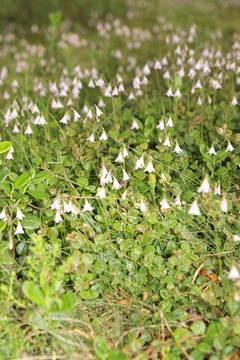
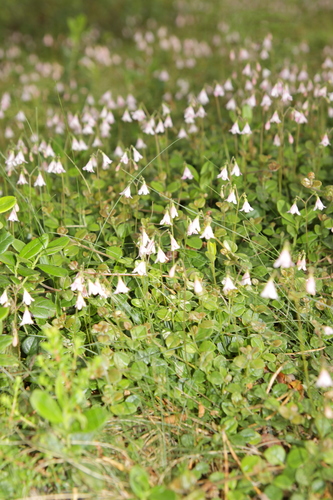
Linnaea is a genus in the family Linnaeaceae, classically containing the twinflower, Linnaea borealis, a slender evergreen creeping subshrub of cool northern forests; some modern treatments broaden the genus to include several shrubs formerly placed in Abelia and related genera. The twinflower forms low, trailing mats only 1-4 inches (2.5-10 cm) high, spreading by thread-like stems that root as they run, with small, rounded, paired evergreen leaves. In early to midsummer, slender upright stalks 2-4 inches (5-10 cm) tall each carry two nodding, bell-shaped pink to white flowers that are fragrant, especially in the evening. The genus grows in cool, moist, acidic soils rich in organic matter, in the partial shade of coniferous and mixed woodland across the cold-temperate and boreal Northern Hemisphere. It depends on cool roots, steady moisture, and low competition, and declines in heat, drought, or disturbed ground. The shrubby species included in broadened treatments are larger, with arching stems and clustered tubular flowers.
Native Range
The twinflower, Linnaea borealis, is circumboreal, native across the cool and boreal regions of North America, Europe, and Asia, growing in coniferous and mixed forests, on mossy banks, and in cool, shaded ground; broadened treatments add shrubby species from eastern Asia and the Himalayas.Suggested Uses
The twinflower is grown as a groundcover in cool woodland and shade gardens, on mossy banks, and in alpine and trough plantings where summers stay cool. It is used in native-plant and conservation plantings in northern regions, while the shrubby species are used as flowering shrubs in mixed borders.How to Identify
Appearance
Size & Dimensions
Height1" - 4"
Width/Spread1' - 3'
Bloom Information
The twinflower flowers in early to midsummer, generally June to July, with paired bell-shaped flowers nodding on forked stalks. Flowers are fragrant, particularly in the evening, and last several weeks. Small dry fruits follow, dispersed by clinging to fur and feathers.
Detailed Descriptions
Flower Description
Pink to whiteFoliage Description
Dark greenGrowing Conditions
Sun Requirements
Requires 2-6 hours of direct sunlight daily
• Full Sun: 6+ hours of direct sunlight
• Partial Shade: 3-6 hours of direct sunlight
• Full Shade: Less than 3 hours of direct sunlight
Care & Maintenance
Care Guide
Linnaea grows in cool, moist, acidic, humus-rich soil in partial shade, mirroring the floor of a coniferous forest. The twinflower needs cool roots, steady moisture, and shelter from hot sun, and spreads slowly by creeping rooted stems. It does poorly in heat, drought, alkaline soil, and competition from vigorous plants. A mulch of leaf litter or conifer needles keeps roots cool and moist. The species is hardy well into the cold zones, roughly USDA zones 2 to 6, but is intolerant of warm-summer climates.Pruning
No formal pruning is needed for the creeping twinflower; stray runners can be trimmed or lifted to keep mats in bounds. Shrubby species in broadened treatments are trimmed after flowering to shape the arching stems. Dead growth is cleared in spring.Pruning Schedule
summer
Container Growing
Suitable for container growing
Minimum container size: 1 gallons