Limbarda, Genus, crithmoides, Species,
- Genus & species
golden samphire
Coasts of western and southern Europe, the Mediterranean, and North Africa
Overview
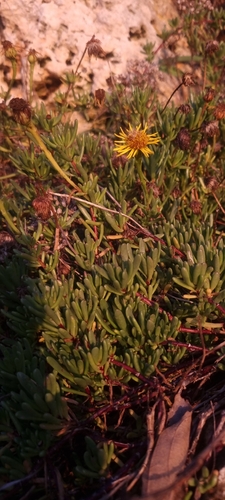
Limbarda crithmoides is a fleshy-leaved perennial of coasts and salt marshes, forming a bushy clump 12-36 inches (30-90 cm) tall on woody-based stems. The narrow, succulent linear leaves are 1-2 inches (2.5-6 cm) long, bright green, and three-toothed at the tip, storing water against salt and drought. From mid to late summer into autumn it bears yellow daisy-like flower heads about 1 inch (2.5 cm) across, each with slender ray florets surrounding a yellow disc. It grows on sea cliffs, shingle, rocky shores, and the upper edges of salt marshes around temperate and Mediterranean coasts. The plant tolerates salt spray, saline soil, and periodic drought, but it needs sun and open conditions and performs poorly in shade or rich, wet inland soil. The young succulent shoots are edible and are gathered like marsh samphire. In a garden it suits coastal and gravel plantings rather than conventional borders. Top growth may be cut back by hard frost in colder areas, though established plants usually resprout from the woody base in spring.
Native Range
Limbarda crithmoides is native to the coasts of western and southern Europe, the Mediterranean basin, and North Africa. It grows on sea cliffs, rocky and shingle shores, and the drier margins of salt marshes. Its range is confined to maritime habitats.Suggested Uses
Grown in coastal, gravel, and seaside gardens and in containers where saline, free-draining conditions prevail. The succulent shoots are also harvested as an edible coastal vegetable. Its salt and drought tolerance suit exposed sites that challenge many border plants.How to Identify
Appearance
Size & Dimensions
Height1' - 3'
Width/Spread1' - 2'
Bloom Information
Yellow daisy-like flower heads open from July to September, sometimes into October on mild coasts. Each head is about 1 inch (2.5 cm) across with narrow ray florets and is visited by bees, hoverflies, and butterflies. Fluffy wind-dispersed seed heads follow in autumn.
Detailed Descriptions
Foliage Description
Fleshy bright greenGrowing Conditions
Sun Requirements
Requires 6-12 hours of direct sunlight daily
• Full Sun: 6+ hours of direct sunlight
• Partial Shade: 3-6 hours of direct sunlight
• Full Shade: Less than 3 hours of direct sunlight
Care & Maintenance
Care Guide
Limbarda crithmoides grows in full sun on free-draining sandy, rocky, or gravelly soil and tolerates saline and alkaline ground. Once established it withstands salt spray, wind, and drought, making it well suited to exposed coastal sites. It performs poorly in shade or on heavy, fertile, waterlogged soil. It is hardy in roughly USDA zones 8 to 10, with top growth sometimes cut back by hard frost before regrowing from the base. Little or no feeding is needed on lean coastal soils. Container plants need free-draining compost and a pot of at least 3 gallons.Pruning
Cut back old, frost-damaged, or untidy stems in spring as new growth begins. Removing spent flower heads tidies the plant and reduces self-sowing. No routine pruning is otherwise needed.Container Growing
Suitable for container growing
Minimum container size: 3 gallons