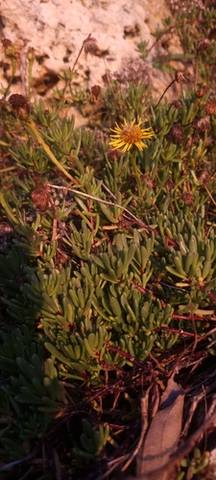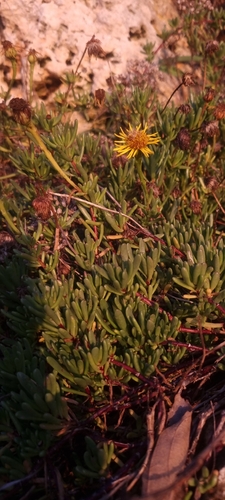
Limbarda, Genus, spp., Multiple species,
- Genus
- Multiple species
golden samphire
Coasts of Europe, North Africa, and the Mediterranean
Overview
Limbarda is a small genus in the daisy family, Asteraceae, separated from Inula, and is represented chiefly by golden samphire, Limbarda crithmoides, of European and Mediterranean coasts. Plants are bushy, somewhat woody-based perennials and subshrubs 8-36 inches (20-90 cm) tall, with many erect stems clothed in fleshy, narrow, almost cylindrical leaves 1-2 inches (2.5-5 cm) long. From late summer into autumn, stems carry yellow daisy flowers about 1 inch (2.5 cm) across, with narrow ray florets surrounding a yellow center. The genus is a salt-tolerant coastal plant, growing on saltmarshes, sea cliffs, shingle, and rocky shores around the Mediterranean and along Atlantic coasts north to Britain. Fleshy leaves store water and resist salt spray, allowing plants to occupy exposed maritime ground where few others persist. In gardens it grows in full sun and sharp drainage and is intolerant of heavy, wet, or shaded sites. The young shoots are edible and have been gathered as a coastal vegetable.
Native Range
Limbarda is native to the coasts of southern and western Europe, North Africa, and the Mediterranean basin, where it grows on saltmarshes, sea cliffs, shingle beaches, and rocky shores, reaching its northern limit on the Atlantic coasts of Britain and Ireland.Suggested Uses
Grown in coastal and seaside gardens, gravel gardens, dry sunny banks, and saline or reclaimed ground where salt tolerance is needed. It is also grown as an edible coastal herb for its succulent young shoots.How to Identify
Appearance
Size & Dimensions
Height8" - 3'
Width/Spread1' - 3'
Bloom Information
Detailed Descriptions
Foliage Description
Fleshy green to grey-greenGrowing Conditions
Sun Requirements
Requires 6-12 hours of direct sunlight daily
• Full Sun: 6+ hours of direct sunlight
• Partial Shade: 3-6 hours of direct sunlight
• Full Shade: Less than 3 hours of direct sunlight
Care & Maintenance
Care Guide
Limbarda grows in full sun in light, sharply drained soil, including sandy, gravelly, and saline ground. It withstands salt spray, coastal wind, and periodic drought once established, drawing on moisture stored in its fleshy leaves. Heavy, wet, or shaded conditions cause weak growth and rot. A free-draining, low-fertility soil keeps plants compact, while rich soil produces lax stems. The plant is hardy in mild and coastal districts, roughly to USDA zone 8, and tolerates poor soils that limit many garden plants.Pruning
Old stems are cut back in early spring to encourage fresh, compact growth from the woody base. Spent flowerheads can be removed after flowering, or left to set seed. Light trimming after bloom keeps the habit dense.Pruning Schedule
early spring
Container Growing
Suitable for container growing
Minimum container size: 3 gallons