Leptorhynchos, Genus, squamatus, Species,
- Genus & species
Scaly buttons
Overview
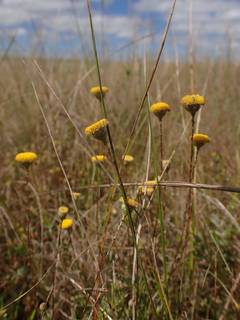
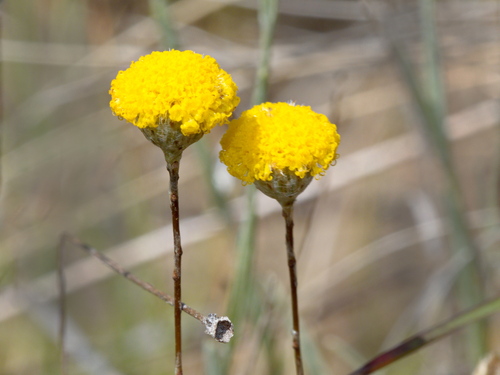
Leptorhynchos squamatus is a tufted perennial herb growing 4-16 inches (10-40 cm) tall, with slender wiry stems rising from a woody base. The leaves are narrow and linear, 0.4-1.2 inches (1-3 cm) long, grey-green, and often curled at the margins, crowded near the base and scattered up the stems. Each stem ends in a single golden-yellow button-shaped flower head 0.4-0.6 inch (1-1.5 cm) across, made up of many small disc florets surrounded by overlapping papery scale-like bracts. Flowering occurs mainly in spring and early summer. The heads dry to a papery seed cluster that releases seeds on a tuft of bristles. Growth is slow, and plants form low open tufts rather than dense mats. Foliage can die back in summer drought and reshoot after rain. The small stature means plants are readily crowded out by taller grasses.
Native Range
Native to south-eastern Australia, including New South Wales, the Australian Capital Territory, Victoria, Tasmania, and South Australia. Grows in native grassland, grassy woodland, and open herbfields on well-drained soils, from the lowlands to subalpine elevations.Suggested Uses
Grown in native grassland restoration, rock gardens, and container plantings, spaced 6-12 inches (15-30 cm) apart. Combined with low native grasses and forbs in dry, sunny plantings. The low size suits the front of beds and gravel gardens but is lost among tall plants.How to Identify
Appearance
Size & Dimensions
Height4" - 1'4"
Width/Spread4" - 10"
Bloom Information
Detailed Descriptions
Foliage Description
grey-greenGrowing Conditions
Sun Requirements
Requires 6-8 hours of direct sunlight daily
• Full Sun: 6+ hours of direct sunlight
• Partial Shade: 3-6 hours of direct sunlight
• Full Shade: Less than 3 hours of direct sunlight
Care & Maintenance
Care Guide
Grows in full sun on well-drained sandy or loamy soils of low fertility; it does not persist in rich or wet soils. Water lightly through the first season to establish, after which plants tolerate seasonal drought and die back during long dry spells. Plants are frost hardy and reshoot from the woody base in spring. Crown and root rot develop in soils that stay wet through winter. The small tufts are slow to spread and are readily overgrown by vigorous neighbours.Pruning
Trim spent flower stems back to the basal tuft after seeding to keep plants compact. Plants reshoot from the base and need no other pruning. Clearing competing grasses around the tufts maintains their vigour.Pruning Schedule
Prune: July
summer
Container Growing
Suitable for container growing
Minimum container size: 1 gallons