Leonotis, Genus, leonurus, Species,
- Genus & species
lion's tail
Native to South Africa, Lesotho, and widely distributed through sub-Saharan Africa; grows in dry fynbos, grassland, scrub, and rocky slopes in well-drained often poor soils in full sun; naturalized in parts of Australia, California, and the Mediterranean; the vivid saturated orange flower color is uncommon in the {Lamiaceae} family where pink, blue, and purple are the dominant color range
Overview
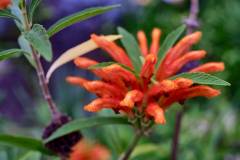
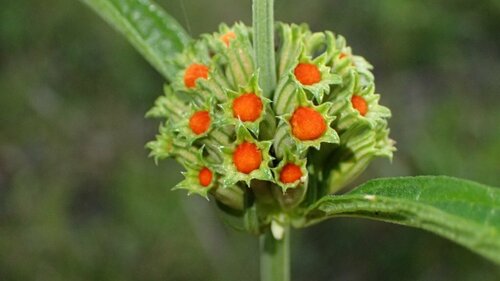
Leonotis leonurus is a tall upright woody-based perennial in the mint family (Lamiaceae) native to the dry scrub, grasslands, and rocky slopes of South Africa and sub-Saharan Africa. Plants produce square branching stems 4-6 feet (120-180 cm) tall clothed in pairs of lance-shaped coarsely toothed aromatic leaves 2-4 inches (5-10 cm) long. From late summer through fall, the upper third of each stem carries evenly spaced whorls of densely packed tubular flowers 1.5-2 inches (4-5 cm) long in vivid burnt-orange to orange-red, covered in dense soft hairs that give a felted velvety appearance. Typically 6-10 whorls appear per stem, each 3-4 inches (8-10 cm) across, creating a stacked candelabra-like effect. The saturated vivid orange color is uncommon in the Lamiaceae family where pink, blue, and purple dominate the flower-color range, and the contrast attracts hummingbirds, sunbirds, and long-tongued bees strongly through the fall migration period. Perennial and woody-based in zones 9-11; treated as a root-hardy perennial in zone 8 and grown as a large annual or overwintered container plant in zones 7 and colder. White-flowered forms also exist. All parts contain leonurine and are mildly toxic if ingested in quantity.
Native Range
Leonotis leonurus is native to South Africa, Lesotho, and widely distributed through sub-Saharan Africa, growing in dry fynbos, grassland, scrub, and rocky slopes in well-drained often poor soils in full sun. Naturalized in parts of Australia, California, and the Mediterranean.Suggested Uses
Used as a focal specimen or back-of-border accent in hot sunny drought-tolerant gardens in zones 8-11 at 36-48 inch (90-120 cm) spacing. The late-season vivid orange color carries value when the border palette is otherwise dominated by yellow, bronze, and purple fall tones. Suits large containers on patios and terraces in colder zones where it can be overwintered frost-free. A reliable hummingbird plant through fall migration — the flowers' vivid orange color and tubular form fit the hummingbird pollination syndrome more closely than most temperate-garden perennials. Wet soils and heavy clay fall outside the tolerance range; crown rot in poorly drained positions is the typical failure mode.How to Identify
Appearance
Size & Dimensions
Height4' - 6'
Width/Spread2' - 4'
Bloom Information
Blooms August through November in zones 8-11, with peak display September-October across a 10-14 week bloom window. In zones 9-11 grown as a perennial, established plants bloom through the full 14-week window. In zone 8, plants often reach blooming size in the first year from overwintered crowns. In zones 6-7, plants grown as large annuals or overwintered container specimens bloom July-November if started indoors 10-12 weeks before last frost.
Detailed Descriptions
Flower Description
Vivid burnt-orange to orange-red densely tubular flowers 1.5-2 inches (4-5 cm) long covered in dense soft hairs giving a felted velvety appearance; arranged in evenly spaced whorls along the upper third of each stem — typically 6-10 whorls per stem each 3-4 inches (8-10 cm) across; white-flowered forms also existFoliage Description
Medium green lance-shaped coarsely toothed leaves 2-4 inches (5-10 cm) long carried in opposite pairs on square stems; aromatic when crushedGrowing Conditions
Sun Requirements
Requires 6-12 hours of direct sunlight daily
• Full Sun: 6+ hours of direct sunlight
• Partial Shade: 3-6 hours of direct sunlight
• Full Shade: Less than 3 hours of direct sunlight
Care & Maintenance
Care Guide
Grows in full sun in poor to moderately fertile sharply drained soil at pH 6.0-8.0. Tolerates sandy, rocky, and alkaline soils. Established plants are highly drought tolerant — irrigation can be reduced substantially once the plant is established. Waterlogged or heavy clay soils cause crown rot, which is the primary cause of failure in wet conditions. In zones 8-9, cut stems back to 12-18 inches (30-45 cm) in early spring; new growth emerges vigorously from the woody base. In zones 6-7, grow in large containers (15+ gallon / 57 L minimum) and overwinter frost-free, or treat as an annual from seeds or cuttings started 10-12 weeks before last frost.Pruning
In frost-free climates, cut all stems back by half to two-thirds in late winter or early spring before new growth emerges — this step maintains a compact habit and maximum flower production. In zone 8, cut to 12-18 inches (30-45 cm) after the risk of hard frost has passed. Remove spent flower whorls by cutting the stem tip just above the topmost whorl to encourage secondary branching and additional bloom. Dried seed heads can be left standing through winter for structural interest.Pruning Schedule
Prune: February–March
early spring
Container Growing
Suitable for container growing
Minimum container size: 15 gallons