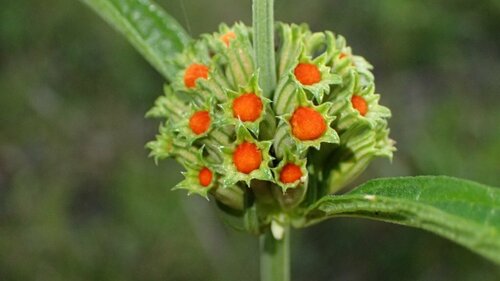
Leonotis, Genus, spp., Multiple species,
- Genus
- Multiple species
lion's ears
Africa (mainly southern and tropical)
Overview
Leonotis is a genus of about nine species of erect perennials and soft-wooded shrubs in the mint family, Lamiaceae, native mainly to Africa, with one widespread weedy species, L. nepetifolia, now found across the tropics. Plants have square stems and paired, toothed, aromatic leaves, and reach 3 to 10 feet (0.9 to 3 m) tall depending on species. The flowers are tubular and densely furry, carried in tight, ball-like whorls spaced up the upper stems, usually bright orange and occasionally white or cream. L. leonurus, lion's tail or wild dagga, is a South African shrub grown widely as a garden plant, blooming from late summer into autumn. The whorled orange flowers are rich in nectar and draw sunbirds, hummingbirds, and butterflies. Plants grow quickly in warm conditions and tolerate heat, wind, and drought once established, but are frost tender and are cut back or killed by hard freezes. In cool regions they are grown as warm-season shrubs, container plants, or annuals. The genus is grown for its bold orange flower whorls and long late-season display, though plants can grow tall and lax and may need staking or cutting back.
Native Range
Leonotis is native mainly to southern and tropical Africa, where most species grow in grassland and scrub. L. leonurus comes from South Africa. L. nepetifolia has spread as a weed of waste ground and roadsides across the tropics, including the Americas, and the genus is not native to North America.Suggested Uses
Lion's tail is grown as a late-season flowering shrub in borders, gravel and dry gardens, and large containers, and as a nectar plant for birds and butterflies. The tall orange flower spikes give height and warm colour from late summer into autumn. In frost-prone areas it is grown as a tender perennial or annual.How to Identify
Appearance
Size & Dimensions
Height3' - 10'
Width/Spread2' - 5'
Bloom Information
Most species flower from late summer into autumn, roughly August to November, with L. leonurus blooming over many weeks until frost. In frost-free climates flowering can continue into winter. The dried calyces remain in their whorls on the stems after the flowers drop.
Detailed Descriptions
Flower Description
Bright orange, sometimes whiteFoliage Description
GreenGrowing Conditions
Sun Requirements
Requires 6-10 hours of direct sunlight daily
• Full Sun: 6+ hours of direct sunlight
• Partial Shade: 3-6 hours of direct sunlight
• Full Shade: Less than 3 hours of direct sunlight
Care & Maintenance
Care Guide
Leonotis grows in full sun in light, free-draining soil and tolerates heat, wind, and drought once established. Plants need warmth and are frost tender, surviving outdoors in roughly USDA zones 9 to 11 and grown as annuals or container plants where winters are colder. A soil pH from about 6.0 to 7.5 suits them. They flower most freely in a hot, open position and may grow tall and floppy in rich soil or shade. Light feeding and sharp drainage keep growth firm. Few pests trouble them, though they rot in cold, wet ground over winter.Pruning
Cutting plants back hard in early spring keeps them compact and encourages strong flowering stems. Pinching young growth produces a bushier shape. Spent flower stems are removed after bloom, or left over winter for the seed heads and structure.Container Growing
Suitable for container growing
Minimum container size: 5 gallons
