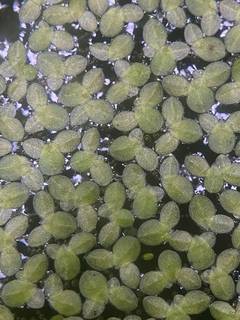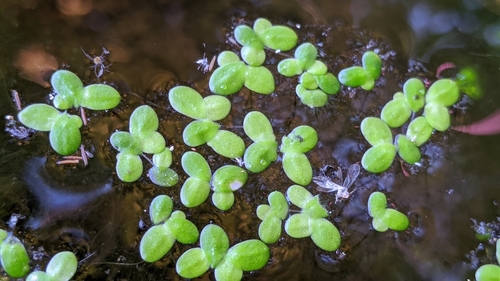
Lemna, Genus, minor, Species,
- Genus & species
common duckweed
Cosmopolitan (worldwide temperate and tropical)
Overview
Lemna minor is a tiny free-floating aquatic flowering plant, with each individual only a few millimeters wide, that drifts on the surface of still and slow-moving fresh water. Each individual is a single rounded to oval green frond, called a thallus, 0.08-0.2 inch (2-5 mm) long and flat to slightly domed, with one thread-like root hanging beneath into the water. The plants have no stems or true leaves. They multiply rapidly by budding, with new fronds growing from pouches on the parent and breaking free, so a few plants can blanket a pond surface in a green sheet within weeks under warm, nutrient-rich conditions. Flowering is extremely rare and the tiny flowers are almost never seen, so spread is almost entirely vegetative. In cold climates the plants form dense starch-filled buds called turions that sink and overwinter on the bottom, rising again in spring. Duckweed grows in ponds, ditches, and quiet backwaters worldwide and is grazed by waterfowl and fish, though heavy mats can shade out submerged plants and lower oxygen in the water below.
Native Range
Lemna minor has a nearly worldwide distribution across temperate and tropical regions, including North America, Europe, Asia, and Africa, growing on still and slow-moving fresh water such as ponds, ditches, marshes, and quiet stream margins.Suggested Uses
Used in wildlife ponds, water gardens, and aquariums as a floating plant that shades the water, takes up excess nutrients, and feeds fish and waterfowl. It is grown in water treatment and research as a fast, simple plant for cleaning nutrient-rich water. In small ponds it is added in modest amounts because it spreads quickly across the surface.How to Identify
Appearance
Bloom Information
Common duckweed almost never flowers, and its minute flowers are rarely observed. The plant spreads instead by rapid budding through the warm months, doubling its numbers in a few days under good conditions. In autumn it forms overwintering buds rather than setting seed.
Detailed Descriptions
Foliage Description
greenGrowing Conditions
Sun Requirements
Requires 4-10 hours of direct sunlight daily
• Full Sun: 6+ hours of direct sunlight
• Partial Shade: 3-6 hours of direct sunlight
• Full Shade: Less than 3 hours of direct sunlight
Care & Maintenance
Care Guide
Lemna minor grows on the surface of still or slow-moving fresh water in full sun to partial shade and grows fastest in nutrient-rich water, at a pH of about 5.0-8.0. It needs no soil, drawing nutrients directly from the water through its fronds and root. In ponds it multiplies fastest in warm, calm, nutrient-loaded water and can quickly cover the surface. Reducing nutrient runoff and skimming off excess growth keep it from blanketing a pond. It tolerates a wide temperature range and overwinters as sunken buds in cold climates, returning in spring. It is hardy across USDA zones 4-11.Pruning
Pruning does not apply to this floating aquatic. Management instead means skimming or netting off excess fronds to keep a pond surface open, and limiting the nutrients that fuel rapid growth. In water gardens it is contained or thinned to stop it from covering the whole surface.Container Growing
Suitable for container growing
Minimum container size: 1 gallons