Layia, Genus, platyglossa, Species,
- Genus & species
tidy tips
Western United States and Baja California
SunFull Sun
Overview
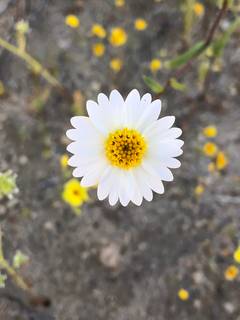
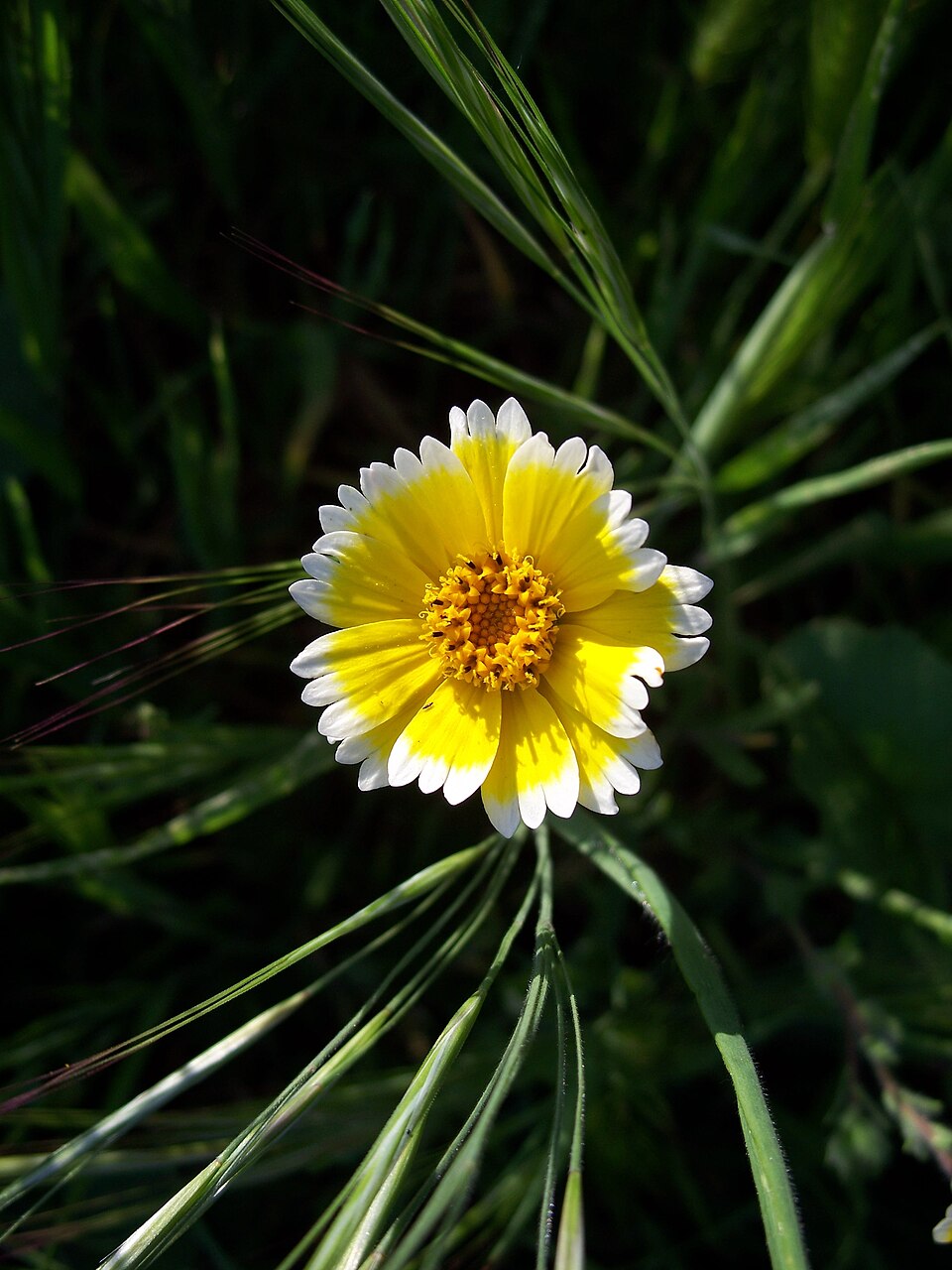
Layia platyglossa, called tidy tips, is an annual wildflower of the daisy family growing 4-16 inches (10-40 cm) tall on branching, glandular-hairy stems that carry a light resinous scent. The narrow, grey-green leaves are 0.5-3 inches (1.5-8 cm) long, the lower ones toothed or lobed and the upper ones entire. Each stem tip bears a single flower head 1-1.5 inches (2.5-4 cm) across with about 13 broad ray florets, yellow at the base and crisply tipped with white, ringing a yellow disc. The neat white-edged rays give the plant its common name. Native to California and the Pacific Slope, L. platyglossa grows in grasslands, coastal bluffs, open hillsides, and valley flats, flowering in spring after winter rains. As a cool-season annual it germinates in autumn or winter, blooms in spring, and dies as summer drought sets in. Bees and butterflies visit the heads, and the seed feeds small birds. One limitation is its brief season: the plants finish and brown out by early summer, leaving a gap unless paired with later bloomers. It self-sows readily on open ground.
Native Range
Layia platyglossa is native to the western United States and Baja California, with its centre in the grasslands and coastal hills of California. It grows from the coast to inland valleys and lower mountain slopes on open, sunny ground, often in wildflower fields and serpentine grassland.Suggested Uses
Layia platyglossa is grown in wildflower meadows, native and pollinator gardens, and seasonal containers, and is sown in roadside and restoration mixes across California. It pairs with California poppy and lupine in spring meadow plantings. The cut heads last a few days in arrangements.How to Identify
Appearance
Size & Dimensions
Height4" - 1'4"
Width/Spread4" - 10"
Bloom Information
Flowering runs from March to June, peaking in April and May after winter rains. Each head lasts about a week, and the plant produces a long succession of heads in a wet year. Seed ripens and sheds from late spring into early summer.
Detailed Descriptions
Flower Description
yellow with white tipsFoliage Description
grey-greenGrowing Conditions
Sun Requirements
Requires 6-10 hours of direct sunlight daily
• Full Sun: 6+ hours of direct sunlight
• Partial Shade: 3-6 hours of direct sunlight
• Full Shade: Less than 3 hours of direct sunlight
Water & Climate
Water Needs
Drought Tolerance
Drought tolerant when established
Care & Maintenance
Care Guide
Layia platyglossa grows in full sun on well-drained sandy, loamy, or clay soils, including serpentine, across a pH of about 6.0 to 7.5. As a cool-season annual it is sown from seed in autumn and germinates with winter rain, needing little summer water. It tolerates poor, dry soils once established but declines in shade or rich, wet ground. The seed is surface-sown on open soil and germinates without special treatment. Plants self-sow where the ground stays bare. They finish quickly once summer heat and drought arrive.Pruning
As an annual, L. platyglossa is not pruned. Leaving spent heads lets the plant reseed for the next season, while shearing before seed drop limits self-sowing. No cutting back is needed within the single spring season.Container Growing
Suitable for container growing
Minimum container size: 1 gallons
Toxicity
Non-toxicPlanting Guide
Planting Methods & Timing
Planting Method
direct sow
Plant Spacing
6 inches