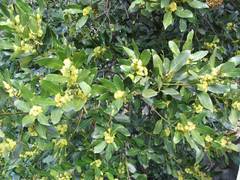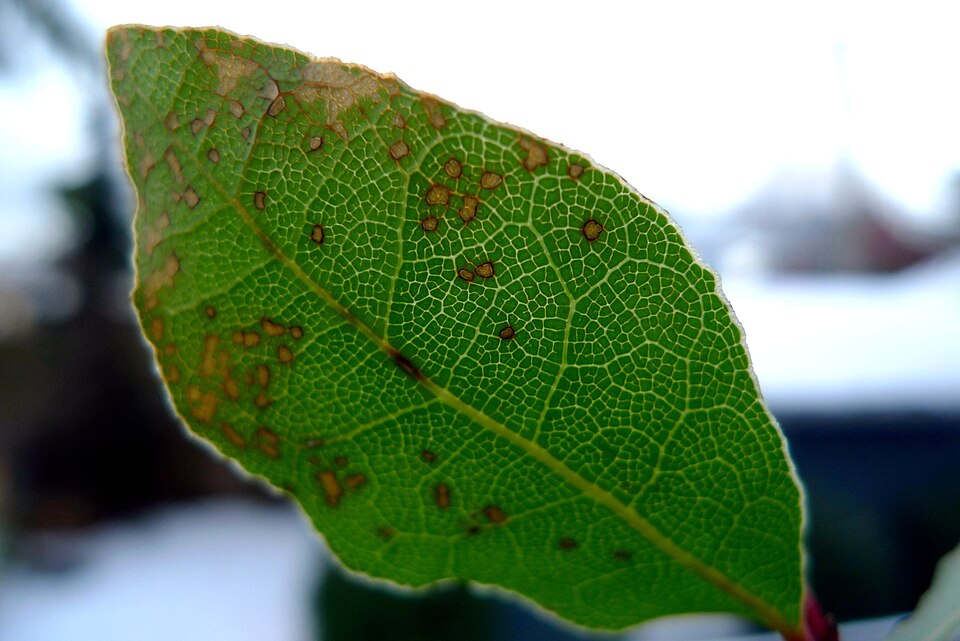
Image 1 of 2
1 / 2
© Ruth Hartnup from Vancouver, Canada, some rights reserved (CC-BY) · Wikimedia Commons
Laurus, Genus, spp., Multiple species,
- Genus
- Multiple species
bay laurel
Mediterranean region and Macaronesia
Overview
Laurus is a genus of two evergreen shrubs or small trees in the family Lauraceae, native to the Mediterranean region and Macaronesia. L. nobilis, the bay laurel, forms a dense, conical shrub or tree 10-40 feet (3-12 m) tall, though it is usually kept much smaller by pruning; L. azorica of the Atlantic islands is similar but larger-leaved. The leathery, glossy dark green leaves are lance-shaped, 2-4 inches (5-10 cm) long, and release a warm, spicy aroma when crushed, the source of the culinary bay leaf. Plants are usually dioecious, with separate male and female trees. Small, pale yellow flowers open in clusters along the stems in spring, and female plants bear glossy black berries about 0.5 inch (1 cm) long in autumn. The genus grows in woodland, scrub, and along watercourses in mild, frost-free or nearly frost-free climates. L. nobilis tolerates clipping into hedges, standards, and topiary, but hard frost browns the foliage and cold winds can scorch exposed plants.
Native Range
Laurus is native to the Mediterranean Basin and Macaronesia, with L. nobilis ranging around the Mediterranean and L. azorica native to the Azores, Madeira, and the Canary Islands. Plants grow in woodland, scrub, and moist ravines in mild climates.Suggested Uses
Laurus is grown as a culinary herb, a clipped hedge or topiary, and a container or courtyard specimen, and the dried leaves are used in cooking. In mild climates it serves as an evergreen screen or windbreak.How to Identify
Appearance
Size & Dimensions
Height10' - 40'
Width/Spread8' - 25'
Bloom Information
Laurus flowers in spring, generally April through May, with small, pale yellow flowers clustered in the leaf axils. Male and female flowers are usually borne on separate plants, so berries form only on female trees near a pollinator. The flowers are inconspicuous against the foliage.
Detailed Descriptions
Foliage Description
glossy dark greenGrowing Conditions
Sun Requirements
Requires 4-10 hours of direct sunlight daily
• Full Sun: 6+ hours of direct sunlight
• Partial Shade: 3-6 hours of direct sunlight
• Full Shade: Less than 3 hours of direct sunlight
Care & Maintenance
Care Guide
Grow Laurus in full sun to part shade on fertile, well-drained soil, with shelter from cold, drying winds. It tolerates a range of soils and some drought once established but responds to steady summer moisture with fuller growth. In climates colder than about USDA zone 8 it is grown in containers moved under cover for winter, as hard frost browns or kills the foliage. Feed container plants through the growing season and refresh the topsoil yearly. Established plants regrow from the base after cold damage.Pruning
Prune Laurus in late spring and summer to shape hedges, standards, and topiary; it tolerates repeated clipping and resprouts from old wood. Cut frost-damaged stems back to live growth in late spring once new shoots appear. Container plants are trimmed to keep a compact form.Container Growing
Suitable for container growing
Minimum container size: 10 gallons