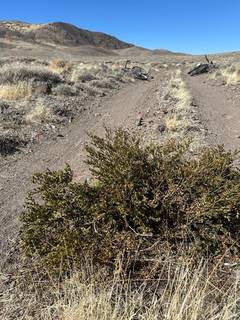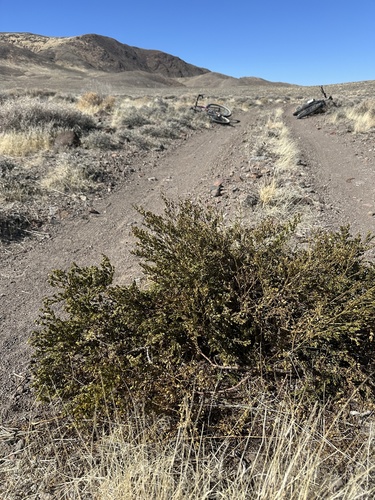
Larrea, Genus, spp., Multiple species,
- Genus
- Multiple species
creosote bush
Deserts of southwestern North America and arid South America
Overview
Larrea is a genus of resinous evergreen shrubs in the family Zygophyllaceae, comprising about five species split between the warm deserts of North America and the arid zones of southern South America. Plants form rounded to upright woody shrubs typically 0.5-3 m (1.6-10 ft) tall, occasionally reaching 4 m (13 ft) on favorable sites, with a similar spread. The small opposite leaves are divided into two leaflets joined at the base, coated in a varnish-like resin that gives the foliage an olive-green color and a creosote scent after rain. Five-petaled yellow flowers about 1 cm (0.4 in) across appear through much of the warm season, followed by rounded fruits densely covered in white to rust-colored hairs. The North American L. tridentata dominates large areas of the Mojave, Sonoran, and Chihuahuan deserts, while L. divaricata occupies comparable habitats in Argentina and Chile. Root systems are extensive and clonal in some populations, with ring-forming colonies among the oldest known living plants. Across the genus, growth is slow and tied to infrequent rainfall, so establishment can take several years. The resin coating and reduced leaf area limit water loss but also make the foliage flammable in dry conditions.
Native Range
Larrea occurs in the warm deserts of southwestern North America, from the southwestern United States into northern and central Mexico, and in the arid lowlands of western and southern South America. The two ranges are widely separated, an example of disjunct desert distribution.Suggested Uses
Used in desert and dry-climate gardens, on slopes, and in unirrigated revegetation plantings. The evergreen resinous foliage and heat tolerance are applied in low-water landscapes, with plants spaced 2-3 m (6-10 ft) apart.How to Identify
Appearance
Size & Dimensions
Height1'6" - 13'1"
Width/Spread3' - 10'
Bloom Information
Flowering responds to rainfall rather than a fixed calendar, with the heaviest bloom in spring (February to April in North American deserts) and scattered flowers after summer or autumn rains. Individual yellow flowers last only a few days. Fruiting follows quickly, producing the characteristic hairy capsules.
Detailed Descriptions
Foliage Description
olive-green to yellow-green, resin-coatedGrowing Conditions
Sun Requirements
Requires 6-12 hours of direct sunlight daily
• Full Sun: 6+ hours of direct sunlight
• Partial Shade: 3-6 hours of direct sunlight
• Full Shade: Less than 3 hours of direct sunlight