Image 1 of 15
1 / 15
Plant Reference
Larix, Genus, spp., Multiple species,
- Genus
- Multiple species
larch
Circumpolar boreal and alpine zones of the Northern Hemisphere; the commonly cultivated species are {Larix decidua} (European larch, native to the Alps and Carpathians), {L. kaempferi} (Japanese larch, native to Honshu), and {L. laricina} (tamarack, native across the boreal forest from Newfoundland and Labrador west to Alaska and south to northern Pennsylvania and Minnesota)
Overview
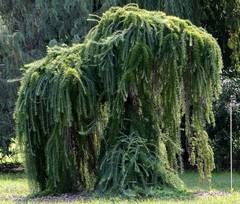
Larix is a genus of deciduous coniferous trees in the family Pinaceae reaching 40-100 feet (12-30 m) tall and 15-40 feet (4.5-12 m) wide depending on species and site. This record covers the three species most commonly encountered in cultivated landscapes: Larix decidua (European larch, native to the Alps and Carpathians), L. kaempferi (Japanese larch, native to Honshu), and L. laricina (tamarack, native across the boreal forest from Newfoundland and Labrador west to Alaska). Needles are soft, 0.75-1.5 inches (2-4 cm) long, and borne in tufted clusters of 15-30 needles on short spur shoots — the clustered spur-shoot arrangement is diagnostic for the genus alongside singly-borne needles on elongating new shoots. Needles emerge bright lime-green in spring, mature to medium or blue-green through summer, turn clear gold to golden-yellow in October, and drop from the tree for the winter. The deciduous habit places Larix in a small group of coniferous genera that shed their needles annually, alongside Metasequoia, Taxodium, Pseudolarix, and Glyptostrobus. Female seed cones emerge red to purple-pink at the branch tips in April and May and mature to small brown woody cones 0.5-1 inch (1.3-2.5 cm) long that persist on the branches through winter. The bare winter silhouette is the main aesthetic consideration — gardeners who expect a year-round green conifer are sometimes surprised by the leafless winter form, which looks dead but is entirely normal. The genus requires full sun and cool summers, does not tolerate shade, and performs poorly in hot humid climates outside of zone 7. Drought tolerance is low and consistent soil moisture through summer is needed for healthy growth. Larch casebearer moth (Coleophora laricella) and larch canker (Lachnellula willkommii) are the recurring pest and disease concerns, with the casebearer moth causing premature browning of needles during heavy infestations. Mature size at 40-100 feet (12-30 m) tall restricts the genus to large landscapes, parks, and estate settings rather than typical residential properties.
Native Range
Larix species occupy cool-temperate, boreal, and alpine zones across the Northern Hemisphere in a circumpolar distribution. Larix decidua is native to the Alps, Carpathians, and Polish uplands of central Europe. Larix kaempferi is native to Honshu in Japan where it grows on volcanic mountain slopes. Larix laricina (tamarack) has a transcontinental boreal range across North America from Newfoundland and Labrador west to Alaska and south into the northern Great Lakes states and New England, where it is the characteristic tree of muskeg bogs and cold acidic wetlands. Other species occupy Siberia, western China, and northwestern North America.Suggested Uses
Planted as a specimen tree in large landscapes, parks, estate settings, and cool-climate botanical collections at 15-40 foot (4.5-12 m) spacing in zones 2-7. The clear golden fall color on a conifer form carries seasonal interest that most other coniferous trees cannot match, and the contrast between fresh lime-green spring needles and the bare winter silhouette gives the tree four distinct seasonal appearances across the year. Combined with broadleaf evergreens such as Rhododendron and Kalmia latifolia in woodland plantings for year-round canopy contrast in cool-summer climates. L. laricina (tamarack) suits wet boggy soils that other cultivated conifers cannot handle and is the practical choice for wetland restoration and naturalized cold-wet sites. Not suited to small residential properties where the 40-100 foot (12-30 m) mature size exceeds the available space, hot humid climates outside zone 7 where summer stress kills the tree, dry drought-prone sites, shaded positions under other trees, or landscapes where a bare winter conifer silhouette is not wanted.How to Identify
Appearance
Size & Dimensions
Height40' - 100'
Width/Spread15' - 40'
Bloom Information
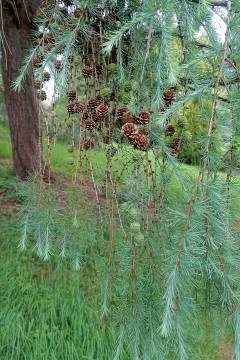
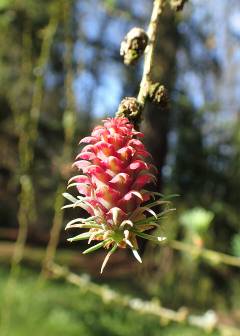
Female seed cones emerge red to purple-pink, 0.5-1 inch (1.3-2.5 cm) across, at the branch tips in April and May in zones 2-7, lasting approximately 2 weeks in the colorful young stage before maturing to small brown woody cones. Male pollen cones appear at the same time as small yellowish clusters and shed wind-borne pollen. The genus is wind-pollinated and the mature cones persist on the branches through winter after the needles have dropped.
Detailed Descriptions
Flower Description
female seed cones emerge red to purple-pink, 0.5-1 inch (1.3-2.5 cm) across, at the branch tips in spring; male pollen cones are small yellowish clusters; the genus is wind-pollinatedFoliage Description
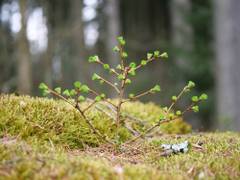
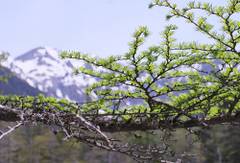
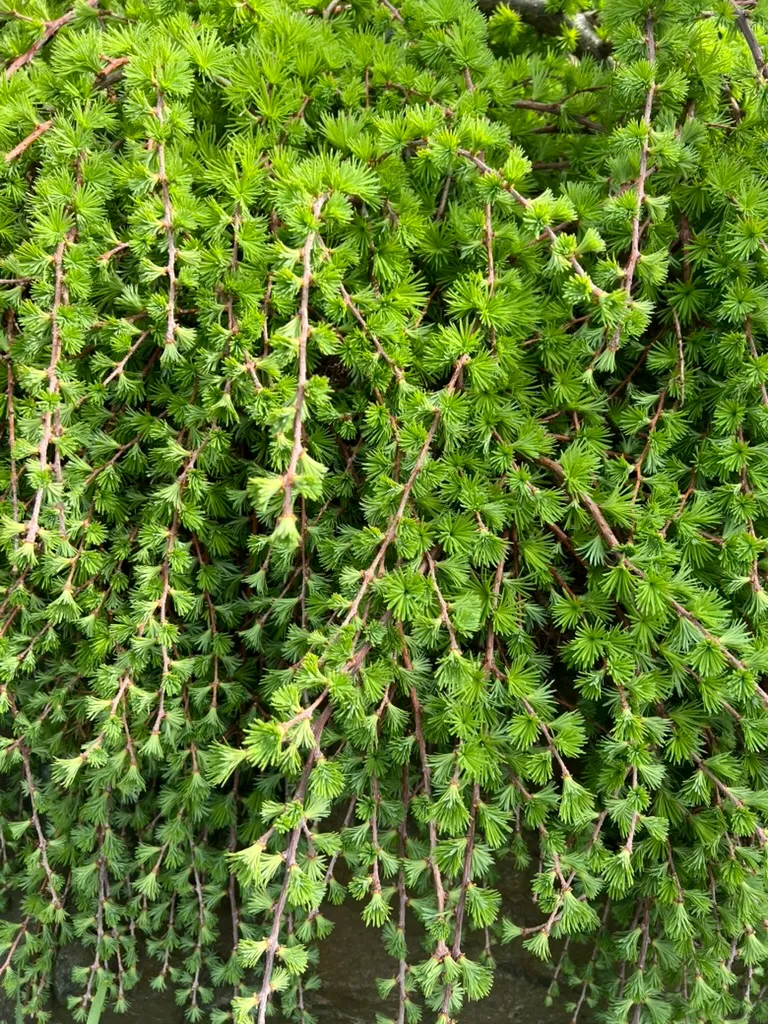
medium to blue-green soft needles 0.75-1.5 inches (2-4 cm) in clusters of 15-30 on short spur shoots (and singly on long shoots); emerging bright lime-green in spring; turns gold to golden-yellow in fall before droppingGrowing Conditions
Sun Requirements
Requires 6-12 hours of direct sunlight daily
• Full Sun: 6+ hours of direct sunlight
• Partial Shade: 3-6 hours of direct sunlight
• Full Shade: Less than 3 hours of direct sunlight
Care & Maintenance
Care Guide
Plant in well-drained soil with a pH of 5.0-7.0 in full sun; tolerated soil types include loam, sand, and clay. Larix requires full sun and does not tolerate shade — branches deteriorate and growth slows in shaded positions. Cool summer conditions are required and the genus performs poorly in hot humid climates outside of zone 7; cultivation is concentrated in the northern US, southern Canada, the Pacific Northwest mountains, northern Europe, and other cool-summer regions. Consistent soil moisture through summer is needed because drought tolerance is low and summer stress produces premature needle yellowing and drop. Larch casebearer moth (Coleophora laricella) causes silvering and premature browning of needles during heavy infestations and is the main pest concern across cultivated Larix; larch canker (Lachnellula willkommii) causes sunken lesions and branch dieback and is more commonly encountered on European larch than on tamarack. Pruning is done in late winter (February-March). The mature size at 40-100 feet (12-30 m) tall restricts the genus to large landscapes and parks rather than small residential properties.Pruning
Pruning is done in late winter (February-March) before new growth. A single central leader is developed in young trees through corrective pruning, and competing leaders are removed to maintain the natural conical pyramidal form. Dead, damaged, and crossing branches are removed at the branch collar at any time. Mature healthy specimens need minimal pruning because the natural form develops without intervention. Removal of larch casebearer-infested or canker-affected branches during pruning reduces pest and disease pressure in gardens where these problems are recurring.Pruning Schedule
Prune: February–March
early spring