Overview
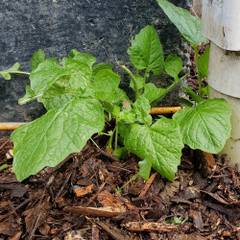
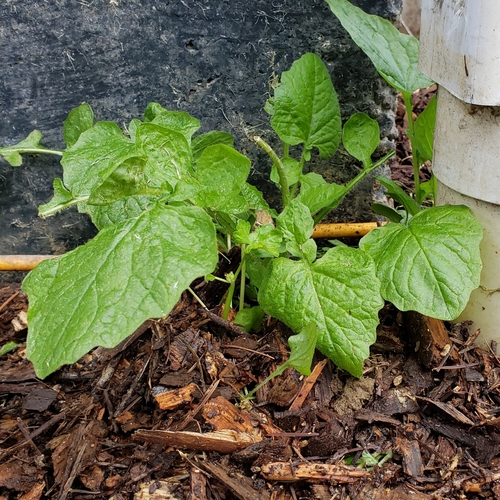
Lapsana is a genus of about nine annual and short-lived perennial herbs in the daisy family, Asteraceae, native to Europe, western Asia, and North Africa. The widespread species, Lapsana communis (nipplewort), is an upright, branching annual 1-4 feet (0.3-1.2 m) tall with thin, angular, slightly hairy stems. The lower leaves are stalked and lyre-shaped, with a large rounded end lobe and smaller side lobes, while the upper leaves are smaller and narrower. From early summer to autumn the branched stems carry many small, yellow, dandelion-like flowerheads 0.4-0.8 inch (1-2 cm) across that open in the morning and close by midday. Each head produces a cluster of small dry seeds without the parachute of hairs found in true dandelions. Lapsana grows quickly on disturbed, fertile ground in sun or light shade, self-seeds heavily, and behaves as a weed of gardens, hedgerows, and waste places across much of its range and where it has naturalised.
Native Range
Lapsana is native to Europe, western Asia, and North Africa, where it grows in woodland edges, hedgerows, roadsides, and cultivated and waste ground. L. communis has naturalised widely in North America and other temperate regions and is a common weed of gardens and disturbed soils.Suggested Uses
Lapsana is rarely planted on purpose and is mostly encountered as a wild or weedy plant of disturbed ground, though the young leaves of L. communis have been eaten as a cooked or salad green. It can fill rough, informal, or wildlife areas where its seeding is not a problem. Its weedy spread makes it unsuited to tidy borders and cultivated beds.How to Identify
Appearance
Size & Dimensions
Height1' - 4'
Width/Spread8" - 1'6"
Bloom Information
Detailed Descriptions
Foliage Description
greenGrowing Conditions
Sun Requirements
Requires 3-8 hours of direct sunlight daily
• Full Sun: 6+ hours of direct sunlight
• Partial Shade: 3-6 hours of direct sunlight
• Full Shade: Less than 3 hours of direct sunlight
Water & Climate
Water Needs
Care & Maintenance
Care Guide
Plants grow in sun or light shade on most moist, fertile soils and need no particular care, since the genus is made up largely of weeds. Growth is fast in disturbed, nutrient-rich ground, and plants complete their cycle in a single season, dying after setting abundant seed. No feeding or watering is usually required. The heavy self-seeding means seedlings appear readily the following year wherever the soil is disturbed. In gardens the plants are generally removed before seeding to limit their spread. As annuals, they need no winter protection.Pruning
No pruning is needed for these annual plants. Cutting or pulling the stems before the seed ripens is the main way to limit self-seeding. Plants are otherwise left to complete their short life cycle.Toxicity
Non-toxicPlanting Guide
Planting Methods & Timing
Planting Method
direct sow
Direct Sow Timing
spring
Days to Maturity
60–90 days
Plant Spacing
10 inches