Laportea, Genus, spp., Multiple species,
- Genus
- Multiple species
wood nettles
Americas, Africa, Asia, and the Pacific
Overview
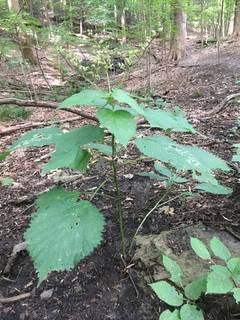
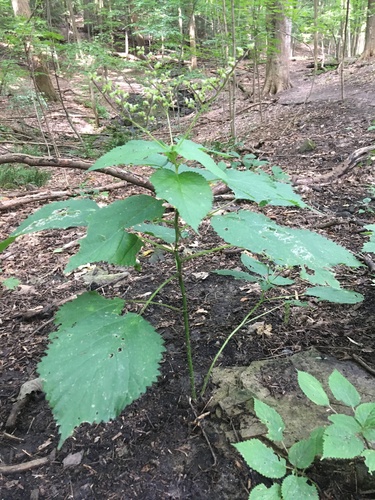
Laportea is a genus of about 20 species of herbaceous perennials and a few shrubs in the nettle family, Urticaceae, known as wood nettles and spread through temperate and tropical regions of the world. Most are upright herbs 1.5 to 4 feet (45 to 120 cm) tall with broad, toothed, alternate or paired leaves and stems clothed in stinging hairs. The hairs inject an irritant on contact, raising a sharp, burning rash that can last from minutes to hours. Tiny greenish flowers are borne in branched, often spreading clusters in the leaf axils and at the stem tips in summer, the separate male and female clusters wind-pollinated. The North American wood nettle, L. canadensis, grows in moist, rich woodland and along streams, often forming large colonies from spreading roots. The genus ranges across North and South America, Africa, Asia, and the Pacific, with some tropical species bearing a far stronger sting. Wood nettles support several butterfly and moth larvae, and the young shoots of some species are cooked and eaten. The stinging hairs and weedy spread make them plants of wild and woodland settings rather than borders.
Native Range
Laportea is found in temperate and tropical parts of the Americas, Africa, Asia, and the Pacific. L. canadensis is native to eastern and central North America, from Canada south to the Gulf states, growing in moist woods and floodplains. Several other species are native to tropical Asia and Africa.Suggested Uses
Wood nettles are planted in native woodland, shade, and streamside gardens and in habitat plantings that support butterfly and moth larvae. The colonies form dense summer ground cover in moist shade. Because of the sting, they are kept away from paths and seating and used in wilder parts of the garden.How to Identify
Appearance
Size & Dimensions
Height1'6" - 4'
Width/Spread1' - 3'
Bloom Information
Flowering is in summer, roughly June to August, when branched clusters of small green flowers form in the upper leaf axils. The flowers are wind-pollinated and not showy, followed by small, flattened, lopsided seeds. In woodland colonies large numbers of plants flower together.
Detailed Descriptions
Foliage Description
GreenGrowing Conditions
Sun Requirements
Requires 2-5 hours of direct sunlight daily
• Full Sun: 6+ hours of direct sunlight
• Partial Shade: 3-6 hours of direct sunlight
• Full Shade: Less than 3 hours of direct sunlight