Lapageria, Genus, spp., Multiple species,
- Genus
- Multiple species
Central and southern Chile (and adjacent Argentina)
Overview
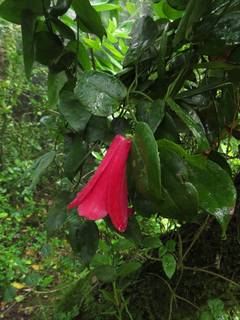
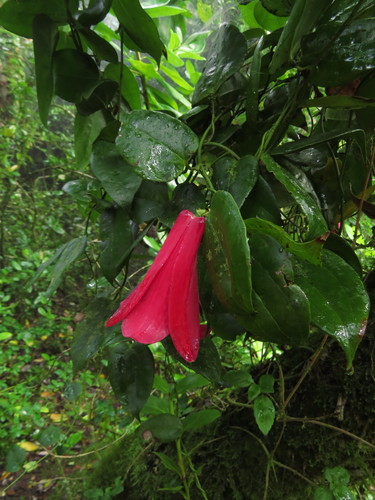
Lapageria is a genus represented by the single species Lapageria rosea, the Chilean bellflower or copihue, an evergreen woody climber native to the cool, humid forests of central and southern Chile, where it is the national flower. The wiry, twining stems climb 10-15 feet (3-4.5 m) or more through shrubs and trees, carrying leathery, oval, dark green leaves 2-4 inches (5-10 cm) long. From late summer into autumn the plant hangs waxy, bell-shaped flowers 2.5-4 inches (6-10 cm) long, usually deep rose-red and often spotted paler inside, with pink- and white-flowered forms in cultivation. The thick-textured flowers last well and are followed by edible, elongated berries. Lapageria needs cool, moist, shaded, frost-free or near-frost-free conditions and acidic soil, and it grows slowly and is intolerant of root disturbance, so it is demanding outside mild oceanic climates. In the wild, its flowers are pollinated by hummingbirds.
Native Range
Lapageria is native to central and southern Chile, with a small extension into adjacent Argentina, where it grows in the moist, shaded understorey of temperate Valdivian rainforest. It climbs through shrubs and trees on cool, humid, acidic forest soils.Suggested Uses
Lapageria is used to climb shaded walls, fences, trellises, and through shrubs in cool, mild, frost-free gardens, and is grown under glass where winters are cold. Its waxy bell flowers suit sheltered courtyards and woodland-edge plantings. Frost sensitivity, slow growth, and exacting moisture and soil needs make it unsuited to hot, dry, or cold-winter gardens.How to Identify
Appearance
Size & Dimensions
Height10' - 15'
Width/Spread3' - 6'
Bloom Information
Flowering runs from late summer into autumn, roughly August to November in the southern hemisphere and the equivalent late-season months in northern gardens. The waxy flowers open over a long period and last well on the plant. Scattered flowers can appear outside the main season in mild, even conditions.
Detailed Descriptions
Flower Description
rose-red, sometimes pink or whiteFoliage Description
dark greenGrowing Conditions
Sun Requirements
Requires 2-6 hours of direct sunlight daily
• Full Sun: 6+ hours of direct sunlight
• Partial Shade: 3-6 hours of direct sunlight
• Full Shade: Less than 3 hours of direct sunlight
Care & Maintenance
Care Guide
Plants grow in cool, sheltered, shaded positions on moist, acidic, humus-rich, free-draining soil, much like conditions suited to rhododendrons. Roots are kept cool and shaded while the stems climb toward filtered light. The plant is frost-tender, tolerating only light frost, and needs a frost-free or sheltered site in cool climates, often grown against a shaded wall or under glass. Growth is slow, especially in the early years, and plants are intolerant of root disturbance once settled. Steady moisture is needed year-round, as the plant does not tolerate drying out. Lime and harsh sun both damage it.Pruning
Little pruning is needed beyond removing dead or weak stems and untangling overcrowded growth in spring. The twining stems can be guided onto supports rather than cut. Hard pruning is avoided, since the slow-growing plant recovers poorly from heavy cutting.Pruning Schedule
spring
Container Growing
Suitable for container growing
Minimum container size: 5 gallons