Lambertia, Genus, spp., Multiple species,
- Genus
- Multiple species
Australia (mainly southwest Western Australia; L. formosa in New South Wales)
Overview
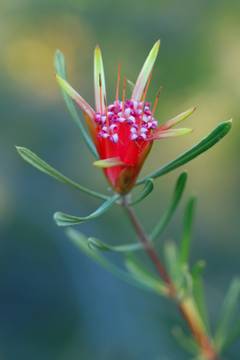
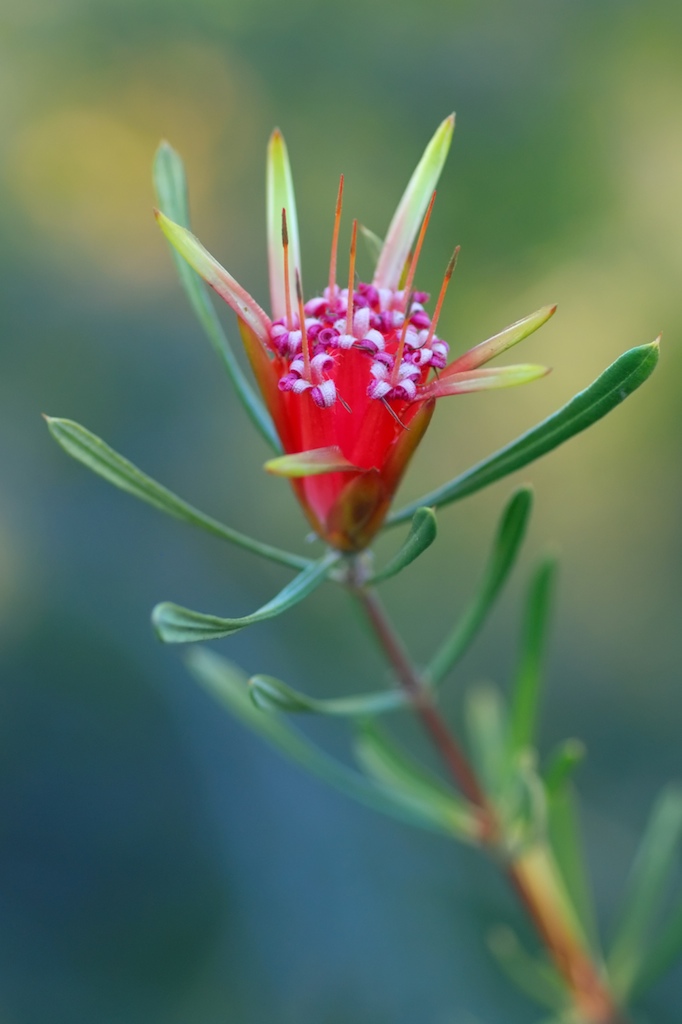
Lambertia is a genus of about ten evergreen shrubs in the family Proteaceae, almost all confined to southwestern Western Australia apart from L. formosa of eastern New South Wales. Plants form stiff, woody, upright to spreading shrubs 2-10 feet (0.6-3 m) tall with narrow, rigid, often sharp-tipped leaves arranged in whorls or pairs along the branches. The tubular flowers, 1-2 inches (2.5-5 cm) long, are grouped in clusters, classically seven together within a ring of coloured bracts, in red, orange, pink, or yellow, and hold abundant nectar that draws honeyeaters and other birds. After flowering the clusters harden into woody, two-horned fruits that gave L. formosa the name mountain devil. Lambertia tolerates poor, sandy, low-phosphorus soils and drought once established, but most species are frost-tender, are intolerant of root disturbance, and are damaged by phosphorus-rich fertilisers. Several Western Australian species are rare and restricted in the wild.
Native Range
Lambertia is native to Australia. Most species grow in the southwest of Western Australia in heath and shrubland on sandy or gravelly soils, while L. formosa occurs in coastal and mountain heath of New South Wales. Plants are typical of nutrient-poor, free-draining sandstone and sandplain country.Suggested Uses
Lambertia is used in native, dry-climate, and habitat gardens, as a nectar source for birds, and in low-phosphorus sandy landscapes. Its bird-attracting flowers and rigid form suit informal screens and wildlife plantings in mild regions. Frost sensitivity, phosphorus intolerance, and a dislike of disturbance make it unsuited to rich, wet, or cold gardens.How to Identify
Appearance
Size & Dimensions
Height2' - 10'
Width/Spread3' - 8'
Bloom Information
Flowering is mainly in spring, with some species flowering over a longer period from winter into summer in mild climates. The nectar-rich flower clusters open over several weeks. L. formosa can carry scattered flowers through much of the year in frost-free conditions.
Detailed Descriptions
Flower Description
red, orange, pink, or yellowFoliage Description
green to gray-greenGrowing Conditions
Sun Requirements
Requires 6-12 hours of direct sunlight daily
• Full Sun: 6+ hours of direct sunlight
• Partial Shade: 3-6 hours of direct sunlight
• Full Shade: Less than 3 hours of direct sunlight
Care & Maintenance
Care Guide
Plants grow in full sun on sharply drained sandy, gravelly, or sandstone-derived soils that are low in nutrients. Good drainage is the main requirement, and wet or heavy soils cause root rot and quick decline. Being members of the Proteaceae, plants are sensitive to phosphorus, so general garden fertilisers can damage or kill them. Most species are frost-tender and suited to mild, dry-summer climates, tolerating only light frost. Watering is sparing once plants are established, mimicking their dry native habitat. Plants are intolerant of root disturbance and are usually set in their permanent position when young.Pruning
Light pruning after flowering keeps plants bushy and removes the woody spent fruits. Tip pruning of young growth encourages denser branching. Hard pruning into bare old wood is risky, as many Proteaceae regrow poorly from leafless stems.Pruning Schedule
spring