Overview
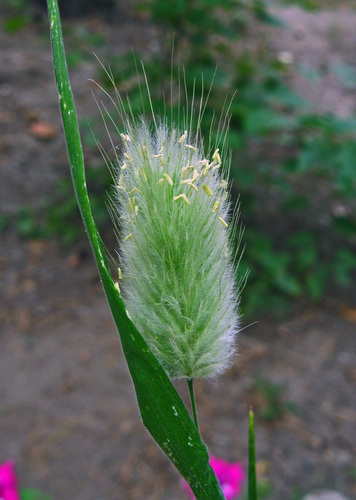
Lagurus ovatus is a tufted annual grass in the Poaceae, growing 8–24 inches (20–60 cm) tall in a soft, low clump. The whole plant is covered in soft hairs, giving the pale grey-green leaves and stems a downy, velvety feel; the flat leaf blades are 1.5–4 inches (4–10 cm) long. In summer it produces dense, ovoid flower heads 0.8–2 inches (2–5 cm) long, soft and woolly, pale cream to buff and tinted with purple as the protruding awns develop, resembling a rabbit's tail. The heads dry well and hold their shape long after cutting. It grows on sandy coasts, dunes, and dry open ground around the Mediterranean and has naturalised on mild coasts elsewhere. As an annual it lives for a single season and depends on self-seeding to return, and it can spread onto open sandy soil where it is not wanted. It needs full sun and free drainage and grows poorly in heavy, wet, or shaded sites.
Native Range
Native to the Mediterranean region, on sandy coasts, dunes, and dry open ground. It has naturalised on mild coasts in western Europe, Australia, and parts of North America.Suggested Uses
Grown in gravel gardens, coastal borders, and containers, and widely raised as a cut and dried flower. The soft heads are used fresh or dried in arrangements and craft work.How to Identify
Appearance
Size & Dimensions
Height8" - 2'
Width/Spread6" - 1'
Bloom Information
Flower heads appear from June to August and persist for many weeks, turning from green-cream to buff and then straw-coloured. Each plant produces a succession of soft plumes through the summer.
Detailed Descriptions
Flower Description
cream to buffFoliage Description
grey-greenGrowing Conditions
Sun Requirements
Requires 6-10 hours of direct sunlight daily
• Full Sun: 6+ hours of direct sunlight
• Partial Shade: 3-6 hours of direct sunlight
• Full Shade: Less than 3 hours of direct sunlight
Water & Climate
Water Needs
Drought Tolerance
Drought tolerant when established
Care & Maintenance
Care Guide
Grows in full sun on light, free-draining, sandy or gravelly soil of low to moderate fertility. Water needs are low, and established plants tolerate coastal exposure and summer drought. Seed is sown directly in spring where plants are to grow, or in autumn in mild areas for earlier flowering. Rich, moist soils produce soft, floppy growth and fewer heads. Self-sown seedlings appear the following year and can be thinned where unwanted. As an annual it needs no winter care and dies after seeding.Pruning
No pruning is needed for this annual grass. Flower heads are cut for drying just before they fully mature, which also limits self-seeding. Whole plants are cleared once they brown and die at the end of the season.Container Growing
Suitable for container growing
Minimum container size: 1 gallons
Toxicity
Non-toxicPlanting Guide
Planting Methods & Timing
Planting Method
direct sow
Direct Sow Timing
spring
Plant Spacing
8 inches