Krigia, Genus, biflora, Species,
- Genus & species
two-flower dwarf-dandelion
Overview
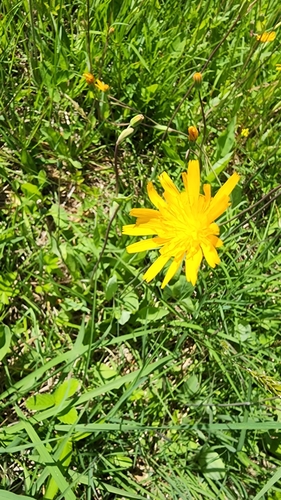
Krigia biflora is a perennial wildflower with a basal rosette of smooth, gray-green leaves and erect, branching flowering stems 8-28 in (20-70 cm) tall. The basal leaves are 2-8 in (5-20 cm) long, oblong to spoon-shaped, and sometimes toothed, while a single clasping leaf often sits partway up the otherwise leafless stem. Each stem branches near the top into two to six flower heads, the feature behind the name two-flower dwarf-dandelion. The heads are 0.8-1.5 in (2-4 cm) across and made entirely of yellow to orange strap-shaped ray florets, with no central disk, opening in the morning and closing by afternoon. Bloom runs from May into August. The stems and leaves exude a milky white sap when broken, as in many members of the chicory tribe. It grows in moist meadows, prairies, open woods, glades, and roadsides on a range of soils. Fluffy parachute-tipped seeds follow the flowers and scatter on the wind. In hot, dry sites the rosette may go dormant by midsummer, a limitation where summers are severe.
Native Range
Native to central and eastern North America, from Manitoba and Ontario south to Georgia and west to Colorado and Texas. It grows in moist prairies, meadows, open woodland, glades, and roadsides.Suggested Uses
Grown in native meadow, prairie, and woodland-edge plantings for late-spring and summer color. Planted in pollinator gardens, where the heads draw small native bees, spaced 12-18 in (30-45 cm) apart.How to Identify
Appearance
Size & Dimensions
Height8" - 2'4"
Width/Spread8" - 1'
Colors
Bloom Information
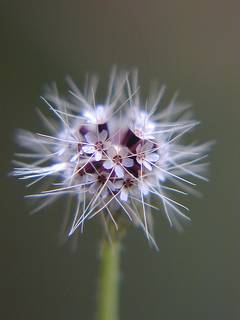
Blooms from May to August, with each branched stem carrying two to six yellow to orange heads that open in the morning and close in the afternoon. Bees and other small insects visit for pollen and nectar. Parachute-tipped seeds follow and disperse on the wind.
Detailed Descriptions
Flower Description
yellow to orangeFoliage Description
gray-greenGrowing Conditions
Sun Requirements
Requires 4-10 hours of direct sunlight daily
• Full Sun: 6+ hours of direct sunlight
• Partial Shade: 3-6 hours of direct sunlight
• Full Shade: Less than 3 hours of direct sunlight
Care & Maintenance
Care Guide
Grows in full sun to part shade on moist, well-drained soil of loam, sand, or rocky ground with a pH from about 5.5 to 7.5. It tolerates a range of moisture but flowers more freely with steady spring moisture. Hardy to USDA zone 4, roughly -30 F (-34 C), with the rosette returning each spring. In hot, dry summers the rosette may go dormant and reappear with fall or the next spring. It self-sows readily where soil is open. Deep shade and prolonged drought reduce bloom and vigor.Pruning
No pruning is needed. Spent flower stems are cut back to limit self-seeding or left for the seed-eating birds. Dormant or frost-killed foliage is removed in late fall.Container Growing
Suitable for container growing
Minimum container size: 1 gallons