Koenigia, Genus, campanulata, Species,
- Genus & species
lesser knotweed
Overview
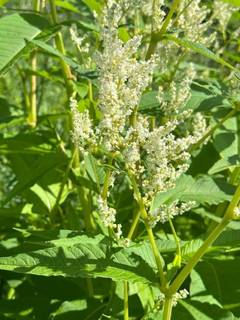
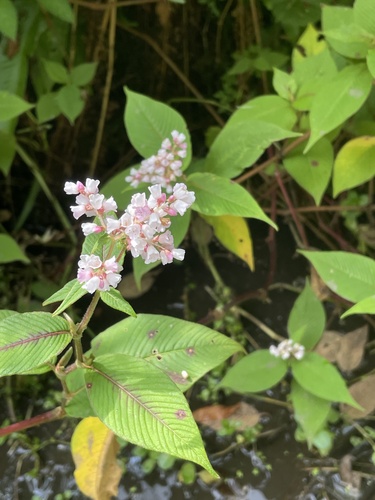
Koenigia campanulata is a spreading herbaceous perennial 16-36 inches (40-90 cm) tall, forming clumps from creeping rhizomes. The pointed, oval to heart-shaped leaves are 2-5 inches (5-12 cm) long, green above and softly grey-hairy beneath, with a fringe of hairs around the swollen leaf joints typical of the knotweed family. From midsummer into autumn it carries loose, branched sprays of small, bell-shaped flowers in pale pink or white, each about 0.2 inch (4-5 mm) long, a flower shape unlike the flat or cup-shaped blooms of most knotweeds. Native to the Himalaya and western China, it grows on damp slopes, stream banks, and woodland clearings, and has naturalised in parts of Britain and other temperate regions. It spreads steadily by rhizome and can form broad colonies, so it overtakes smaller plants in moist, fertile ground. The foliage dies back to the rootstock each winter and reappears in spring. The bell-shaped flowers and grey-felted leaf undersides separate it from related knotweeds. In gardens it is grown for its late flowers but is kept in check because of its spreading habit.
Native Range
Native to the Himalaya and western China. It grows on damp slopes, stream banks, and woodland clearings, and has naturalised in Britain and other temperate areas.Suggested Uses
Grown in moist borders, woodland edges, and wild or naturalistic plantings for its long season of late flowers. It is used as ground cover in damp, fertile ground where its spread is wanted. The flowers support late-season pollinators.How to Identify
Appearance
Size & Dimensions
Height1'4" - 3'
Width/Spread2' - 4'
Bloom Information
Detailed Descriptions
Flower Description
pale pink to whiteFoliage Description
greenGrowing Conditions
Sun Requirements
Requires 4-10 hours of direct sunlight daily
• Full Sun: 6+ hours of direct sunlight
• Partial Shade: 3-6 hours of direct sunlight
• Full Shade: Less than 3 hours of direct sunlight
Care & Maintenance
Care Guide
Koenigia campanulata grows in moist, fertile soils in full sun to partial shade and tolerates a soil pH from about 5.5 to 7.5. It withstands cold to USDA zone 5 and dies back to the rhizome each winter. The plant spreads by creeping rhizomes and can form wide colonies, so it is given room or confined where space is limited. It needs steady moisture and grows lush in damp ground. Division in spring or autumn controls its spread and renews old clumps. In dry soils growth is shorter and flowering reduced.Pruning
Faded stems can be cut to the ground in late autumn or winter once flowering ends. Lifting and dividing clumps every few years limits the spread of the rhizomes. Removing flower heads before seed set reduces self-sowing.Container Growing
Suitable for container growing
Minimum container size: 5 gallons