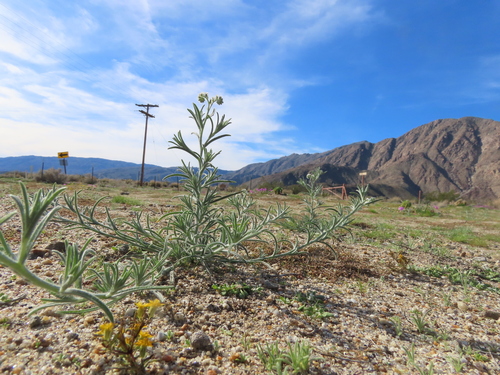
Johnstonella, Genus, angustifolia, Species,
- Genus & species
narrow-leaved cryptantha
Southwestern US and northwestern Mexico deserts
Overview
Johnstonella angustifolia is a slender winter annual reaching 4-16 inches (10-40 cm) tall, with one to several erect stems branching from the base. The stems and narrow linear leaves are covered in stiff, spreading white bristles that give the plant a rough, grayish texture. Leaves are 0.4-2 inches (1-5 cm) long and less than 0.1 inch (3 mm) wide, crowded near the base and scattered up the stem. Small white flowers about 0.1 inch (2-4 mm) across open along coiled, one-sided cyme branches that uncurl as the flowers mature, each bloom with five rounded lobes and a yellow center. Flowering follows winter rains, from February to May depending on elevation and moisture. Each flower produces up to four small, lance-shaped nutlets roughly 0.06 inch (1.5 mm) long that drop near the parent plant. The species germinates with cool-season rainfall, completes its life cycle in a few months, and dies as the desert dries. In low-rainfall years plants stay under 4 inches (10 cm) and set few seeds. It is one element of the spring annual flush on open desert flats and washes.
Native Range
Johnstonella angustifolia is native to the deserts of the southwestern United States and northwestern Mexico, including southern California, Arizona, Nevada, Utah, Baja California, and Sonora. It grows on sandy or gravelly flats, washes, and slopes in creosote bush scrub below 4,000 feet (1,200 m).Suggested Uses
Used in native desert wildflower seed mixes and habitat restoration on sandy soils. Suited to naturalized desert gardens where winter rains support a spring annual display. The seeds and foliage feed desert ants, birds, and small mammals.How to Identify
Appearance
Size & Dimensions
Height4" - 1'4"
Width/Spread2" - 6"
Bloom Information
Flowering runs from February to May, triggered by autumn and winter rainfall. The coiled flower clusters open progressively from the base outward over several weeks. Small native bees and flies visit the white blooms, though many flowers also self-pollinate.
Detailed Descriptions
Flower Description
White with yellow throatFoliage Description
Grayish-green, bristlyGrowing Conditions
Sun Requirements
Requires 6-12 hours of direct sunlight daily
• Full Sun: 6+ hours of direct sunlight
• Partial Shade: 3-6 hours of direct sunlight
• Full Shade: Less than 3 hours of direct sunlight
Water & Climate
Water Needs
Drought Tolerance
Drought tolerant when established
Care & Maintenance
Care Guide
Johnstonella angustifolia grows as a cool-season desert annual and is rarely cultivated. It needs full sun, sharp drainage, and the lean sandy or gravelly soils of its native flats. Seed germinates after autumn or winter rains when soil temperatures are cool, and plants complete growth before summer heat. Supplemental water is needed only to start germination in dry years; established seedlings draw on residual soil moisture. Excess irrigation and rich soil produce weak, rot-prone growth. The plant reseeds on its own where conditions suit it.Pruning
No pruning is needed for this short-lived annual. Spent plants can be left in place to drop seed for the following season. Removing dried stems after seed set clears space in cultivated wildflower plots.Toxicity: Not assessed
UnknownPlanting Guide
Planting Methods & Timing
Planting Method
direct sow
Direct Sow Timing
Fall to early winter
Days to Maturity
50–90 days
Plant Spacing
6 inches