Jeffersonia, Genus, spp., Multiple species,
- Genus
- Multiple species
Eastern North America and northeastern Asia
Overview
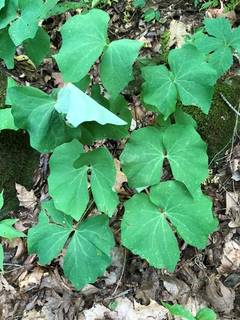
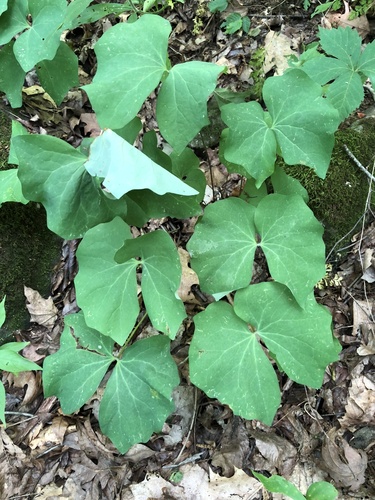
Jeffersonia is a genus of two species of woodland perennials in the barberry family, Berberidaceae, named after Thomas Jefferson and known as twinleaf. J. diphylla grows in eastern North America and J. dubia (sometimes placed in Plagiorhegma) in northeastern Asia. The common name comes from the leaves, each of which is deeply split into two mirror-image lobes that resemble a pair of wings or a butterfly. Plants form low clumps about 6 to 18 inches (15 to 45 cm) tall, rising from short rhizomes. In early to mid spring, single cup-shaped flowers appear on leafless stalks, white in J. diphylla and lavender-blue in J. dubia, each with eight petals that drop quickly, often lasting only a day or two. The flowers are followed by a pear-shaped capsule that opens by a hinged lid. The genus grows in rich, moist, deciduous woodland on limestone-influenced soils in J. diphylla and in cooler montane woodland in J. dubia. The flowers are short-lived and the plants grow slowly, and they recover slowly from disturbance once established.
Native Range
Jeffersonia has a disjunct distribution, with J. diphylla native to eastern North America and J. dubia native to northeastern Asia, including Korea, northeastern China, and the Russian Far East. Both grow in moist, shaded woodland.Suggested Uses
Jeffersonia is used in shade and woodland gardens, native plant collections, and shaded rock gardens. The paired leaves and early flowers suit the front of a shaded border or a woodland path. Plants combine with other spring woodland perennials such as trilliums and hepaticas.How to Identify
Appearance
Size & Dimensions
Height6" - 1'6"
Width/Spread8" - 1'6"
Bloom Information
Flowering occurs in early to mid spring, roughly March to April, before or as the leaves expand. Each flower has eight white or lavender-blue petals and is short-lived, often lasting only a day or two in warm weather. Early bees and other insects visit the flowers for pollen.
Detailed Descriptions
Foliage Description
green to blue-greenGrowing Conditions
Sun Requirements
Requires 1-4 hours of direct sunlight daily
• Full Sun: 6+ hours of direct sunlight
• Partial Shade: 3-6 hours of direct sunlight
• Full Shade: Less than 3 hours of direct sunlight
Care & Maintenance
Care Guide
Jeffersonia grows in part to full shade in moist, humus-rich, well-drained woodland soils, with J. diphylla growing on neutral to limy ground. The genus is hardy in roughly USDA zones 5 to 8 and dies back to the rhizome each winter, returning in early spring. Plants grow slowly and are long-lived once settled, forming larger clumps over many years. Steady moisture through spring and summer and a mulch of leaf litter suit the plants, which can scorch in dry, sunny sites. Propagation is by fresh seed, which needs a cold period to germinate, or by careful division in late summer.Pruning
No regular pruning is needed beyond removing faded leaves and spent flower stalks. Tattered foliage can be cut away in late autumn after it dies down. Clumps are left undisturbed rather than divided often.Container Growing
Suitable for container growing
Minimum container size: 2 gallons