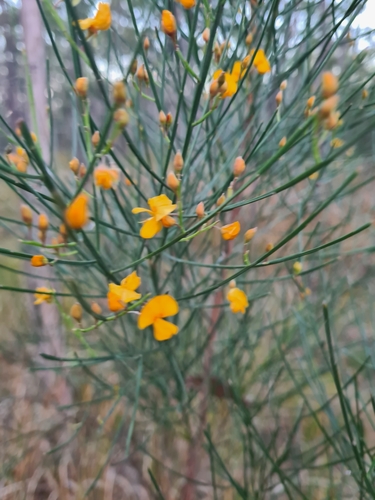
Jacksonia, Genus, scoparia, Species,
- Genus & species
winged broom-pea
Overview
Jacksonia scoparia is an evergreen shrub or small tree reaching 6-13 feet (2-4 m) tall, occasionally to 20 feet (6 m), with a weeping, broom-like form. Mature plants are nearly leafless; photosynthesis is carried out by flattened, winged grey-green branchlets 1-2 mm wide that give the canopy a slender, broom-like appearance. Seedlings bear small simple leaves that are shed early. Pea-shaped flowers about 0.4 inch (10 mm) long are yellow to orange with reddish markings, carried in loose terminal sprays, and are fragrant. Flowering occurs in spring. The fruit is a hairy pod 0.3-0.5 inch (8-12 mm) long containing one or two seeds. Plants fix nitrogen through root nodules and grow on poor, sandy soils. J. scoparia is moderately fast-growing but short-lived, often declining after 10-15 years. It tolerates drought and low-nutrient soils but is sensitive to prolonged waterlogging and heavy frost.
Native Range
Native to eastern Australia, from Queensland through New South Wales, in dry sclerophyll forest, woodland, and heath on sandy or gravelly soils. Common on poor, well-drained soils in low-rainfall and coastal areas at low to moderate elevations.Suggested Uses
Used in native and low-water gardens, on embankments, and in revegetation of poor sandy soils, spaced 4-6 feet (1.2-1.8 m) apart. The weeping, broom-like form suits informal screening and wildlife plantings. Short lifespan limits its use as a permanent specimen.How to Identify
Appearance
Size & Dimensions
Height6' - 13'
Width/Spread5' - 10'
Bloom Information
Flowers from September to December in spring, with peak bloom over 4-6 weeks. Flowers are fragrant and draw native bees and other insects. Bloom is heavier in years with good winter rainfall.
Detailed Descriptions
Flower Description
yellow to orangeFoliage Description
grey-greenGrowing Conditions
Sun Requirements
Requires 6-10 hours of direct sunlight daily
• Full Sun: 6+ hours of direct sunlight
• Partial Shade: 3-6 hours of direct sunlight
• Full Shade: Less than 3 hours of direct sunlight
Care & Maintenance
Care Guide
Grows in full sun to light shade in sandy or gravelly, sharply drained soils of low fertility. Established plants are drought-tolerant and need watering only during extended dry spells in the first two years. Excess water and rich or poorly drained soils shorten the plant''s life. Phosphorus-rich fertilizers can damage the roots, as with many Australian legumes. Few pests affect it. Plants are short-lived, generally lasting 10-15 years before declining.Pruning
Light tip pruning after flowering maintains a denser shape. The species resprouts poorly from old wood, so cutting into bare stems can kill the affected branch. Spent plants are usually replaced rather than rejuvenated.Pruning Schedule
Prune: December–January
summer