Itea, Genus, ilicifolia, Species,
- Genus & species
holly-leaf sweetspire
W China (Hubei, Sichuan, Guizhou, Yunnan; moist mountain forests, stream margins; 3000-7500 ft / 900-2300 m)
Overview
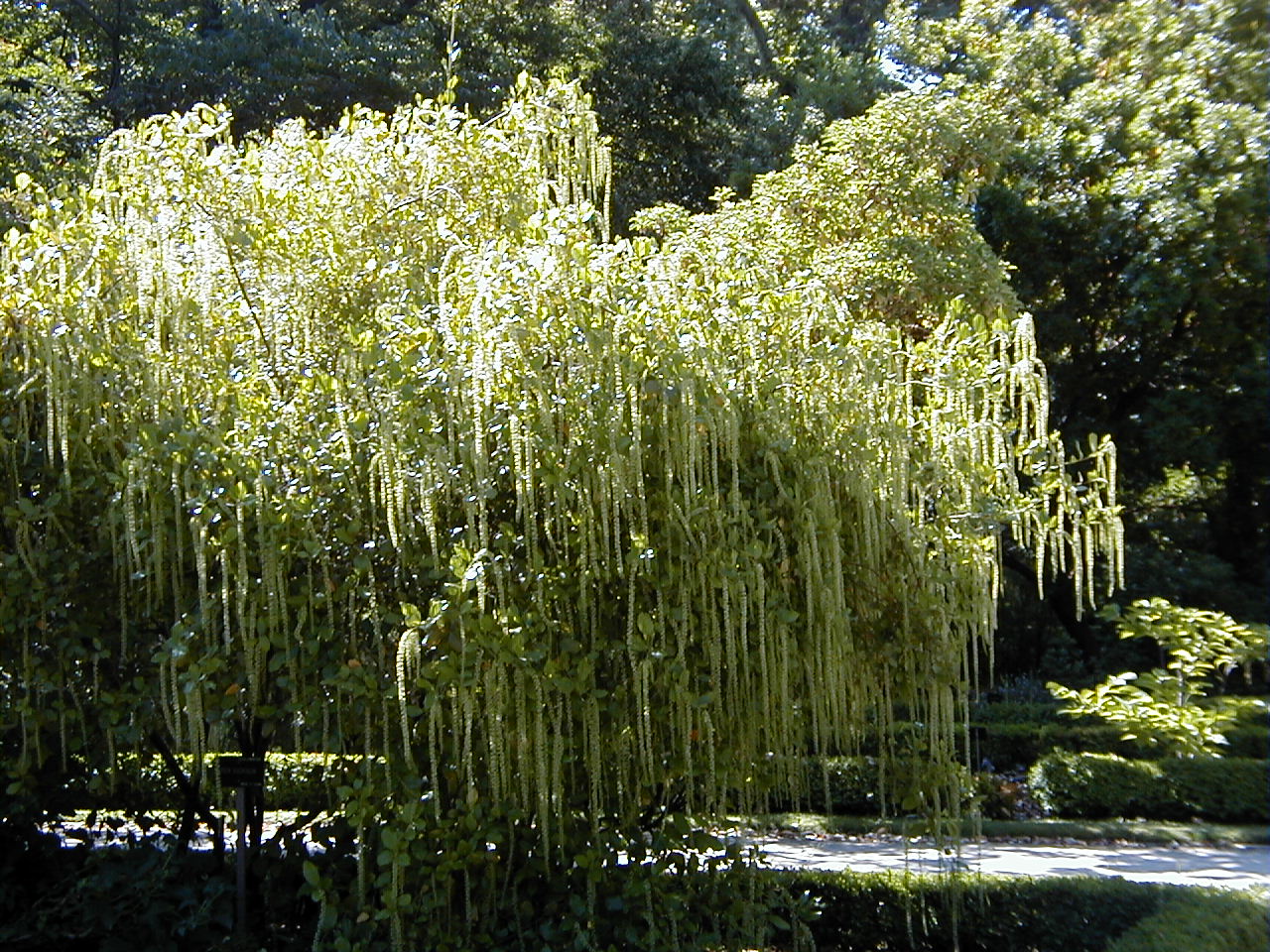
Itea ilicifolia is an evergreen arching shrub reaching 6–10 feet (1.8–3 m) tall with a spread of 6–10 feet (1.8–3 m). The species carries glossy dark green leathery holly-like leaves 2–4 inches (5–10 cm) long with spiny-toothed margins, and the specific epithet ilicifolia means 'holly-leaved' in botanical Latin—a direct reference to the resemblance of the foliage to Ilex (holly). Leaves are leathery ovate and carried on arching branches that create a graceful fountain-like habit at maturity. In mid-to-late summer, pendant catkin-like racemes of tiny greenish-white to cream flowers dangle 6–12 inches (15–30 cm) long from the branch tips. These inflorescences run longer than most shrub racemes in temperate cultivation, and the extreme length carries the species' primary ornamental value through the July-to-August bloom window. Flowers carry a faint honey-like fragrance detectable at close range. Small greenish capsule fruit follows in autumn. Growth rate is moderate. Hardy to zone 7.
Native Range
Itea ilicifolia is native to western China—Hubei, Sichuan, Guizhou, and Yunnan provinces—growing in moist mountain forests and stream margins at 3,000–7,500 feet (900–2,300 m) elevation. The Chinese mountain habitat gives the species its zone-7 cold tolerance and its preference for moist humus-rich garden soils. The species was introduced to Western cultivation by Ernest Wilson in the early 20th century through his plant-collecting expeditions in western China for the Arnold Arboretum and Veitch Nurseries.Suggested Uses
Planted as a specimen, wall shrub, or informal screen at 6–8 foot (1.8–2.4 m) spacing in zone-7-and-warmer gardens. The long pendant flower racemes read most clearly when the plant is trained against a wall or positioned above eye level—ground-level plantings hide the inflorescences within the foliage canopy. Evergreen holly-like foliage carries year-round structural value beyond the summer bloom season. Sheltered warm-wall positions in zone 7 reduce winter foliage injury that would otherwise damage exposed specimens. Exposed cold sites below zone 7, dry soils, and formal sheared hedging are poor fits for the species.How to Identify
Appearance
Size & Dimensions
Height6' - 10'
Width/Spread6' - 10'
Bloom Information
Pendant catkin-like racemes of tiny greenish-white to cream flowers 6–12 inches (15–30 cm) long dangle from branch tips from July through August. Individual flowers measure 0.1 inches (3 mm) across and are aggregated in the dangling raceme structure. The light honey-like fragrance carries at close range and attracts bees and other small pollinators. Bloom duration is 4–6 weeks.
Detailed Descriptions
Flower Description
Greenish-white to cream; tiny flowers in pendant catkin-like racemes 6-12 inches long; faint honey fragranceFoliage Description
Glossy dark green; leathery holly-like with spiny-toothed margins; ovate 2-4 inches; evergreenGrowing Conditions
Sun Requirements
Requires 4-7 hours of direct sunlight daily
• Full Sun: 6+ hours of direct sunlight
• Partial Shade: 3-6 hours of direct sunlight
• Full Shade: Less than 3 hours of direct sunlight
Care & Maintenance
Care Guide
Partial shade to full sun in moist humus-rich well-drained soil (pH 5.5–7.0) matches the species' cultivation needs. Hardy to zone 7 (0°F / −18°C); cold zone-7 positions against south-facing warm walls reduce winter foliage injury and flower-bud damage in marginal climates. The arching branches need room to spread—the species develops its fountain-like habit only when planted with sufficient lateral space. Drought tolerance is moderate once established, but the species performs in consistently moist soil that matches the native stream-margin ecology. Pest and disease problems are minimal in well-sited plantings.Pruning
Pruning after flowering in late summer (August–September) maintains size and shape for positions where the species outgrows its allotted space; the cultivar carries flower buds through winter for the following year's bloom, so timing pruning after the flower cycle preserves the coming season's inflorescences. Frost-damaged growth is removed in early spring once winter injury is fully assessed. The natural arching form carries the species' ornamental character and shearing into formal geometric shapes eliminates the fountain habit. Thinning older branches at the base encourages fresh arching growth and rejuvenates overgrown specimens.Pruning Schedule
Prune: August–September
summer
