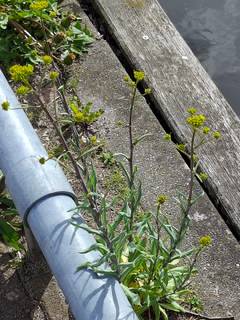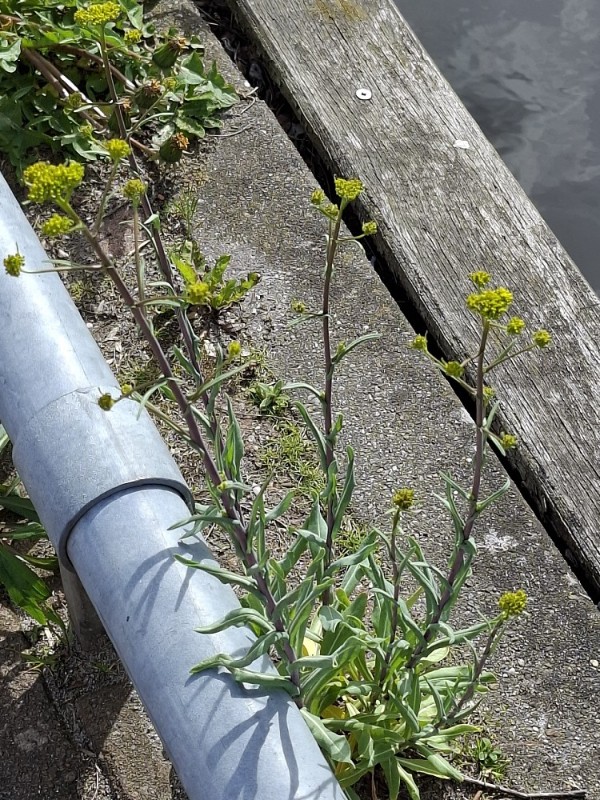
Isatis, Genus, spp., Multiple species,
- Genus
- Multiple species
Europe, Mediterranean, and western and central Asia
Overview
Isatis is a genus of roughly thirty to eighty species of annual, biennial, and short-lived perennial herbs in the mustard family, Brassicaceae, native to Europe, the Mediterranean, and western and central Asia. The most familiar species, I. tinctoria (woad), was grown for centuries as the main European source of blue dye before imported indigo replaced it. Plants begin as a basal rosette of bluish-green, lance-shaped leaves, then send up a branched flowering stem 2 to 5 feet (0.6 to 1.5 m) tall carrying clouds of small, four-petalled yellow flowers. Flowering is followed by hanging, flattened, dark purple-brown winged seed pods, each holding a single seed. The genus is spread across temperate Eurasia, where the plants grow on dry banks, rocky slopes, and disturbed open ground. I. tinctoria has naturalised and become an aggressive weed in parts of the western United States, where it is listed as noxious in several states and forms dense stands on rangeland. The bluish foliage and yellow flowers last only briefly before the plant sets seed and dies, and self-sown seedlings can spread well beyond the original planting.
Native Range
Isatis is native to temperate Europe, the Mediterranean region, and western and central Asia. The plants grow on dry, rocky, and disturbed open ground, and I. tinctoria has naturalised widely, including in North America where it is regarded as an invasive weed.Suggested Uses
Isatis is grown in dye gardens, herb collections, and historical or educational plantings for its long use as a blue dye source. The tall yellow flower sprays suit informal and wild borders where self-seeding is acceptable. Cut stems with young seed pods are used in dried arrangements.How to Identify
Appearance
Size & Dimensions
Height2' - 5'
Width/Spread1' - 2'
Colors
Bloom Information
Flowering occurs in late spring and early summer, roughly May to June, when the branched stems carry many small yellow four-petalled flowers. The bloom period is short, lasting a few weeks before the pendulous seed pods form. Bees and other small insects visit the flowers.
Detailed Descriptions
Foliage Description
bluish-greenGrowing Conditions
Sun Requirements
Requires 6-10 hours of direct sunlight daily
• Full Sun: 6+ hours of direct sunlight
• Partial Shade: 3-6 hours of direct sunlight
• Full Shade: Less than 3 hours of direct sunlight