© No machine-readable author provided. Rickjpelleg assumed (based on copyright claims)., some rights reserved (CC-BY) · Wikimedia Commons
Inula, Genus, viscosa, Species,
- Genus & species
sticky fleabane
Mediterranean basin (Portugal and Morocco east to Turkey, the Levant, and Iran)
Overview
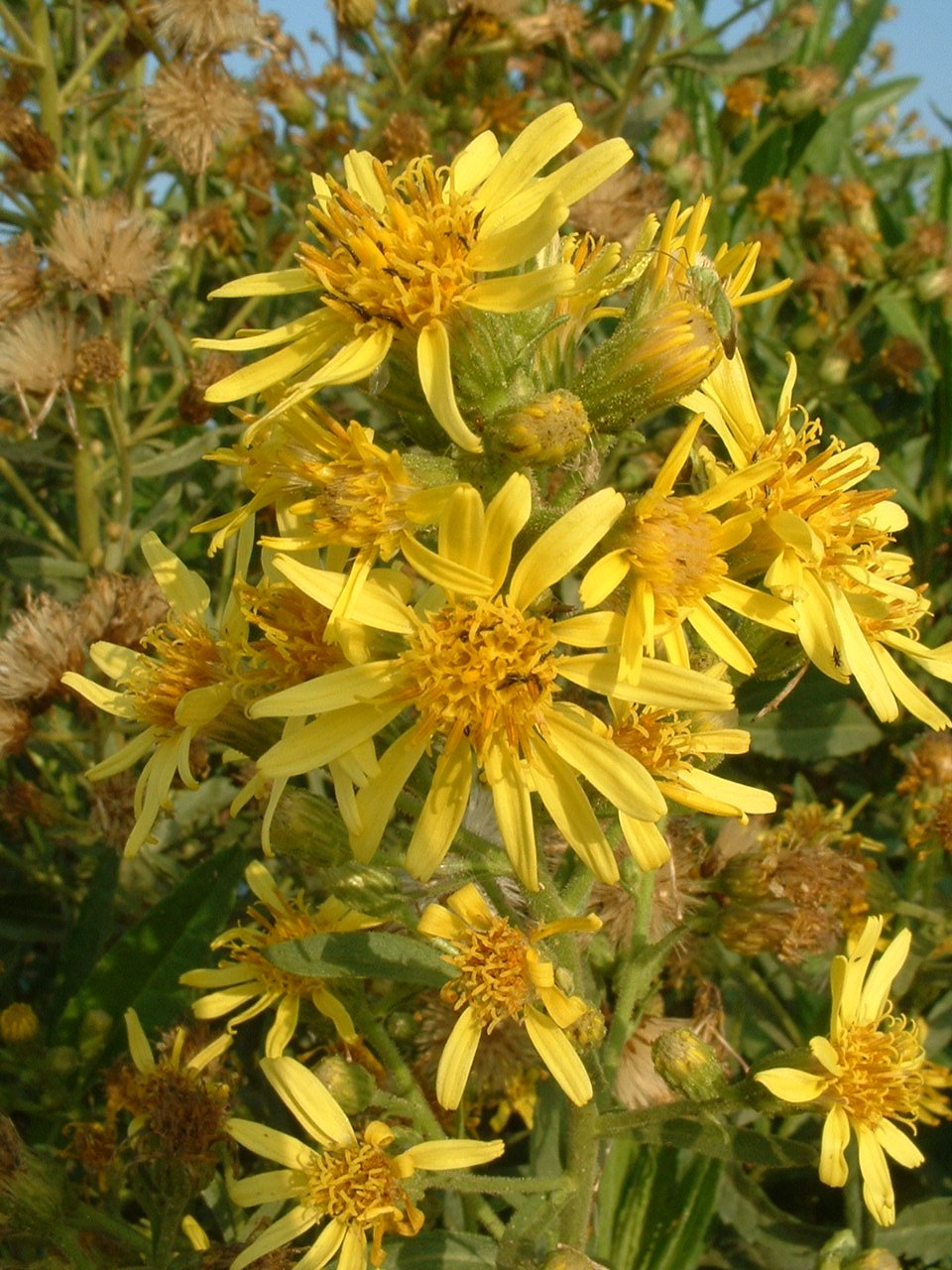
Inula viscosa (syn. Dittrichia viscosa) is a semi-woody shrubby perennial in the family Asteraceae growing 24-48 inches (60-120 cm) tall and 24-36 inches (60-90 cm) wide with an upright bushy habit. The entire plant is densely glandular-sticky (viscid), coated in a resinous exudate carrying a strong pungent camphor-like scent detectable from several feet. Stems are erect, woody at the base, and profusely branched in the upper half. Leaves are alternate, lanceolate, 1.5-4 inches (4-10 cm) long, sessile, clasping the stem at the base, with a wavy margin, bright green and sticky on both surfaces. Flower heads are 0.5-0.75 inch (12-18 mm) across, with bright yellow ray florets and a yellow disc, borne in large branching terminal panicles producing hundreds of heads per plant. The species blooms in late summer to autumn, a period when few other shrubby perennials of Mediterranean habitats are in flower, which makes the species a primary late-season nectar source for migrating insects. Native to the Mediterranean basin, where the species is widespread and conspicuous on disturbed ground, roadsides, and abandoned agricultural land. Tolerates extreme drought, poor soil, salt spray, and pollution. Considered invasive in parts of South Africa and Australia. The sticky glandular exudate traps small insects on the stems and leaves, though the plant is not carnivorous.
Native Range
Inula viscosa is native across the Mediterranean basin, from Portugal and Morocco east through the entire Mediterranean littoral to Turkey, the Levant, and Iran. The species occurs on disturbed ground, roadsides, abandoned fields, riverbanks, and coastal habitats from sea level to approximately 3,000 feet (900 m).Suggested Uses
Planted in dry Mediterranean-style gardens, gravel gardens, and coastal plantings. The late-autumn bloom gives color and nectar when few other plants are flowering. In Mediterranean climates, used for erosion control on dry slopes and disturbed ground. A primary plant for late-season pollinator support. Not suited to irrigated garden borders or heavy clay soils. The sticky exudate stains hands and clothing during handling.How to Identify
Appearance
Size & Dimensions
Height2' - 4'
Width/Spread2' - 3'
Bloom Information
Flower heads open from August through November, late in the Mediterranean shrub-flowering season. The branching panicles produce hundreds of small yellow heads progressively over 8-12 weeks. Peak bloom is September through October. Pollinated by bees, hoverflies, and butterflies; a primary late-season nectar source in Mediterranean ecosystems.
Detailed Descriptions
Flower Description
Bright yellow; ray florets and a yellow disc; flower heads 0.5-0.75 inch (12-18 mm) across in large branching terminal panicles producing hundreds of heads per plantFoliage Description
Bright green; lanceolate 1.5-4 inches (4-10 cm) long; sessile, clasping the stem at the base; wavy margin; sticky-glandular on both surfaces; strong camphoraceous scentGrowing Conditions
Sun Requirements
Requires 6-12 hours of direct sunlight daily
• Full Sun: 6+ hours of direct sunlight
• Partial Shade: 3-6 hours of direct sunlight
• Full Shade: Less than 3 hours of direct sunlight
Care & Maintenance
Care Guide
Sited in full sun in any well-drained soil at pH 6.0-8.5. Tolerates poor, rocky, gravelly, and calcareous soils. Spaced 24-30 inches (60-75 cm) apart. Fertilizer is not applied. Watered sparingly: drought-tolerant once established and resents summer irrigation in heavy soils. In the Pacific Northwest, hardy only in the mildest zones (8b-9) with sharp drainage. In zones 7-8a, the species is treated as an annual or potted plants are overwintered in a cold greenhouse. The sticky exudate stains hands and clothing, and gloves support handling during pruning and removal.Pruning
Plants are cut back hard to 6-8 inches (15-20 cm) in early spring (March) to maintain a compact shape and limit legginess. The species regenerates from the woody base. Spent flower stems are removed in late autumn or left for winter structural interest. Without annual hard pruning, plants become leggy and open within 2-3 years.Pruning Schedule
Prune: March
early spring
Container Growing
Suitable for container growing
Minimum container size: 5 gallons