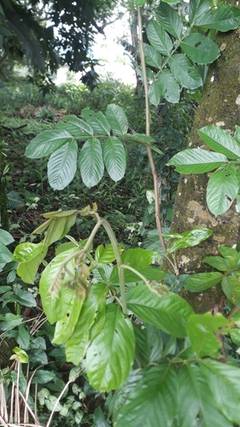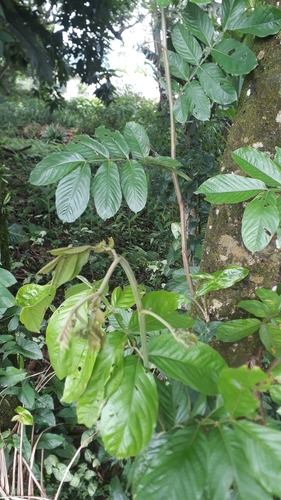
Inga, Genus, spp., Multiple species,
- Genus
- Multiple species
Neotropics (Mexico, Caribbean, Central and South America)
Overview
Inga is a genus of about 300 evergreen trees and shrubs in the family Fabaceae, native to the Neotropics from Mexico through Central America to tropical South America. Plants range from 15 to 100 ft (4.5 to 30 m) tall, with spreading crowns and pinnately compound leaves whose central stalk is winged and carries a small nectar gland between each pair of leaflets. As legumes, Inga species fix atmospheric nitrogen in root nodules, which lets them grow on poor, acidic soils and enrich those soils over time. Flowers gather into heads or spikes of many long white stamens, giving a pom-pom or brush-like form, and are followed by cylindrical to flattened pods 2 to 40 in (5 to 100 cm) long depending on species. In I. edulis, the ice-cream bean, the pod holds seeds wrapped in a sweet white pulp eaten fresh. The genus is widely used to shade coffee and cacao and in alley-cropping systems where the prunings mulch food crops. Limitations include frost sensitivity, brittle wood in several species, and fast growth that calls for repeated pruning in cultivation.
Native Range
Inga is native to the lowland and montane tropics of the Americas, from Mexico and the Caribbean through Central America to Bolivia, Brazil, and northern Argentina. Species grow in rainforest, along rivers, and in seasonally flooded forest, and several have spread through the wider tropics by cultivation. The genus is most diverse in the Amazon basin and the Andean foothills.Suggested Uses
Inga is planted as a shade tree over coffee and cacao, as a nitrogen-fixing tree in alley-cropping and soil-restoration systems, and as a fruit tree in the case of I. edulis. In large frost-free gardens and parks it is grown for shade. The prunings serve as green mulch and livestock fodder.How to Identify
Appearance
Size & Dimensions
Height15' - 100'
Width/Spread15' - 50'
Bloom Information
Flowering in Inga occurs through much of the warm season and, near the equator, can continue year-round, with individual trees often flushing several times. The white stamen heads open over a few days and are pollinated by bees, moths, and hummingbirds. Pods ripen weeks to months after flowering depending on species.
Detailed Descriptions
Foliage Description
green to dark greenGrowing Conditions
Sun Requirements
Requires 6-10 hours of direct sunlight daily
• Full Sun: 6+ hours of direct sunlight
• Partial Shade: 3-6 hours of direct sunlight
• Full Shade: Less than 3 hours of direct sunlight