Hyssopus, Genus, officinalis, Species, ssp., Subspecies, aristatus, Subspecies,
- Genus & species
- Subspecies
dwarf hyssop
Southern Europe and Middle East; subspecies aristatus is more compact than the typical species
Overview
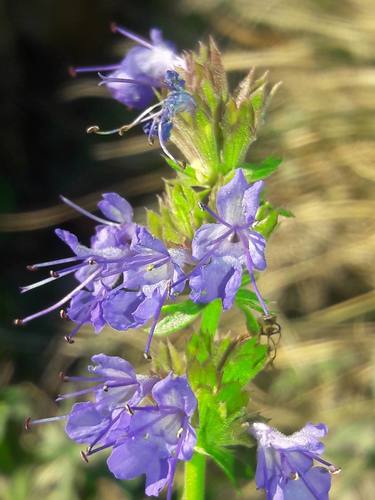
Hyssopus officinalis ssp. aristatus is dwarf hyssop — a compact form of the biblical herb, growing 12–18 inches (30–45 cm) tall and wide. The subspecies name 'aristatus' means 'awned' or 'bearded', describing the tiny bristle at the calyx tip; the practical significance is the more compact, denser habit than the typical species. Deep blue to violet-blue small tubular flowers in dense terminal spikes bloom from July through September — a 6+ week season. The species name 'officinalis' indicates historical medicinal and culinary use; hyssop is mentioned in the Bible and has been grown in European herb gardens for centuries. The narrow aromatic leaves release a strong camphor-mint fragrance when brushed. Bees, butterflies, and hummingbirds visit the flowers heavily — this is a high-value pollinator herb. Lean, well-drained, alkaline soil in full sun. Cut back by one-third in early spring to keep dense growth. Deer avoid the strongly aromatic foliage.
Native Range
Hyssopus officinalis is native to southern Europe and the Middle East. Subspecies aristatus is a compact form.Suggested Uses
Used in herb gardens, pollinator gardens, borders, and containers of 3 gallons (11 liters) or more. Biblical herb with centuries of culinary and medicinal use. The deep blue flowers are heavily worked by bees, separating this from the lavender-and-pink majority of summer-flowering herbs. The compact subshrub form suits formal herb garden edges.How to Identify
Appearance
Size & Dimensions
Height1' - 1'6"
Width/Spread1' - 1'6"
Bloom Information
Detailed Descriptions
Flower Description
Deep blue to violet-blue, small, tubular, in dense terminal spikesFoliage Description
Dark green, narrow, aromatic, glossyGrowing Conditions
Sun Requirements
Requires 6-10 hours of direct sunlight daily
• Full Sun: 6+ hours of direct sunlight
• Partial Shade: 3-6 hours of direct sunlight
• Full Shade: Less than 3 hours of direct sunlight
Care & Maintenance
Care Guide
Plant in full sun. Lean, well-drained, alkaline soil. Cut back by one-third in early spring. Shear after main bloom. Culinary herb — leaves and flowers edible.Pruning
Cut back by one-third in early spring. Shear after the main bloom to keep compact form.Pruning Schedule
Prune: March–April
early spring
Container Growing
Suitable for container growing
Minimum container size: 3 gallons