Hyssopus, Genus, spp., Multiple species,
- Genus
- Multiple species
Mediterranean region east to Central Asia
Overview
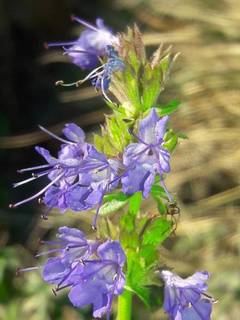
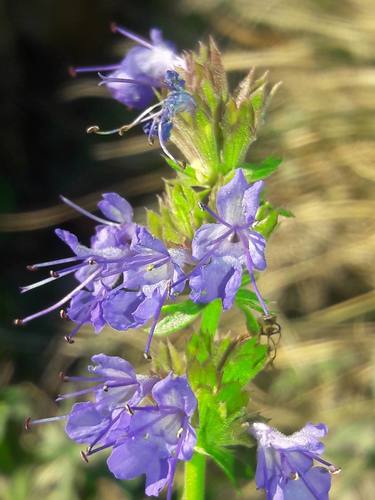
Hyssopus is a small genus of about ten to fifteen species of aromatic perennials and low subshrubs in the mint family, Lamiaceae. The species H. officinalis (hyssop) has been cultivated for centuries as a culinary and medicinal herb. Plants form upright, bushy clumps of slender square stems clothed in narrow, opposite, dark green leaves that release a sharp, slightly camphor-like scent when bruised. Across the genus, height ranges from about 12 to 24 inches (30 to 60 cm). From summer into early autumn, the stems carry dense, one-sided spikes of small two-lipped flowers, usually blue to violet but sometimes pink or white depending on species and form. The flowers hold abundant nectar and draw large numbers of bees and butterflies. The genus is native to a band from the Mediterranean region eastward through southwestern and Central Asia, where the plants grow on dry, rocky, often limy slopes in full sun. Plants are woody at the base and can become open or sparse with age, and they are shorter-lived on heavy, wet soils than on the lean, sharply drained ground where they grow naturally.
Native Range
Hyssopus is native to a region stretching from southern Europe and the Mediterranean basin eastward through the Caucasus, southwestern Asia, and into Central Asia. H. officinalis, the cultivated hyssop, has naturalised more widely, including in parts of North America.Suggested Uses
Hyssopus is used in herb gardens, pollinator plantings, low informal hedges, and dry sunny borders and rock gardens. The aromatic foliage and flowers are used fresh or dried as a culinary herb and in teas. The compact form suits edging and container growing.How to Identify
Appearance
Size & Dimensions
Height1' - 2'
Width/Spread1' - 2'
Bloom Information
Flowering runs from early summer into autumn, roughly June to September in the Northern Hemisphere, often over a long season when spent spikes are removed. The small two-lipped flowers are usually blue to violet, with pink- and white-flowered forms in cultivation. The nectar-rich flowers draw bees, butterflies, and other pollinating insects throughout the flowering period.
Detailed Descriptions
Flower Description
blue to violet, sometimes pink or whiteFoliage Description
dark greenGrowing Conditions
Sun Requirements
Requires 6-10 hours of direct sunlight daily
• Full Sun: 6+ hours of direct sunlight
• Partial Shade: 3-6 hours of direct sunlight
• Full Shade: Less than 3 hours of direct sunlight
Care & Maintenance
Care Guide
Hyssopus grows in full sun in light, dry to medium, sharply drained soils and tolerates poor, rocky, and limy ground. The genus withstands drought once established and is hardy in roughly USDA zones 4 to 9, dying back in winter in colder areas and behaving as a semi-evergreen subshrub in mild ones. Heavy, wet, or poorly drained soil shortens plant life and can cause root rot. A trim after flowering keeps plants compact, as old plants tend to become woody and open at the base. Propagation is by seed, by softwood cuttings in early summer, or by division of clumps in spring.Pruning
Plants are cut back by about one-third after the main flush of bloom to encourage fresh growth and a second flush of flowers. A harder trim in early spring removes winter-damaged growth and keeps the base bushy. Cutting into old, leafless wood is left undone because hyssop is slow to resprout from bare stems.Container Growing
Suitable for container growing
Minimum container size: 2 gallons