Hypochaeris, Genus, spp., Multiple species,
- Genus
- Multiple species
Cat's-ears
South America, Europe, North Africa, and temperate Asia
Overview
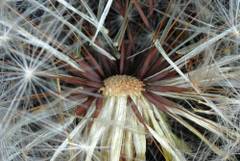
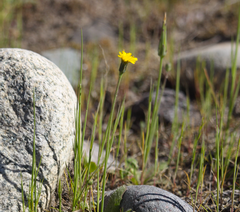
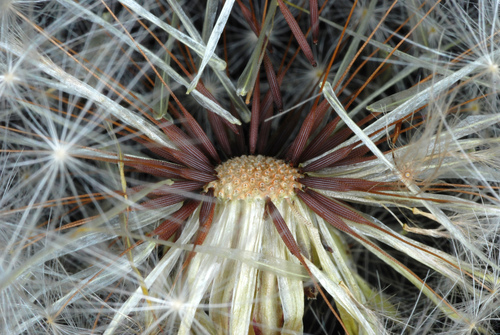
Hypochaeris is a genus of about 50 to 60 annual and perennial herbs in the daisy family (Asteraceae), commonly called cat's-ears or false dandelions. Most species form a flat basal rosette of oblong, lobed or toothed leaves 1-8 in (2.5-20 cm) long, usually rough with stiff hairs. From the rosette rise leafless or nearly leafless branched stems 4-24 in (10-60 cm) tall, each tipped with a yellow flower head 0.6-1.6 in (1.5-4 cm) across made entirely of ray florets. The branched, often forked stem and small scale-like bracts along it separate cat's-ear from the unbranched hollow stalks of true dandelions. Flower heads close in dull weather and give way to fluffy seed heads of parachuted achenes that disperse on the wind. H. radicata is a deep-rooted perennial naturalized as a lawn and pasture weed across much of the world, while other species are native components of South American and Mediterranean grasslands. The taproot resprouts after mowing, which sustains the weedy behavior of several species in turf.
Native Range
Hypochaeris is native to South America, Europe, North Africa, and temperate Asia, with the greatest diversity in South America. H. radicata and H. glabra originate in Europe and North Africa and have naturalized widely across North America, Australia, and New Zealand as weeds of lawns, pastures, and roadsides.Suggested Uses
Native South American and Mediterranean species appear in meadow and grassland plantings and are a nectar and pollen source for bees and hoverflies. Naturalized species such as H. radicata are seldom planted and are managed as weeds in lawns and pastures. The flowers and seed heads feed pollinators and seed-eating birds in informal settings.How to Identify
Appearance
Size & Dimensions
Height4" - 2'
Width/Spread6" - 1'
Bloom Information
Hypochaeris flowers over a long season from late spring into autumn, mainly May to September in temperate regions. Individual heads last a day or two, opening in sun and closing in dull weather, and a single plant produces many heads in succession. Seed follows quickly as wind-borne, parachuted achenes.
Detailed Descriptions
Foliage Description
GreenGrowing Conditions
Sun Requirements
Requires 6-10 hours of direct sunlight daily
• Full Sun: 6+ hours of direct sunlight
• Partial Shade: 3-6 hours of direct sunlight
• Full Shade: Less than 3 hours of direct sunlight