Image 1 of 19
1 / 19
Plant Reference
Hypochaeris, Genus, radicata, Species,
- Genus & species
hairy cat's-ear
Europe, western Asia, northern Africa
Overview
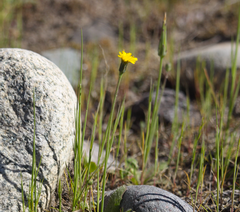
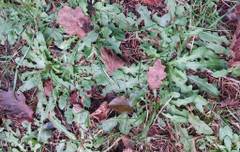
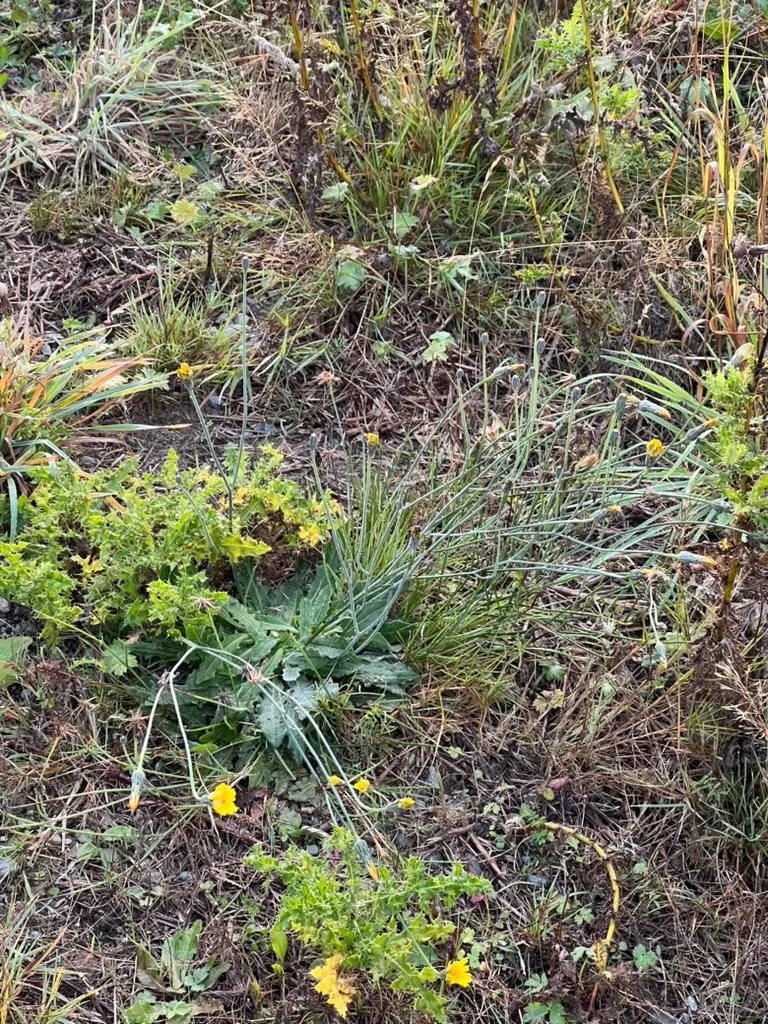
Hypochaeris radicata is a taprooted perennial in the daisy family (Asteraceae) reaching 8-24 inches (20-60 cm) tall with a 6-12 inch (15-30 cm) spread. Plants form a basal rosette of oblanceolate, coarsely lobed leaves 2-8 inches (5-20 cm) long with rounded lobe tips, sparsely to moderately hairy on both surfaces. Flowering scapes are solid, wiry, branching (typically forking 1-3 times), smooth or with scattered hairs, and leafless except for small scale-like bracts at the forks. Flower heads are 1-1.5 inches (2.5-4 cm) across, composed entirely of yellow ligulate florets, resembling dandelion heads. Outer florets are often greenish or reddish on the underside. Fruit is an achene with a feathery (plumose) pappus on a long beak, enabling wind dispersal. A single plant produces 1,000-5,000 seeds. The deep taproot, 6-12 inches (15-30 cm) long, is fleshy and regenerates if broken during pulling. H. radicata ranks among the more widespread lawn and roadside weeds in the Pacific Northwest. Dense populations in horse pastures have been associated with equine stringhalt (a neuromuscular condition) in Australia and parts of the Pacific coast.
Native Range
Hypochaeris radicata is native to Europe, western Asia, and northern Africa, occurring in meadows, lawns, roadsides, and waste ground from sea level to approximately 5,000 feet (1,500 m). Widely naturalized across North America, the species is particularly abundant in the Pacific Northwest, where it ranks among the more frequent yellow-flowered lawn weeds.Suggested Uses
Used in weed identification courses for teaching differentiation among yellow-flowered Asteraceae in lawns (dandelion, cat's-ear, hawk's-beard, hawkweed). The plumose versus simple pappus distinction is a key taxonomic teaching point. Studied in equine veterinary medicine for the association with stringhalt in horses. Included in Asteraceae morphology exercises for ligulate head structure.How to Identify
Appearance
Size & Dimensions
Height8" - 2'
Width/Spread6" - 1'
Bloom Information
Flowers appear May through September. Individual heads open for 2-3 days. Branching scapes produce heads sequentially over 10-14 weeks. In the Pacific Northwest, peak flowering occurs in June through August. Seeds mature 2-3 weeks after flowering and disperse by wind via the plumose pappus. The species is self-pollinating.
Detailed Descriptions
Flower Description
Yellow ligulate heads 1-1.5 inches (2.5-4 cm) across, dandelion-like; outer florets often greenish or reddish beneathFoliage Description
Medium green, oblanceolate, coarsely lobed with rounded tips, sparsely to moderately hairy on both surfacesGrowing Conditions
Sun Requirements
Requires 4-10 hours of direct sunlight daily
• Full Sun: 6+ hours of direct sunlight
• Partial Shade: 3-6 hours of direct sunlight
• Full Shade: Less than 3 hours of direct sunlight