Hymenopappus, Genus, scabiosaeus, Species,
- Genus & species
Carolina Woollywhite
Southeastern and south-central United States
Overview
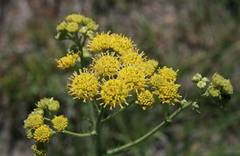
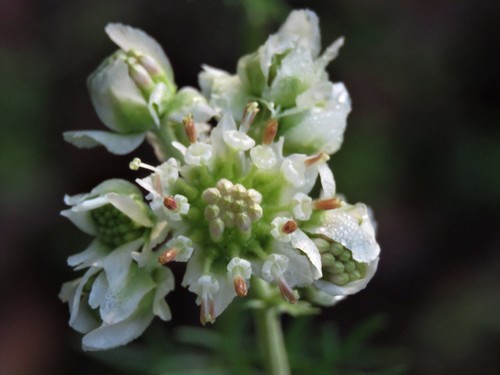
Hymenopappus scabiosaeus is a biennial to short-lived perennial that forms a basal rosette in its first year and sends up a flowering stem 1.5-3.5 feet (45-105 cm) tall in the second. The basal leaves are finely twice-divided into narrow segments, 3-8 inches (7.5-20 cm) long, and woolly when young. The branched upper stem carries open, flat-topped clusters of rounded flower heads, each head about 0.5 inch (1.3 cm) wide and made of 20 to 40 small white to cream disk florets with no ray petals, the protruding anthers giving a slightly fuzzy look. Flowering runs from April to June. Dry, ribbed seeds tipped with tiny scales follow. The species grows in dry, open sandy ground, including pine and oak woodlands, sandhills, and old fields, tolerating heat and drought. After flowering and setting seed the plant usually dies, relying on seed to renew. Numbers rise and fall from year to year with rainfall and disturbance.
Native Range
Hymenopappus scabiosaeus is native to the southeastern and south-central United States, from the Carolinas and Florida west to Texas and north into Missouri and Kansas. It grows in dry sandy soils of pine and oak woodlands, sandhills, prairies, and roadsides.Suggested Uses
Used in sandy native plantings, pine savanna restorations, and dry meadow or pollinator gardens, spaced 12-18 inches (30-45 cm) apart. Suited to lean, well-drained sites where richer perennials struggle. The late-spring flowers support native bees and other insects.How to Identify
Appearance
Size & Dimensions
Height1'6" - 3'6"
Width/Spread1' - 1'6"
Bloom Information
Flat clusters of small white to cream flower heads open from April to June. Each cluster blooms over three to four weeks in late spring. Bees, wasps, and small butterflies visit the heads for nectar and pollen.
Detailed Descriptions
Flower Description
White to creamFoliage Description
Gray-green, woolly when youngGrowing Conditions
Sun Requirements
Requires 6-12 hours of direct sunlight daily
• Full Sun: 6+ hours of direct sunlight
• Partial Shade: 3-6 hours of direct sunlight
• Full Shade: Less than 3 hours of direct sunlight
Care & Maintenance
Care Guide
Grow Hymenopappus scabiosaeus in full sun on dry, sharply drained sandy soil. It tolerates heat, drought, and poor fertility and accepts a pH from 5.5 to 7.5. As a biennial it forms a leaf rosette the first year and flowers, seeds, and dies the second, so a steady stand depends on self-sowing. Sowing seed in fall, or letting plants drop seed where bare sandy ground is available, keeps a colony going. The species rots in wet or rich soil and needs no fertilizer. Removing some seed heads limits spread where it is not wanted.Pruning
No routine pruning is needed for this short-lived plant. Spent flowering stems can be cut after seed drops, or left to self-sow. Dead second-year plants are easily pulled once they finish seeding.Toxicity: Not assessed
UnknownPlanting Guide
Planting Methods & Timing
Planting Method
direct sow
Direct Sow Timing
Fall