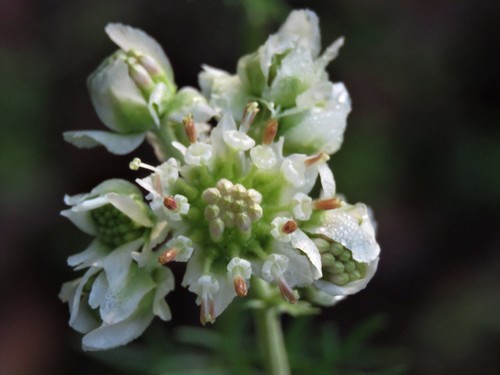
Hymenopappus, Genus, spp., Multiple species,
- Genus
- Multiple species
Woollywhites
Overview
Hymenopappus is a genus of about 14 biennial and perennial herbs in the daisy family (Asteraceae), native to dry, open habitats across North America, from the central and western United States into northern Mexico. Plants form a basal rosette of finely dissected, fern-like leaves, often grey-green with a woolly or felted coating, and send up branching flower stems 1-3 feet (30-90 cm) tall. The flower heads are small and lack showy ray florets in most species, instead carrying tight clusters of tubular disc flowers in white, cream, or yellow, grouped into flat-topped or rounded arrays. The pale, fuzzy heads give the genus the common name woollywhites. Plants grow on sandy plains, prairies, rocky slopes, and roadsides, rooting deeply to withstand heat and drought. Biennial species flower in their second year and then die, while perennial species return from a woody root crown. The genus draws bees and butterflies to its nectar-rich heads. On rich or moist soils plants grow soft and short-lived, and are longer-lived on lean, fast-draining ground.
Native Range
Native to North America, from the Great Plains and Rocky Mountain states south into Texas and northern Mexico, on sandy prairies, plains, and rocky open ground.Suggested Uses
Grown in native-plant gardens, prairie and meadow plantings, and dry sunny borders across its range. The dissected silvery foliage and pale flower clusters suit naturalistic and pollinator gardens. Deep roots make established plants useful on dry banks and lean soils.How to Identify
Appearance
Size & Dimensions
Height1' - 3'
Width/Spread8" - 1'6"
Colors
Bloom Information
Detailed Descriptions
Flower Description
white, cream, or yellowFoliage Description
grey-green, woollyGrowing Conditions
Sun Requirements
Requires 6-12 hours of direct sunlight daily
• Full Sun: 6+ hours of direct sunlight
• Partial Shade: 3-6 hours of direct sunlight
• Full Shade: Less than 3 hours of direct sunlight
Care & Maintenance
Care Guide
Grows in full sun on dry, sandy, or rocky soil with a pH near 6.0-8.0, including poor and alkaline ground. Established plants are drought tolerant and need little or no supplemental water. Rich, moist, or poorly drained soil produces weak growth and shortens the plant life. A deep taproot makes the genus tolerant of heat but slow to recover from transplanting. Plants self-sow where soil is open, maintaining a stand from year to year. No feeding is required.Pruning
Spent flowering stems are cut back after bloom, which can prompt a modest rebloom in perennial species. Removing seed heads before they ripen limits self-sowing. Biennial plants are cleared once they finish flowering and die.Pruning Schedule
Prune: July–August
summer
