Hydrophyllum, Genus, tenuipes, Species,
- Genus & species
Pacific waterleaf
British Columbia south through Washington, Oregon to California; moist conifer forests, streambanks, and shaded forest edges
Overview
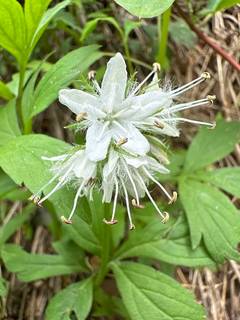
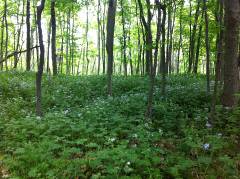
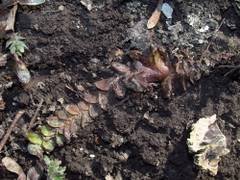
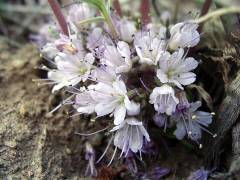
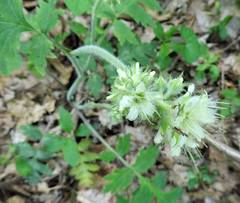
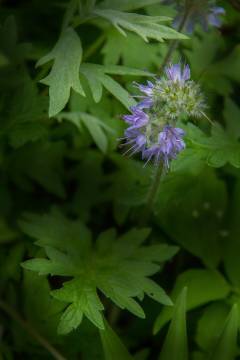
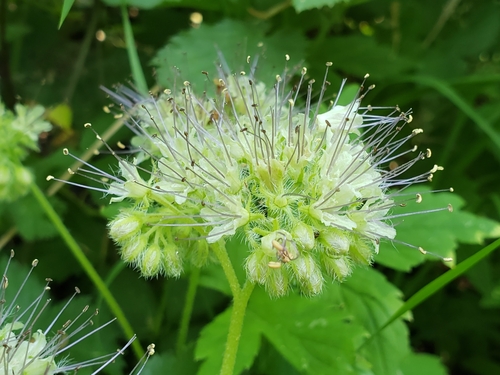
Hydrophyllum tenuipes is a deciduous rhizomatous perennial in the Hydrophyllaceae family native to moist conifer forests, streambanks, and shaded forest edges from British Columbia south to northern California. Plants form low mounds 8-20 inches (20-50 cm) tall and 12-18 inches (30-45 cm) wide, with palmately divided green leaves 4-8 inches (10-20 cm) wide carried on slender petioles. Each leaf has 5-7 sharply toothed lobes, and the foliage emerges in early spring and persists into mid-summer. Loose cymes of greenish-white to pale lavender bell-shaped flowers 0.25-0.4 inch (6-10 mm) long appear May to July, held just above or among the leaves; the long-exserted stamens give the cluster a fringed appearance. Foliage goes summer-dormant in dry sites and disappears entirely by August. H. tenuipes requires consistently moist shade and will not persist in sites that dry out in summer or in full sun. The plant spreads slowly by short rhizomes to form patches 24-36 inches (60-90 cm) across over several years, and is suited to native woodland gardens and shaded rain garden margins within its range.
Native Range
Native to moist conifer forests, streambanks, and shaded forest edges from British Columbia south through Washington and Oregon to California.Suggested Uses
Used in native woodland gardens, shaded rain garden margins, and restoration plantings under conifer canopy within Pacific Northwest native ranges. Spaced 12-18 inches (30-45 cm) apart, plants form a slow-spreading groundcover layer 24-36 inches (60-90 cm) across over 4-5 years. Pairs with other moisture-loving forest perennials in shaded sites that retain summer soil moisture.How to Identify
Appearance
Size & Dimensions
Height8" - 1'8"
Width/Spread1' - 1'6"
Bloom Information
Blooms May to July with loose cymes of greenish-white to pale lavender bell-shaped flowers 0.25-0.4 inch (6-10 mm) long. Long-exserted stamens project well beyond the corolla and give each cluster a fringed look. Each plant flowers for 4-6 weeks, after which the foliage begins summer dormancy in drier sites.
Detailed Descriptions
Flower Description
Greenish-white to pale lavenderFoliage Description
GreenGrowing Conditions
Sun Requirements
Requires 2-5 hours of direct sunlight daily
• Full Sun: 6+ hours of direct sunlight
• Partial Shade: 3-6 hours of direct sunlight
• Full Shade: Less than 3 hours of direct sunlight
Care & Maintenance
Care Guide
Site H. tenuipes in part shade to full shade with consistently moist, organic-rich, well-drained forest soil. Plant rhizome divisions or potted plants in fall or early spring, spacing 12-18 inches (30-45 cm) apart. Water deeply during establishment in the first growing season; established plants in shaded sites with summer moisture require no supplemental irrigation. Foliage goes summer-dormant in sites that dry out, and the plant will not persist in chronically dry conditions. A 2-3 inch (5-7.5 cm) layer of leaf mulch annually mimics the natural forest litter and supports establishment. Plants spread slowly to form patches 24-36 inches (60-90 cm) across over 4-5 years.Pruning
No pruning is required. Spent flowering stems and senescing summer foliage can be left in place to decompose into the leaf litter, or removed in mid-summer if the bare ground is undesirable. Cut back any remaining stems at ground level in fall.Pruning Schedule
Prune: November
fall